アジアの3大思想である、
仏教、道教、儒教(制御的、自己啓発的)
×
中国人、日本人、台湾人、アジア系アメリカ人、白人アメリカ人
で、
①ココロの平穏に効くか
②メンタルヘルス治療へのステイグマをもたらしてしまうか
(メンタルヘルス治療に病院行くのは、何かヤだ。という感覚)
という研究。
ーー
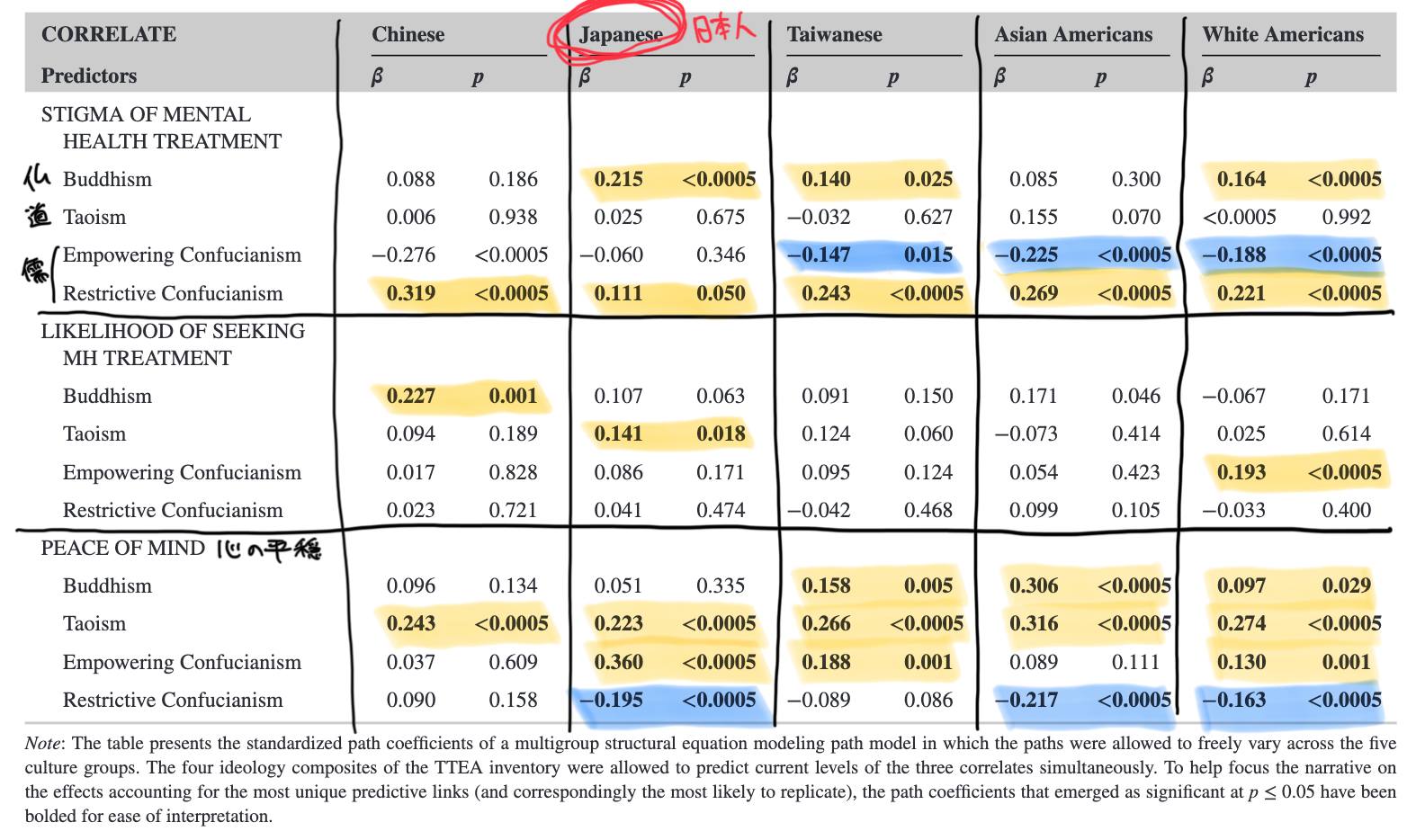
日本人で見れば、
心の平穏については、
仏教はどちらとも言えない。道教は効く。
儒教は制御的な部分は、平穏を減らす。自己啓発的な部分は平穏に効く。
感じでした。
ーー
全体的に見て、どの思想も心の平穏につながるけど、
儒教だけは、制限的な部分と、自己啓発的な部分(力を与える)があって、
制限的な部分は危険。
みたいなですね。
※儒教の制限的な部分:対人調和、礼儀正しさ、人間関係のヒエラルキーなど
※儒教の自己啓発的な部分:自己修養、率先垂範、人心掌握など
ーーー
From zen to stigma: Buddhism, Taoism, Confucianism, and their cross-cultural links to mental health
Journal of counseling and development,2024/3
https://www.researchgate.net/publication/379261274_From_zen_to_stigma_Buddhism_Taoism_Confucianism_and_their_cross-cultural_links_to_mental_health
スティグマは、特に東アジアの血を引く人々にとって、必要な支援を求めることを妨げる大きな障壁であり続けている。潜在的なメカニズムを探るため、本研究では、5つの文化グループ(中国322人、日本400人、台湾362人、アジア系アメリカ人319人、白人アメリカ人688人)において、東アジアのイデオロギーとメンタルヘルス支援を求める態度および心の平穏との関連を検討した。東アジアの3つの教えは、メンタルヘルスに対する態度と心の平安における異文化間の違いの31%~85%を占めていた。
力を与える儒教の教え(自己修養、率先垂範、人心掌握)、道教、仏教はすべて、ほとんどのグループにおいて、より大きな心の平和を独自に予測した。また、儒教の力強さはメンタルヘルスの偏見を低くするのに対し、仏教は偏見を大きくすることを予測した。最後に、制限的な儒教の教義(例えば、対人調和、礼儀正しさ、人間関係のヒエラルキー)は、より大きなスティグマとより低い心の平穏を予測した。治療におけるスティグマ/抵抗への対処や、文化を超えたメンタルヘルス促進への示唆が論じられている。
CORRELATE Predictors STIGMA OF MENTAL HEALTH TREATMENT Buddhism Taoism Empowering Confucianism Restrictive Confucianism LIKELIHOOD OF SEEKING MH TREATMENT Buddhism Taoism Empowering Confucianism Restrictive Confucianism PEACE OF MIND [心の平様] Buddhism Taoism Empowering Confucianism Restrictive Confucianism Chinese β p 0.088 0.186 0.006 0.938 −0.276 <0.0005 0.319 <0.0005 0.227 0.001 0.094 0.189 0.017 0.828 0.023 0.721 0.096 0.134 0.243 <0.0005 0.037 0.609 0.090 0.158 Japanese 日本 β p 0.215 <0.0005 0.025 0.675 −0.060 0.346 0.111 0.050 0.107 0.063 0.141 0.018 0.086 0.171 0.041 0.474 0.051 0.335 0.223 <0.0005 0.360 <0.0005 −0.195 <0.0005 Taiwanese β p 0.140 0.025 −0.032 0.627 −0.147 0.015 0.243 <0.0005 0.091 0.150 0.124 0.060 0.095 0.124 −0.042 0.468 0.158 0.005 0.266 <0.0005 0.188 0.001 −0.089 0.086 Asian Americans β p 0.085 0.300 0.155 0.070 −0.225 <0.0005 0.269 <0.0005 0.171 0.046 −0.073 0.414 0.054 0.423 0.099 0.105 0.306 <0.0005 0.316 <0.0005 0.089 0.111 −0.217 <0.0005 White Americans β p 0.164 <0.0005 <0.0005 0.992 −0.188 <0.0005 0.221 <0.0005 −0.067 0.171 0.025 0.614 0.193 <0.0005 −0.033 0.400 0.097 0.029 0.274 <0.0005 0.130 0.001 −0.163 <0.0005 Note: The table presents the standardized path coefficients of a multigroup structural equation modeling path model in which the paths were allowed to freely vary across the five culture groups. The four ideology composites of the TTEA inventory were allowed to predict current levels of the three correlates simultaneously. To help focus the narrative on the most unique predictor links (and correspondingly the most likely to replicate), the path coefficients that emerged as significant at p ≤ 0.05 have been bolded for ease of interpretation.
本研究のウェルビーイング小話はこちら😊
はぴテク相談室:アジア3大思想:仏教、道教、儒教(制御的、自己啓発的)と心の平穏
https://wellbeing-archive.pages.dev/posts/2024-04-02-1712098808/