2024.06.23
謙虚さと幸せ
謙虚さは幸せにつながるのか?という研究。
結果としては、
潜在的な謙虚さは幸せにつながる。一方で、顕在的な謙虚さは幸せにつながらなかった。
(潜在的な謙虚さは、IATという手法で、アンケートの回答までの時間などを使って、本当の所を見出すテストで計測。
顕在的な謙虚さは、あなた謙虚ですか?という質問と、こんな時に控えめになりますか?みたいな質問。)
ーー
謙虚さ調査の難しさとして、本当に謙虚な人は、謙虚ですか?と聞いても、いやいや〜そんなことないですよ〜と、
謙虚故に傾向が分からない。
そこを乗り越えるような研究でした。
本当の謙虚さは幸せにつながる😊
ーー
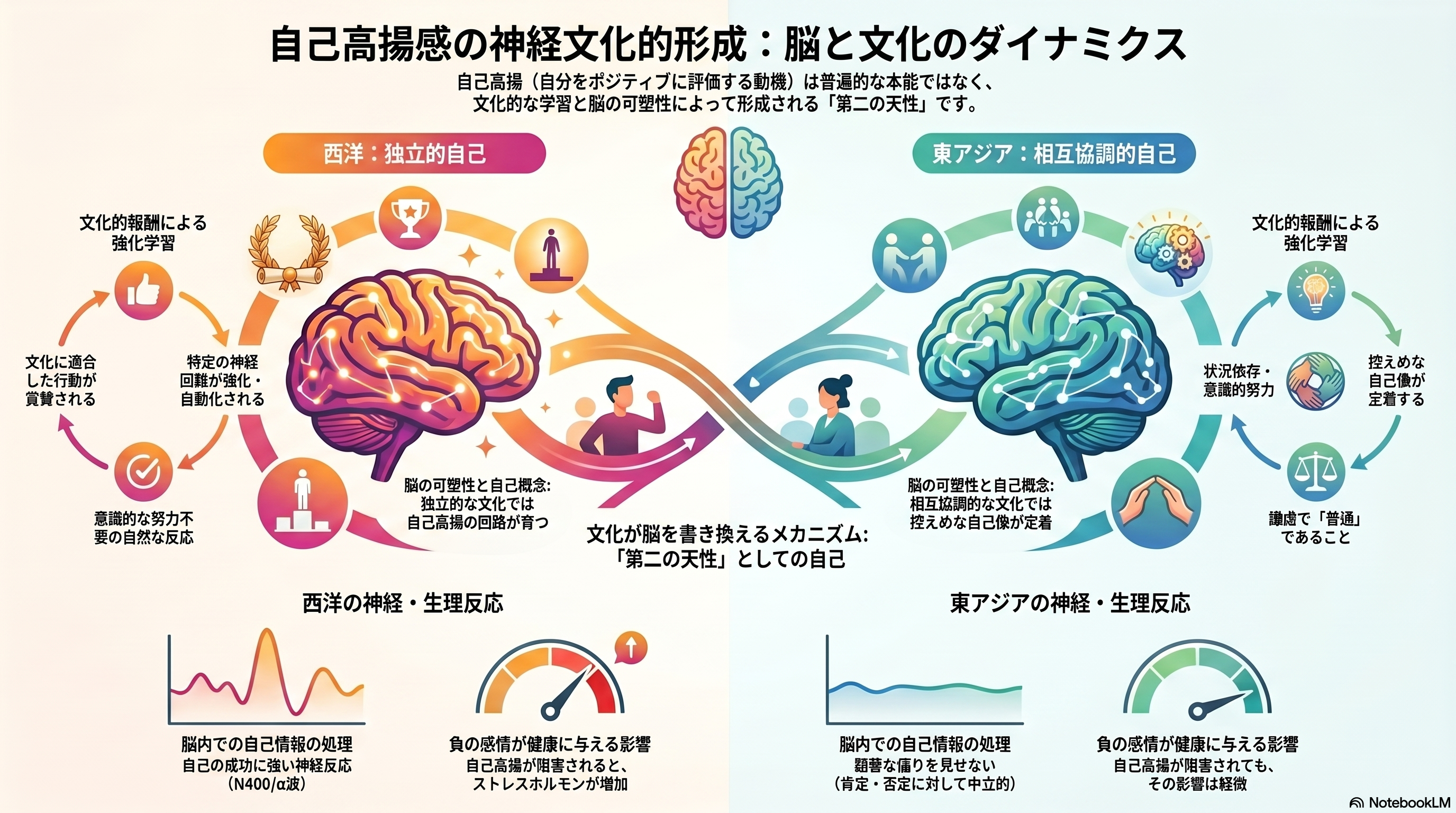
一方で、面白いのは米国での調査では、逆の結果が出ていたりします。
顕在的な謙虚さ(自分、謙虚っす!)は幸せと相関があり、
潜在的な謙虚さ(IAT)だと、幸せと相関がない。
個人主義的な文化が強い米国では、いつも謙虚というより、時たま謙虚くらいが良いのかもしれません。
ーーー
Humility and life satisfaction in Japan
日本における謙虚と人生満足度
Journal of Human Environmental Studies,2024/6
https://www.jstage.jst.go.jp/article/shes/22/1/22_61/_pdf
本研究の目的は、自己報告のほかに潜在指標も用いて謙虚と人生満足度の関係を調査することであった。
研究 1 では、回答バイアスに影響されずに謙虚を測定できる謙虚―傲慢潜在連合テストの日本語版を開発し、その妥当性を確認した。
研究 2 では、自己報告式の質問紙によって測定した顕在的謙虚と潜在連合テストによって測定した潜在的謙虚がそれぞれ人生満足度とどのように関連しているかを調査した。
その結果、顕在的謙虚は人生満足度と有意な相関を示さなかったが、潜在的謙虚は人生満足度と有意な正の相関を示した。年齢と性別を統制しても同様の結果が得られた。
これは、謙虚は単なる社会的美徳ではなく、自分自身にとってもポジティブな行動特性であるという仮説を支持するものであった。
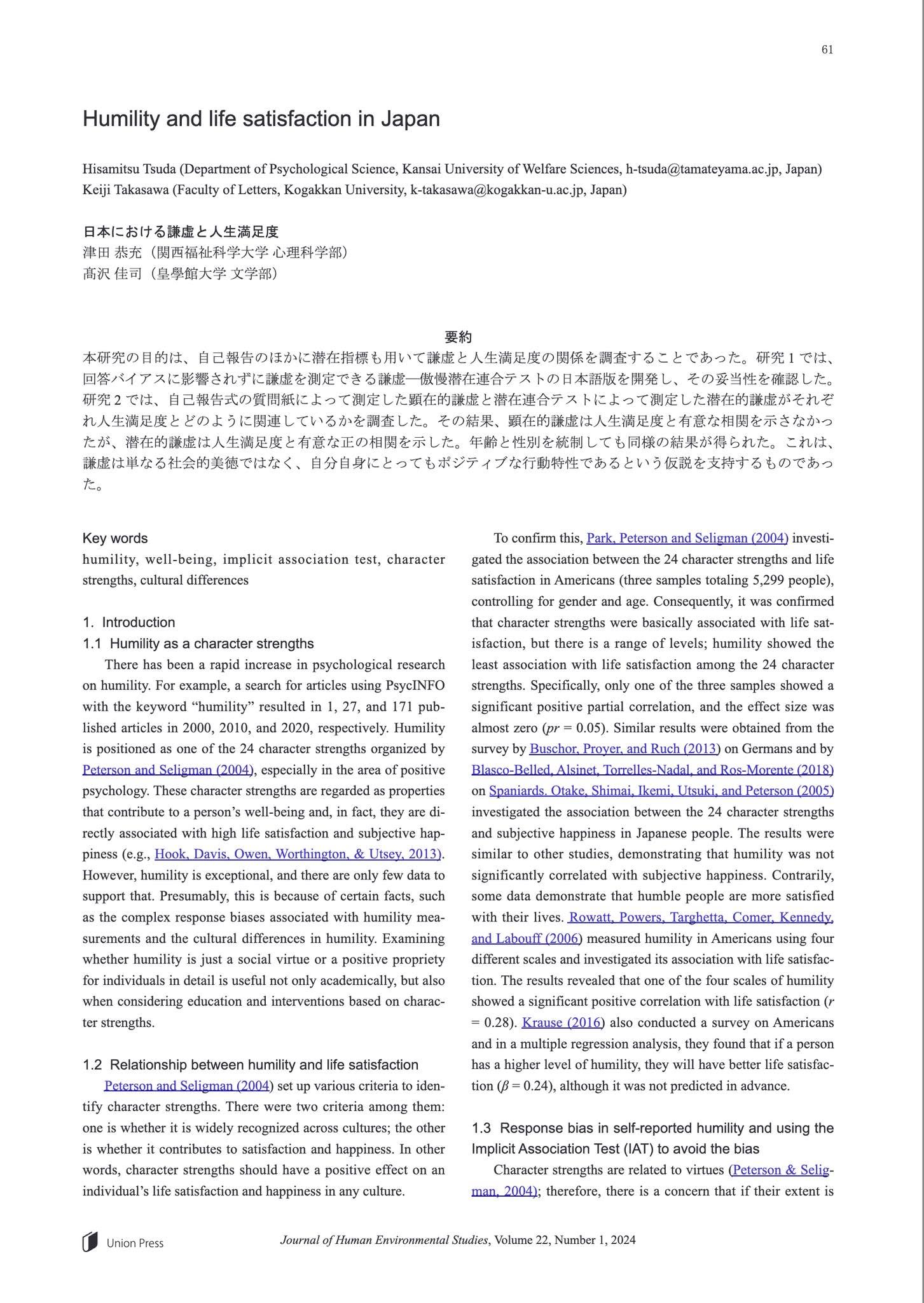
61 Humility and life satisfaction in Japan Hisamitsu Tsuda (Department of Psychological Science, Kansai University of Welfare Sciences, h-tsuda@tamateyama.ac.jp, Japan) Keiji Takasawa (Faculty of Letters, Gogakkan University, k-takasawa@gogakkan-uac.jp, Japan) 日本における謙虚と人生満足度 津田 悠志(関西福祉科学大学心理科学部) 高澤佳司(皇學館大学 文学部) 要約 本研究の目的は、自己報告のほかに暗在指標も用いて謙虚と人生満足度の関係を調査することであった。研究1では、回帰バイアスに影響されず謙虚を測定できる謙虚一般潜在連合テストの日本語版を開発し、その妥当性を確認した。研究2では、自己報告式の質問紙によって測定した顕在的謙虚と潜在在ラテスト上によって測定した暗在的謙虚それぞれと人生満足度の関係を調査した。その結果、暗在的謙虚は人生満足度と有意な相関関係を示さなかったが、潜在的謙虚は人生満足度と有意な正の相関を示した。年齢と性別を統制して回帰の分析が行われたこれについては、潜在性は低くなる会的美徳ではなく、自分自身についてもポジティブな自動特性であるという仮説を支持するものであった Key words humility, well-being, implicit association test, character strengths, cultural differences 1. Introduction 1.1 Humility as a character strengths There has been rapid increase in psychological research on humility. For example, a search for articles using PsycINFO with the keyword "humility" revealed 17, 27, and 171 published articles in 2000, 2010, and 2020, respectively. Humility is positioned as one of the 24 character strengths organized by Peterson and Seligman (2004) especially in the area of positive psychology. These character strengths are regarded as properties that contribute to one's well-being and, in fact, they are directly associated with high life satisfaction and subjective happiness (e.g., Hook, Davis, Owen, Worthington, & Utsey, 2013). However, humility is exceptional, and there are only few data to support that. Presumably, this is because of certain facts, such as the complex responses being associated with humility measurements and the cultural differences in humility. Examining whether humility is just a social virtue or a positive property for individuals in each is useful not only academically, but also when considering education and interventions based on character strengths. 1.2 Relationship between humility and life satisfaction Peterson and Seligman (2004) say various criteria to identify character strengths. There were two criteria among them: one is whether it is widely recognized across cultures; the other is whether it contributes to satisfaction and happiness. In other words, character strengths should have a positive effect on an individual's life satisfaction and happiness in any culture. To confirm this, Park, Peterson and Seligman (2004) investigated the association between the 24 character strengths and life satisfaction in Americans (three samples totaling 5,299 people), controlling for gender and age. Consequently, it was confirmed that character strengths were basically associated with life satisfaction, but there is a range of levels; humility showed the least association with life satisfaction among the 24 character strengths. Specifically, only one of the three samples showed a significant negative partial correlation, and the effect size was almost zero (p = 0.05). Similar results were obtained from the survey by Hossier, Proyer, and Ruch (2013) on Germans and by
本研究のウェルビーイング小話はこちら😊
はぴテク相談室:謙虚さと幸せ
https://wellbeing-archive.pages.dev/posts/2024-06-23-1719180008/