2023.07.23
7/23(日) IPPA 4日目②成長 2.0: ポジティブな神経可塑性を利用し
9:15-10:15
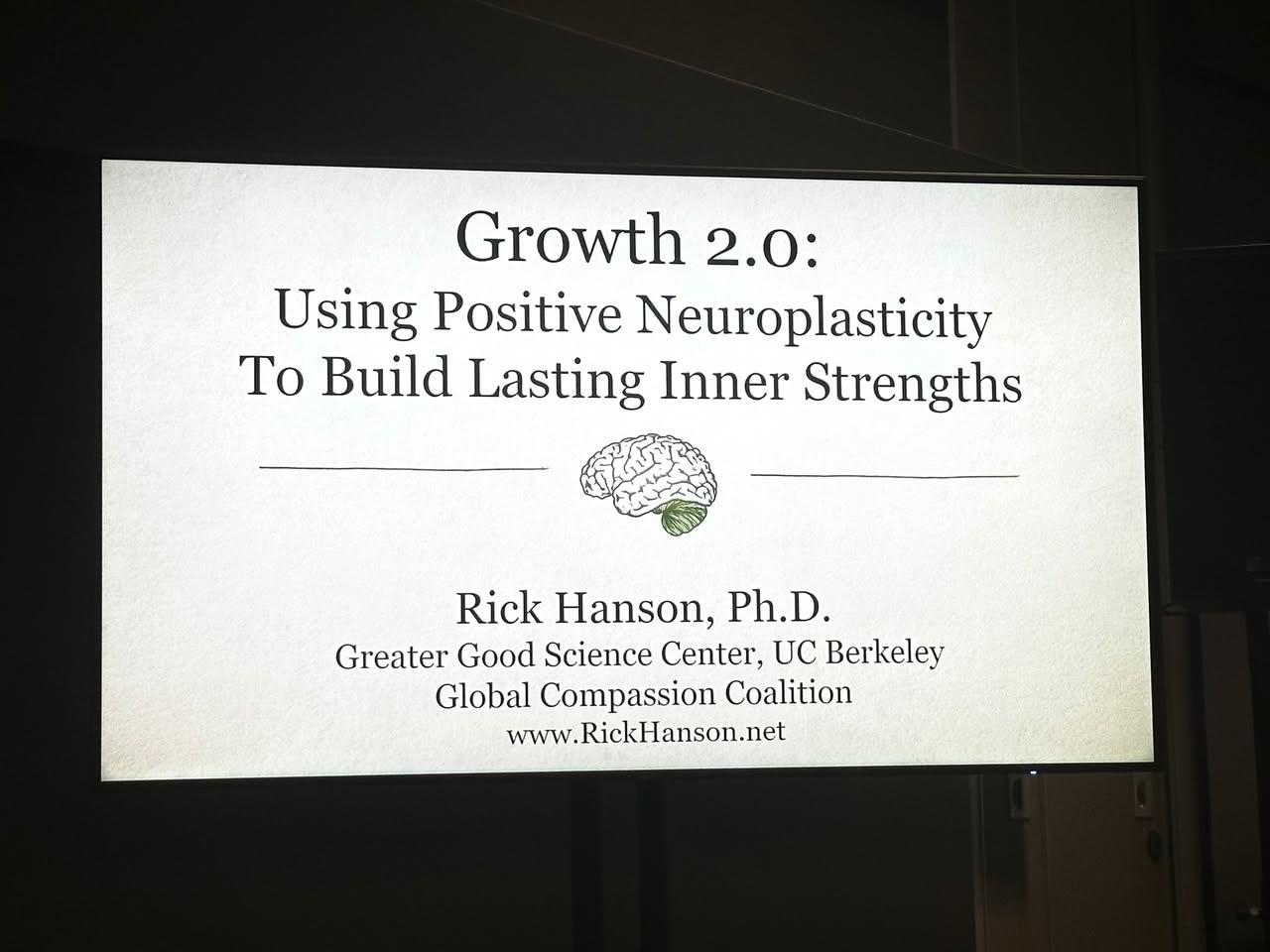
成長 2.0: ポジティブな神経可塑性を利用して永続的な内面の強さを構築する (#291)
リック・ハンソン 1
ーーー
ニューロサイエンスと幸せの第一人者でもあるリックハンソン先生。
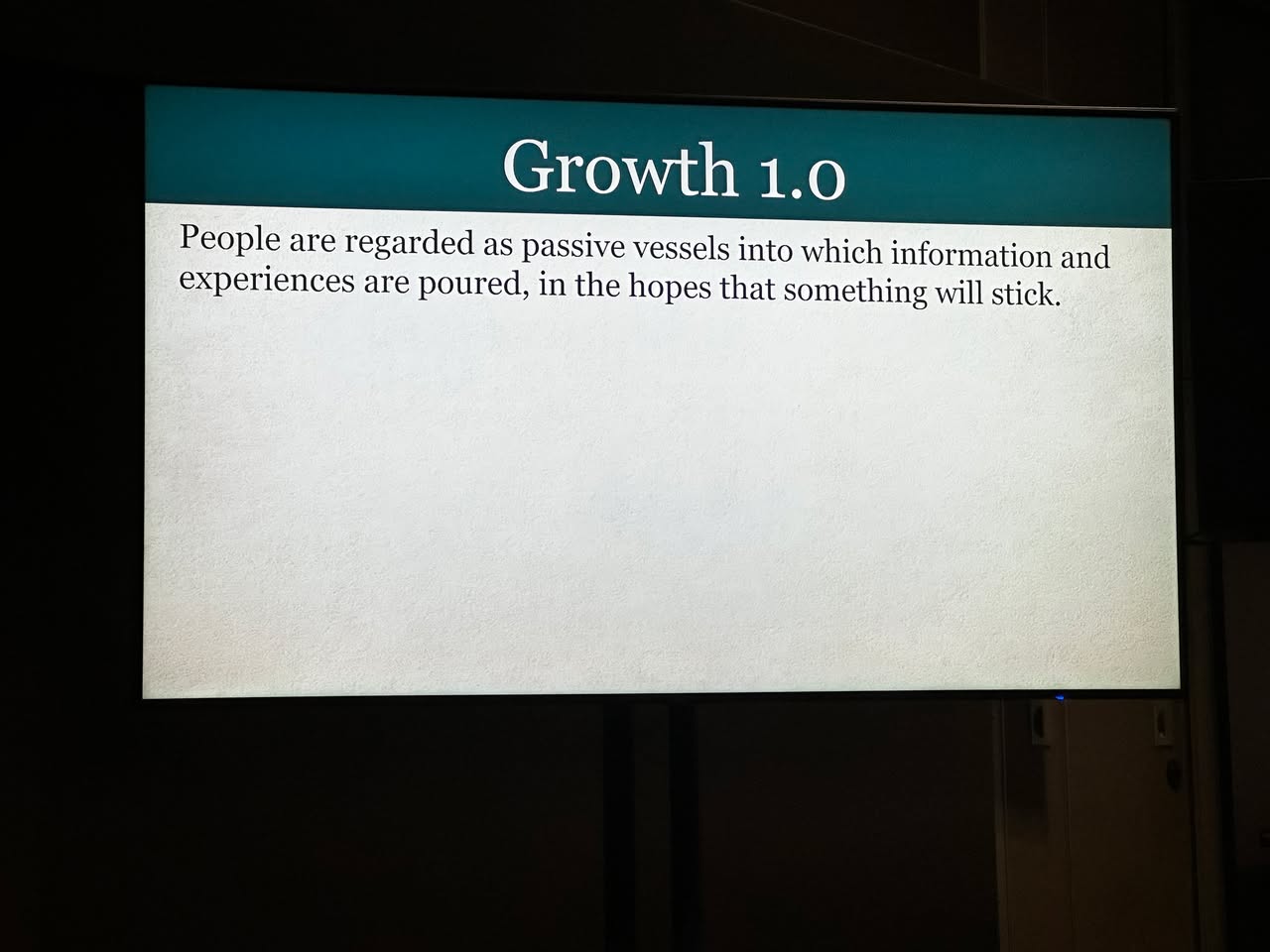
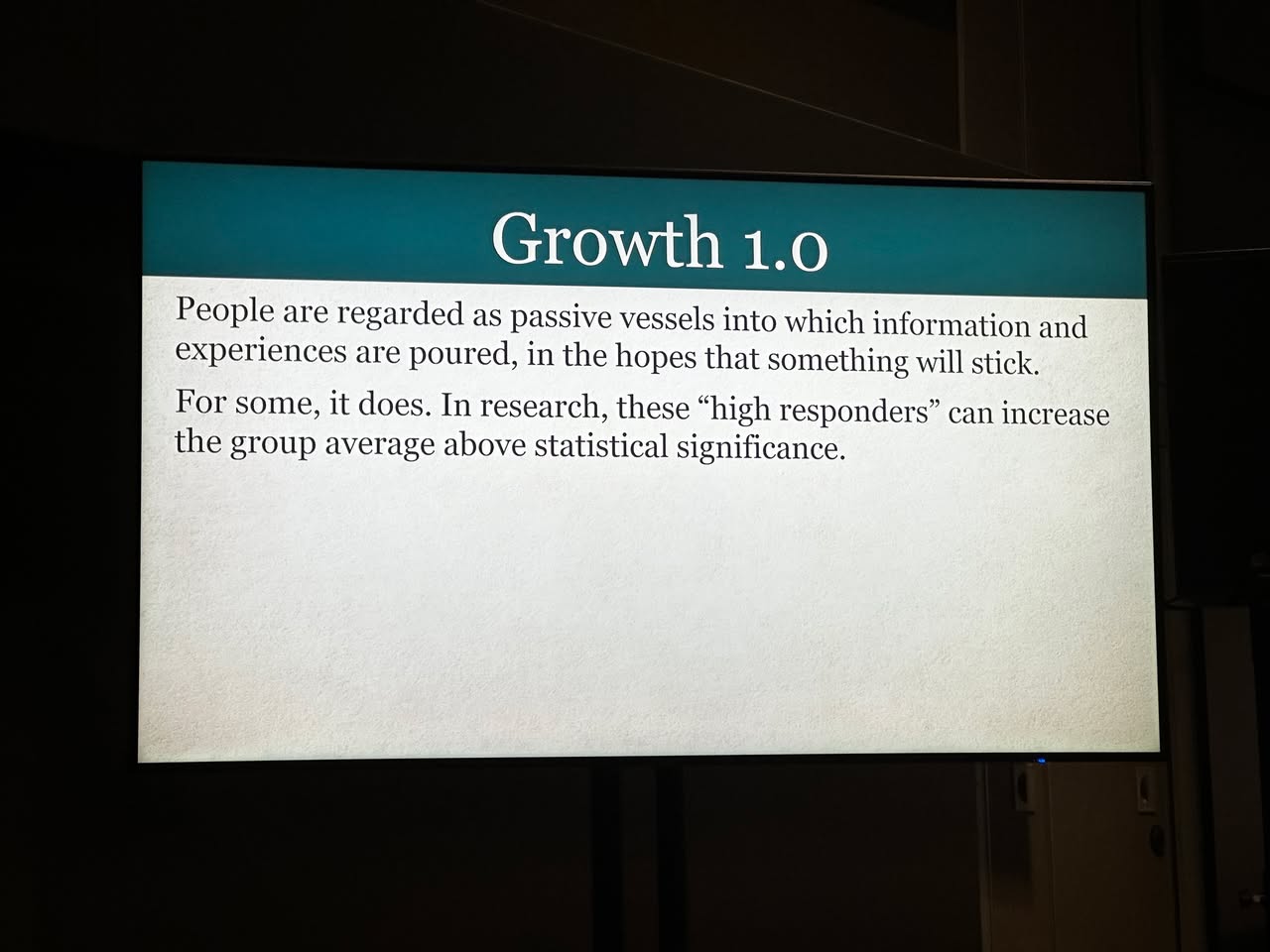
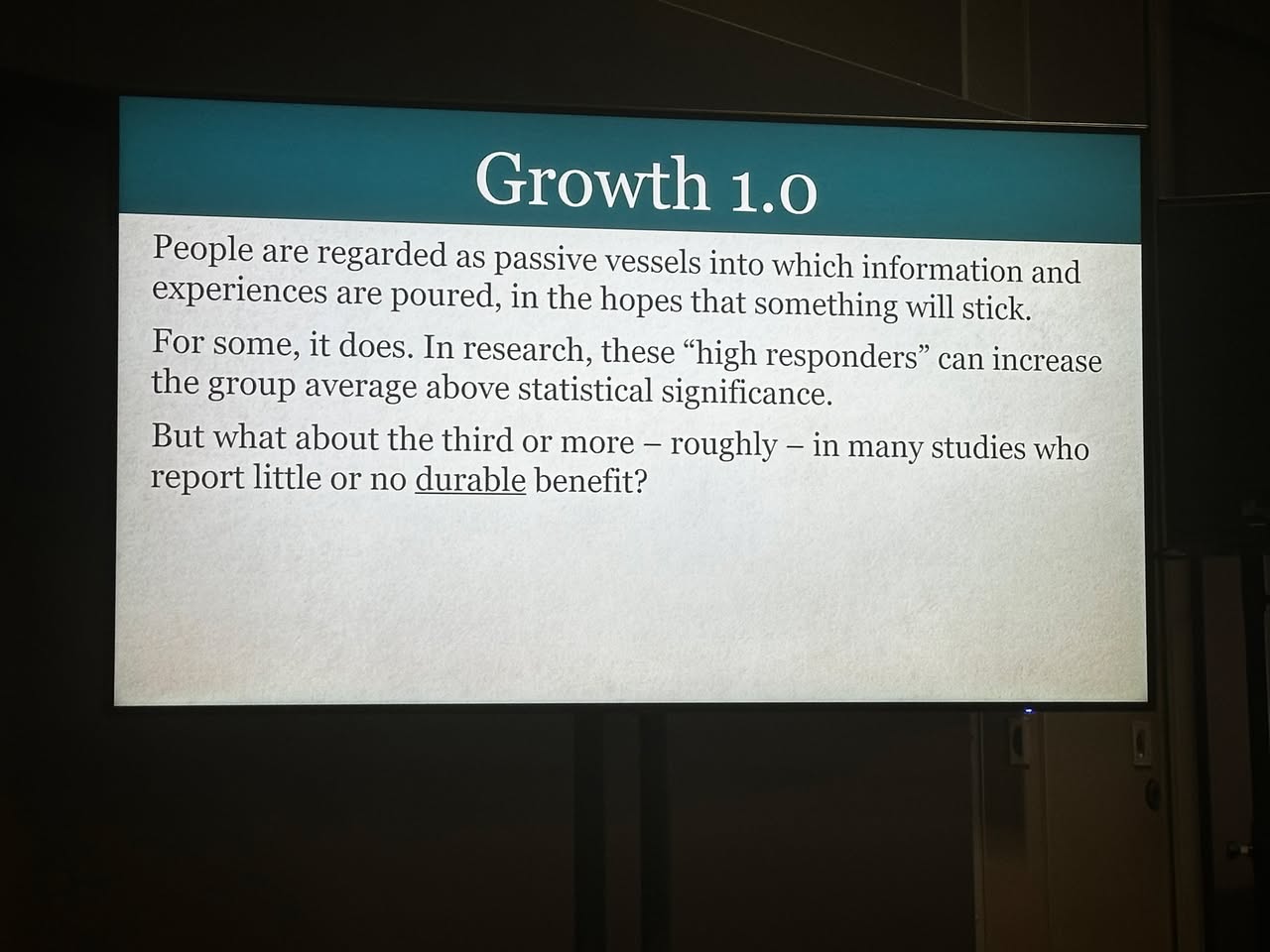
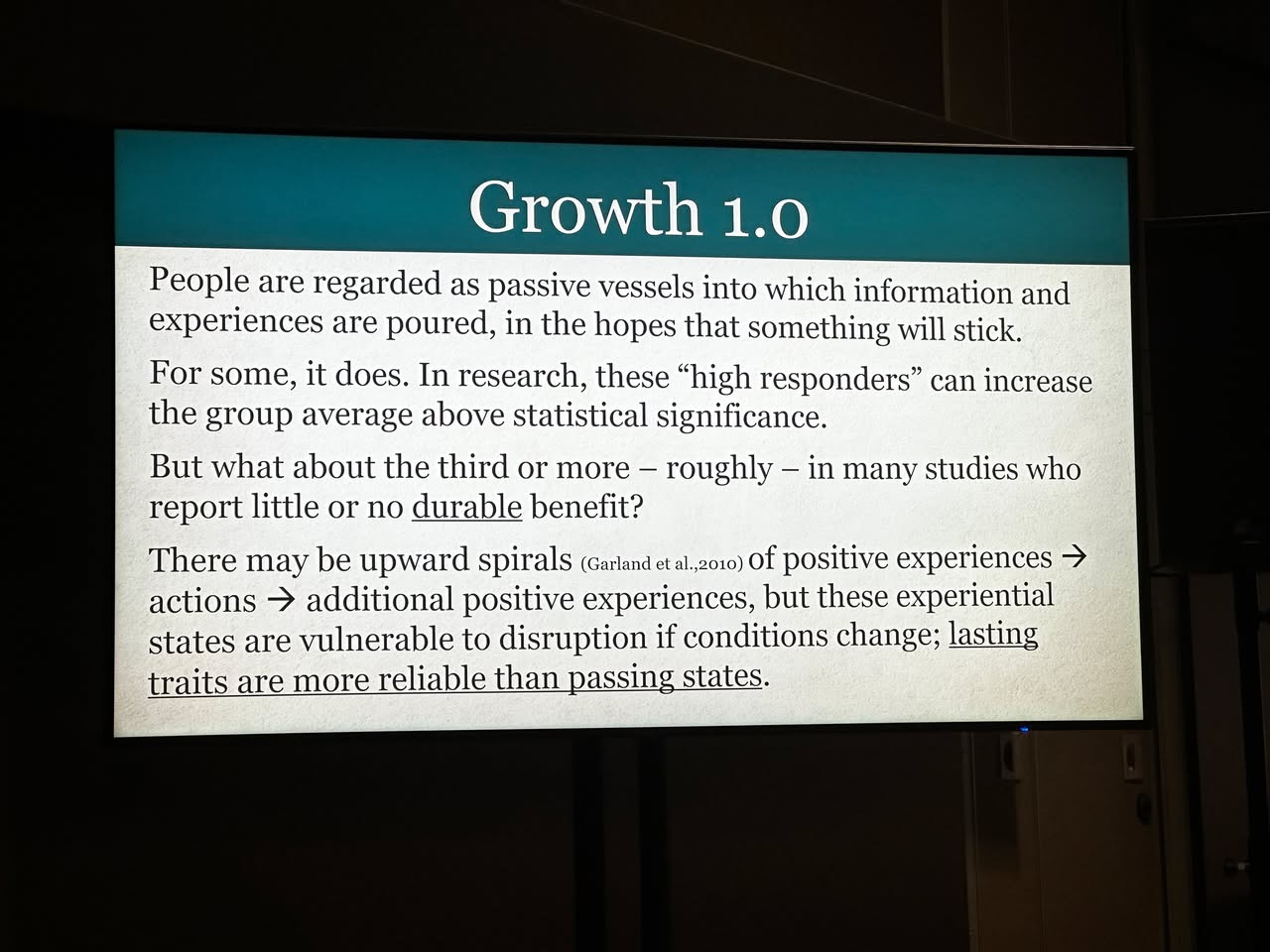
成長1.0
援助の専門家は、何かが定着することを期待して情報や経験が注ぎ込まれる受動的な器のように人々を扱うモデル
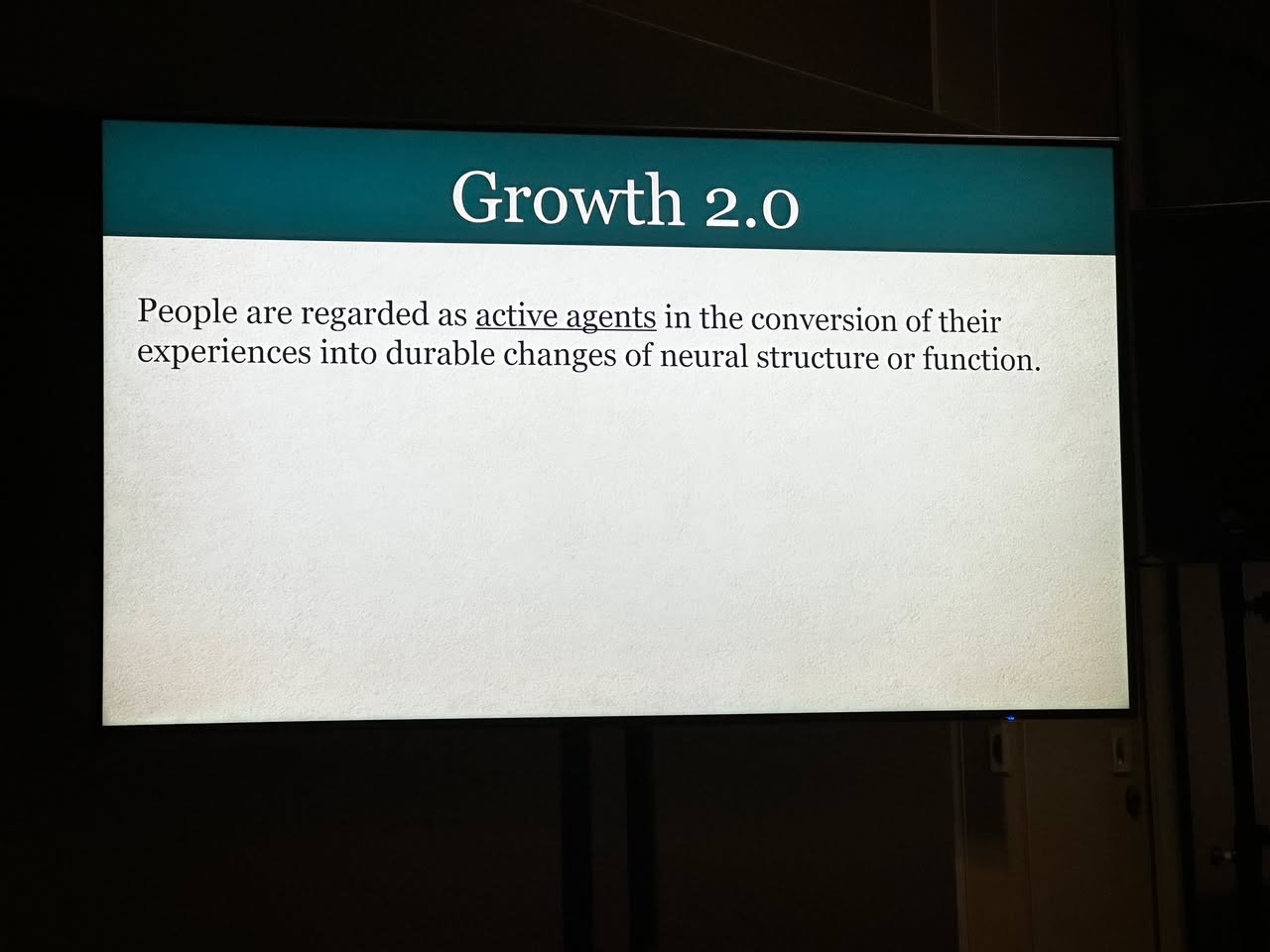
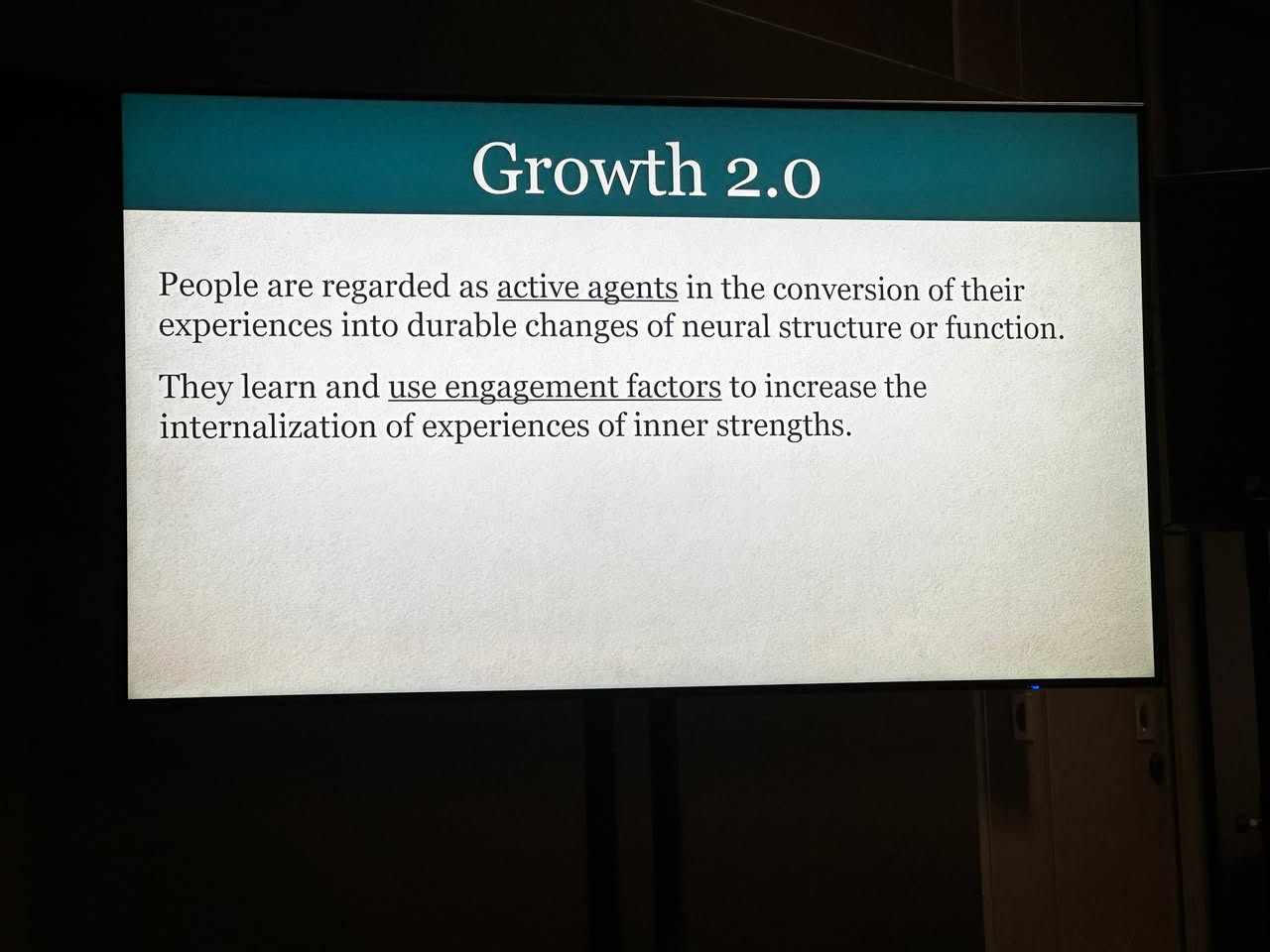
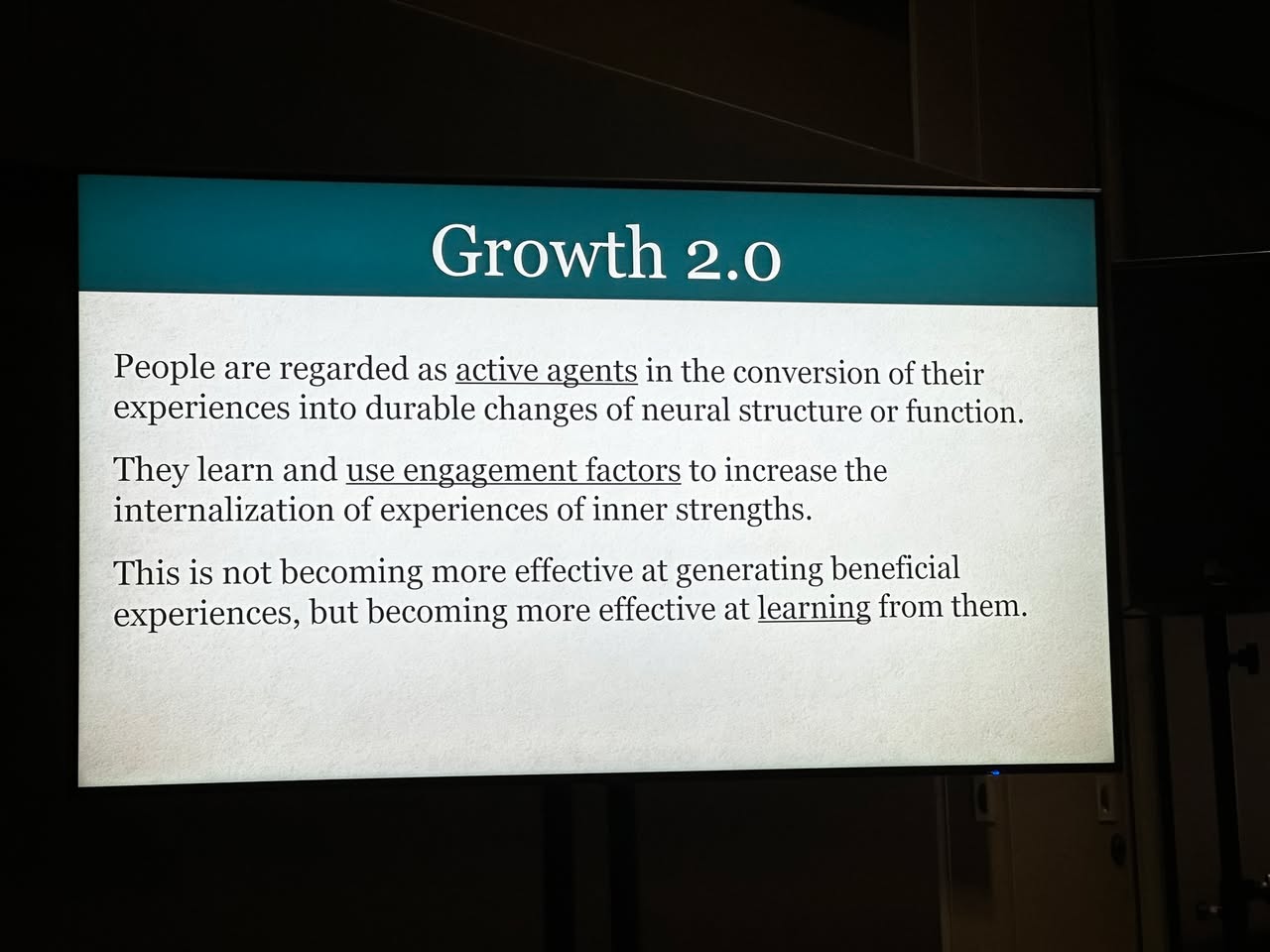
成長2.0
人々が内なる強さの経験の神経可塑性「内面化」において積極的な主体となるモデル
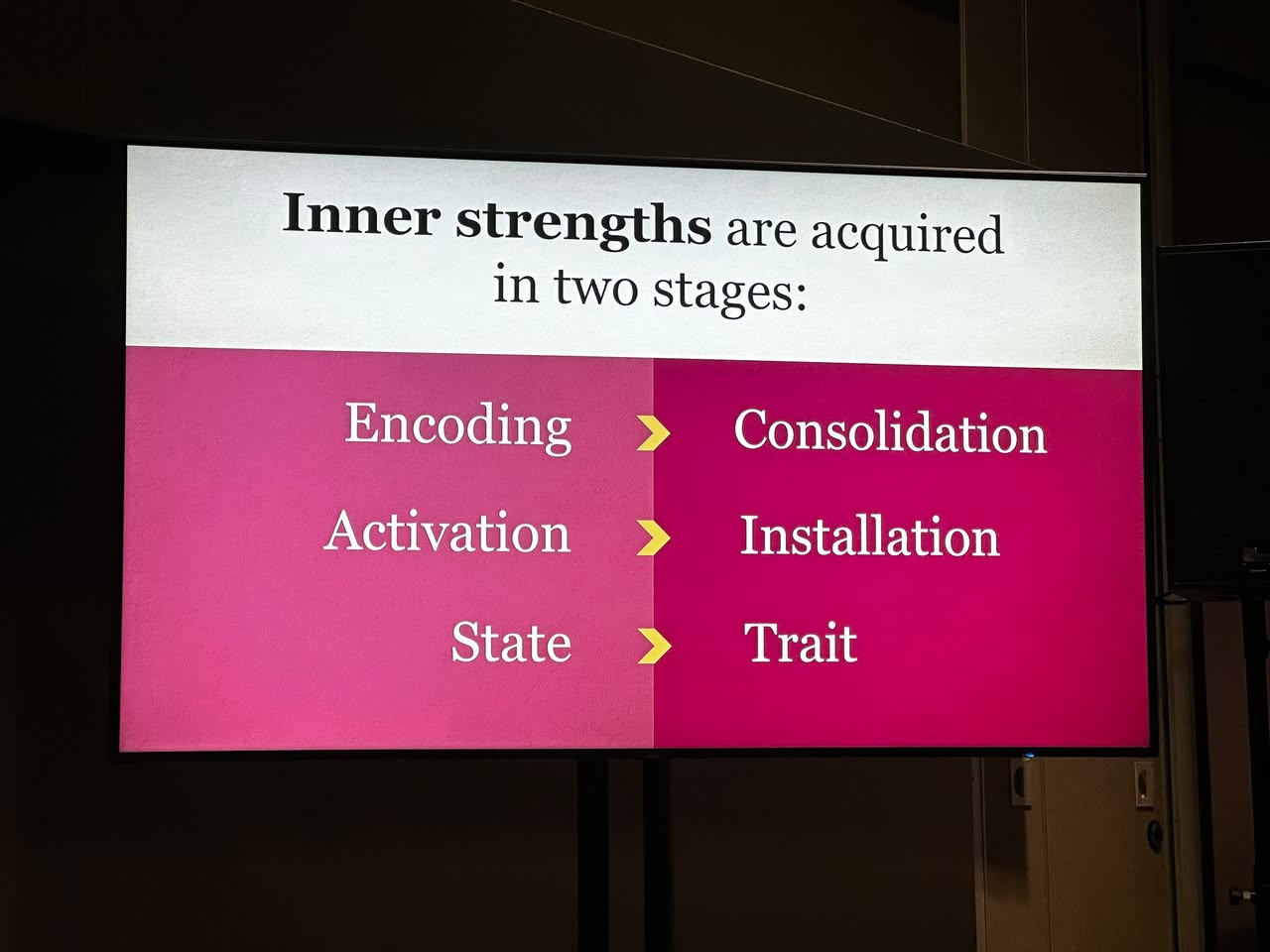
脳は2段階プロセス。神経可塑性。
経験→脳の接続の変化。
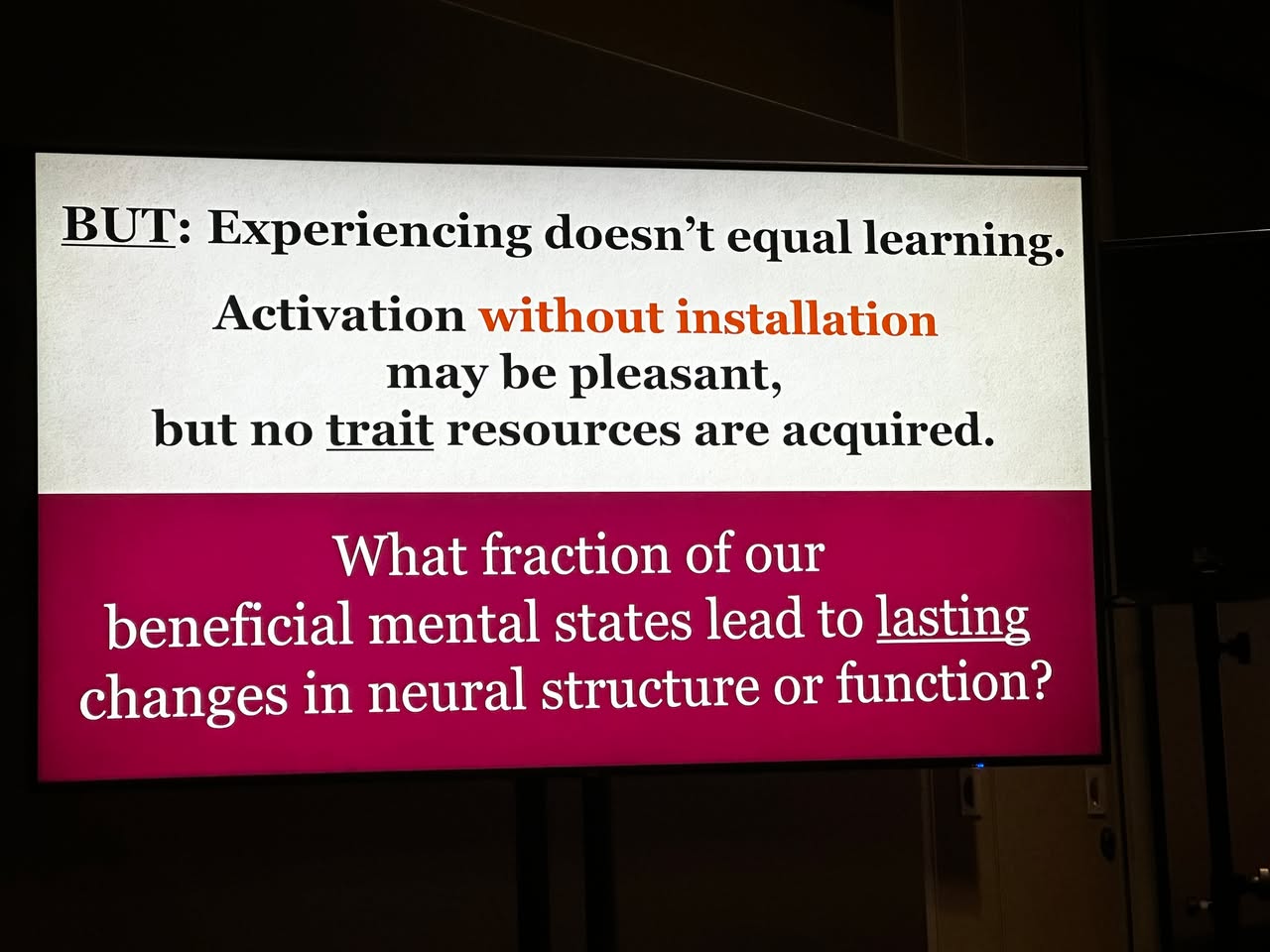
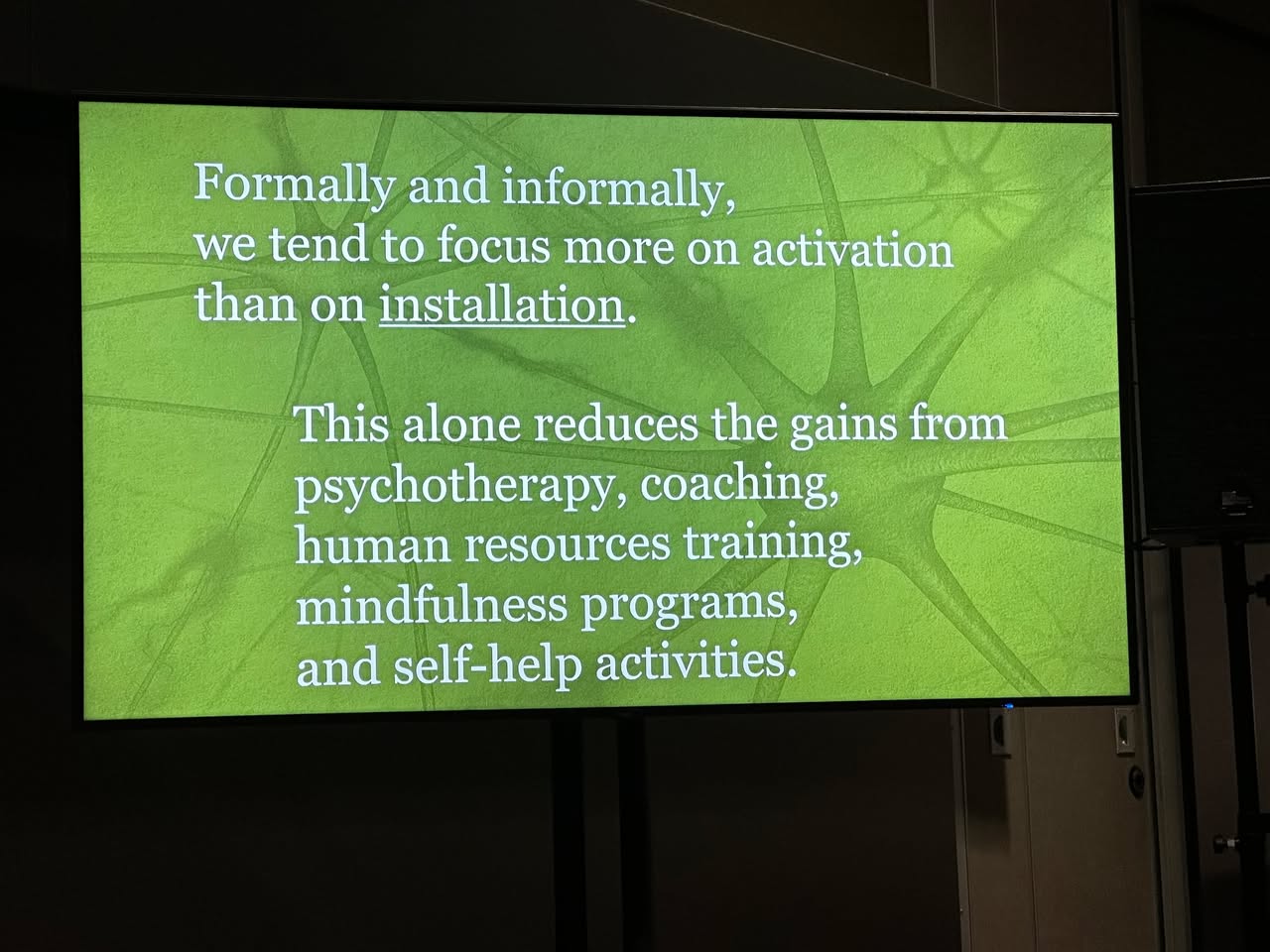
アクティベーションだけ(成長1.0)でなく、インストールしてからアクティベーション(成長2.0)。
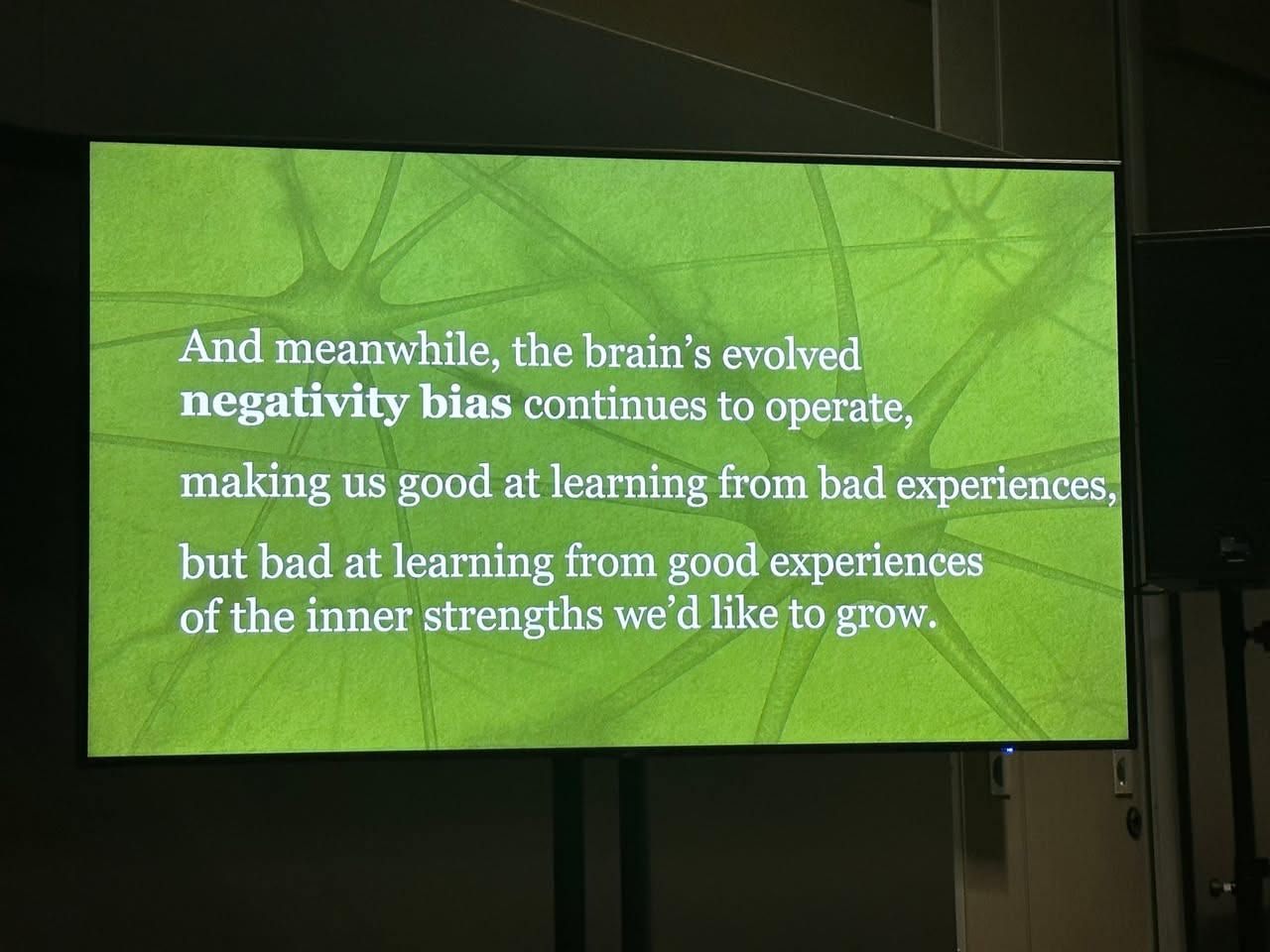
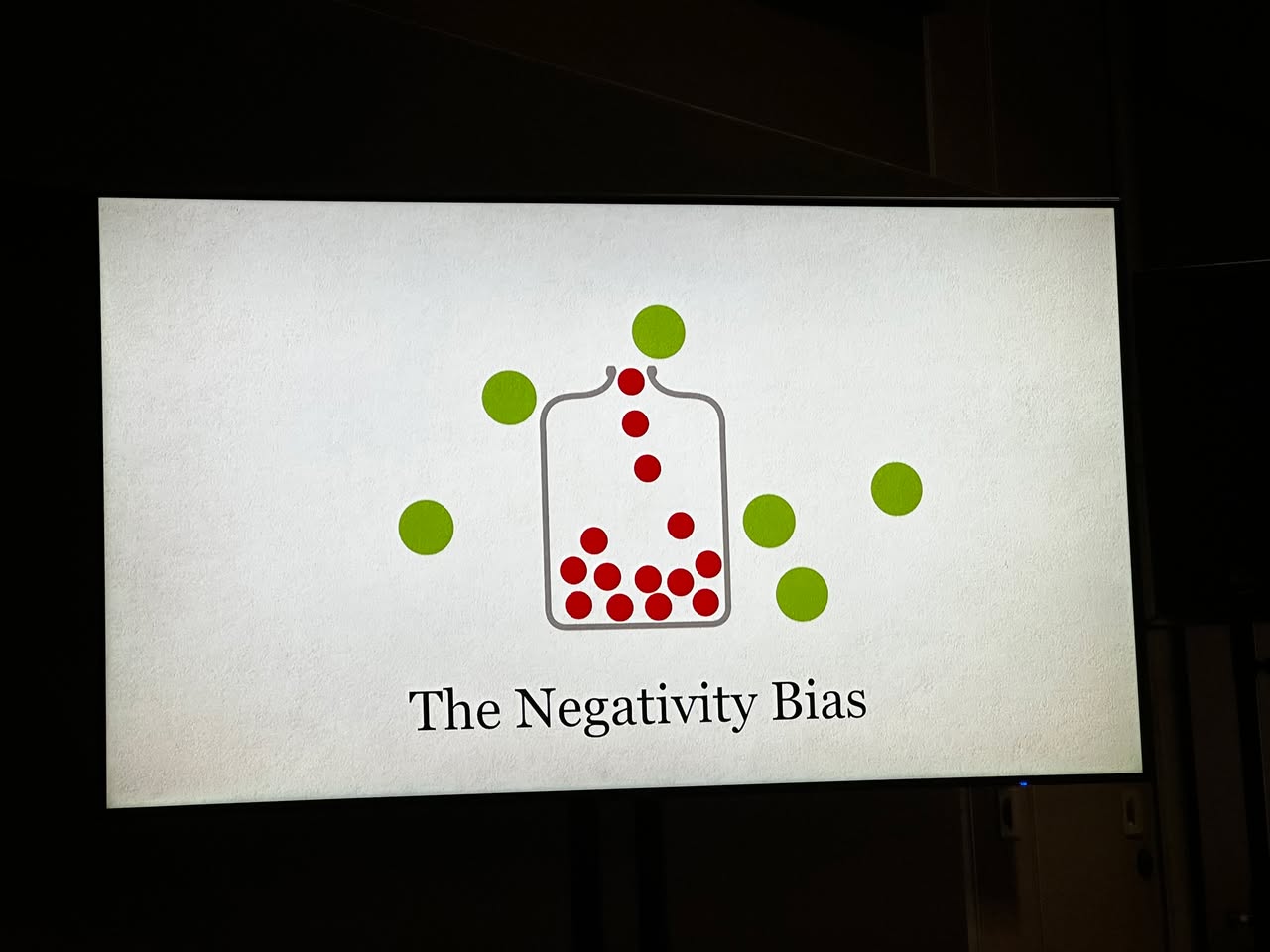
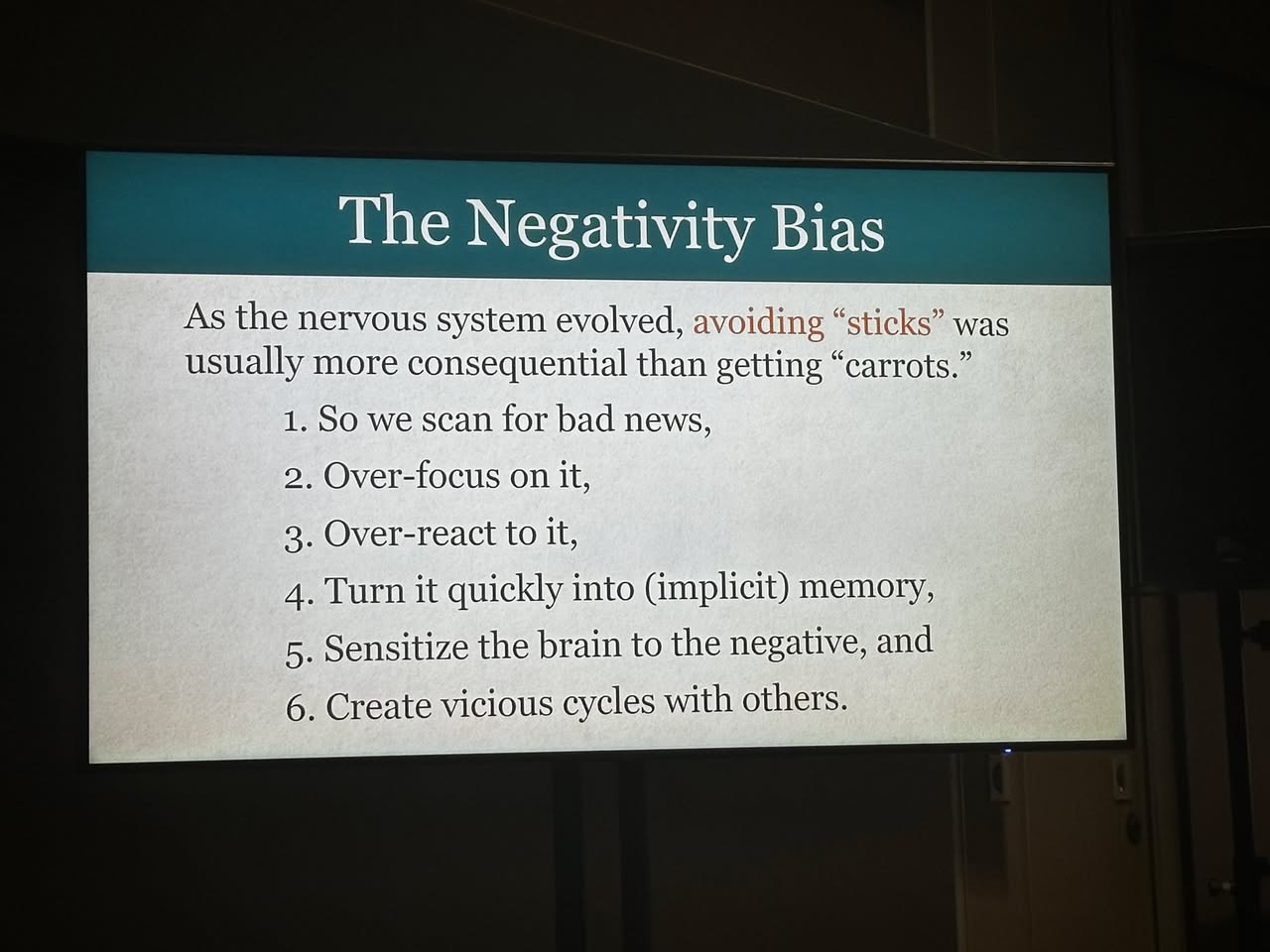
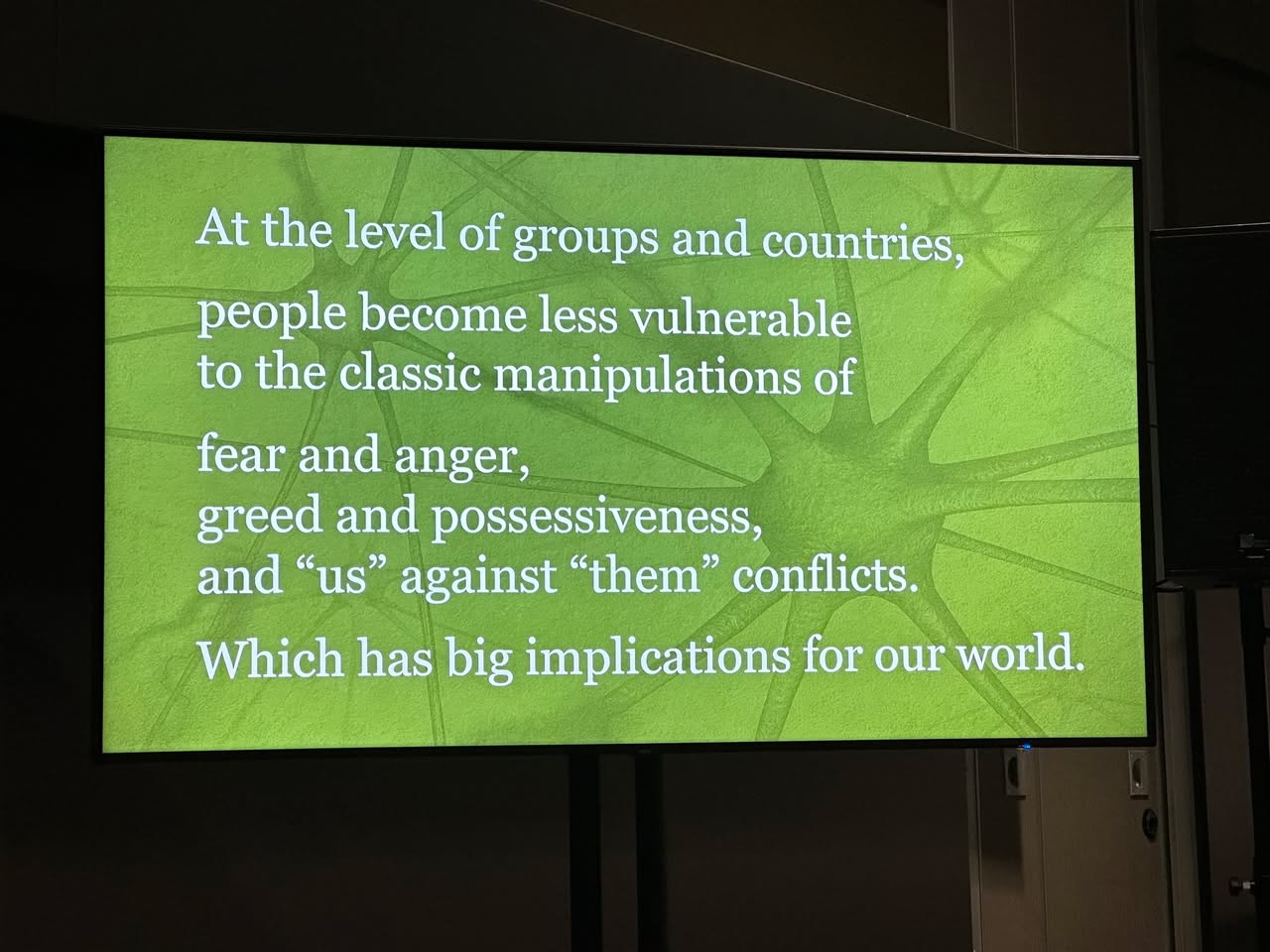
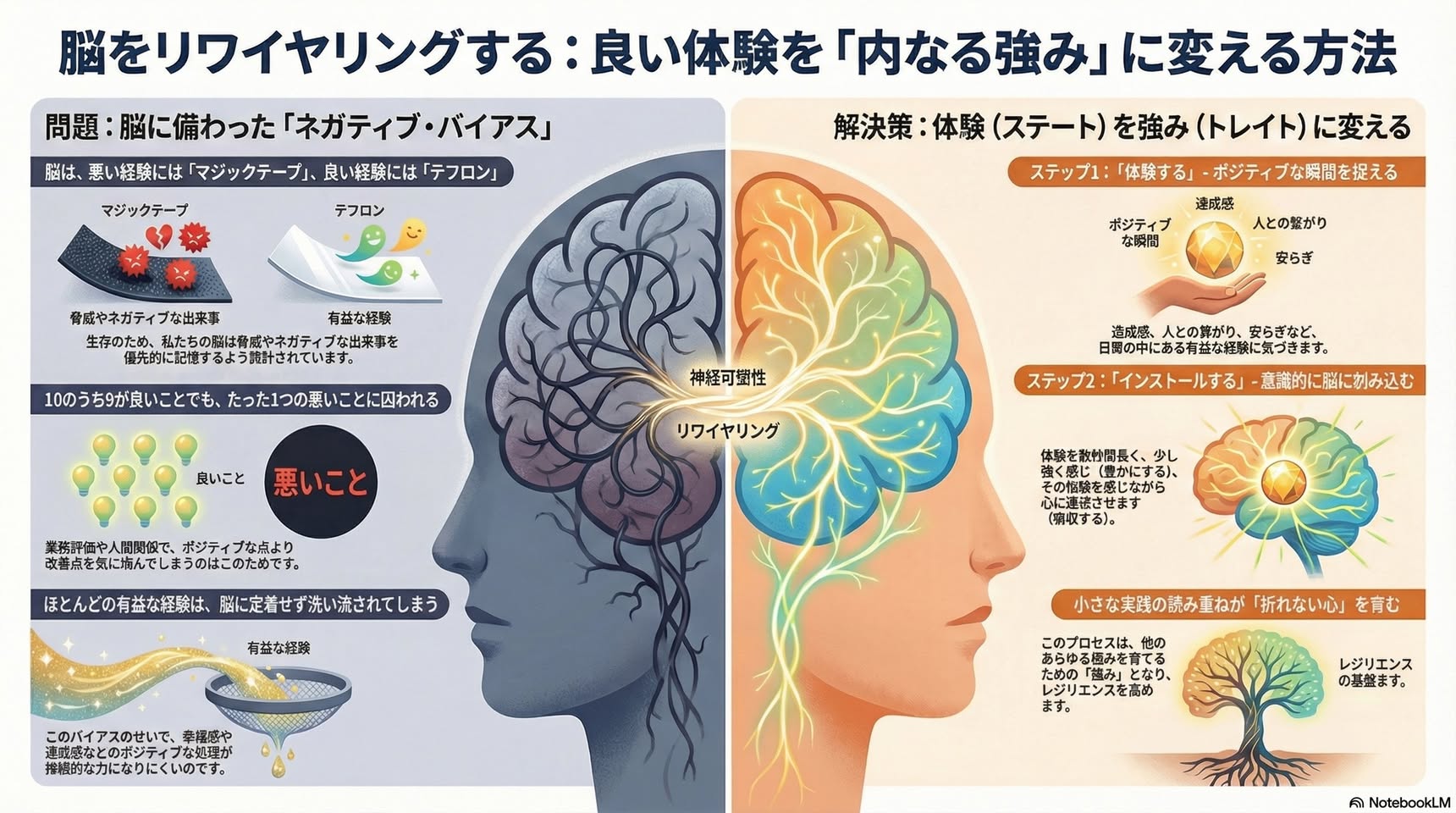
ネガティブバイアス
悪い経験からの方が学びやすい
良い経験から学ぶのは苦手。
※ロイ・ボールマイスターとその仲間の論文
ストレスホルモンが扁桃体を過敏にして、学ぶことができる。
でも良い経験からだと、学びにくい。
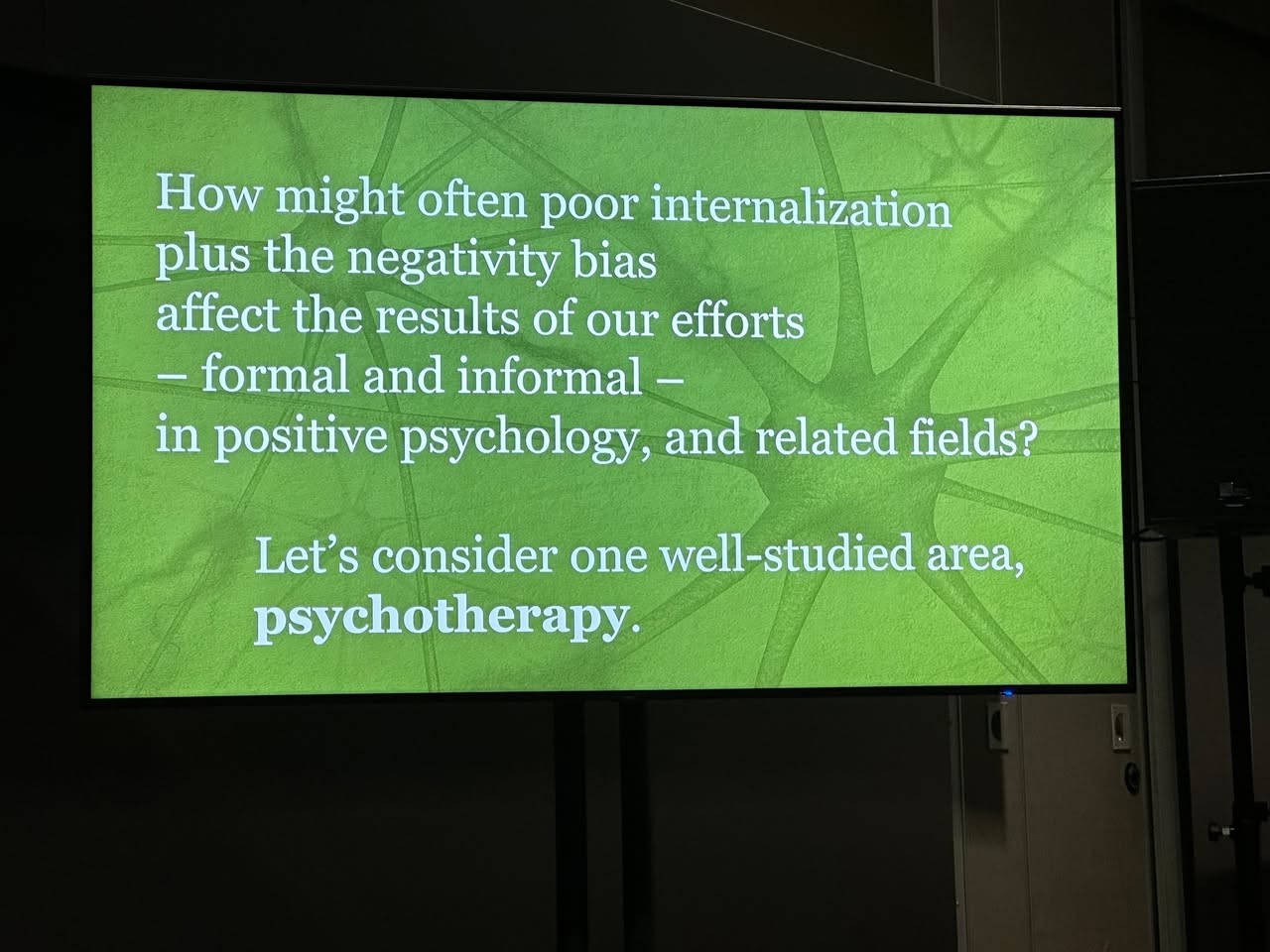
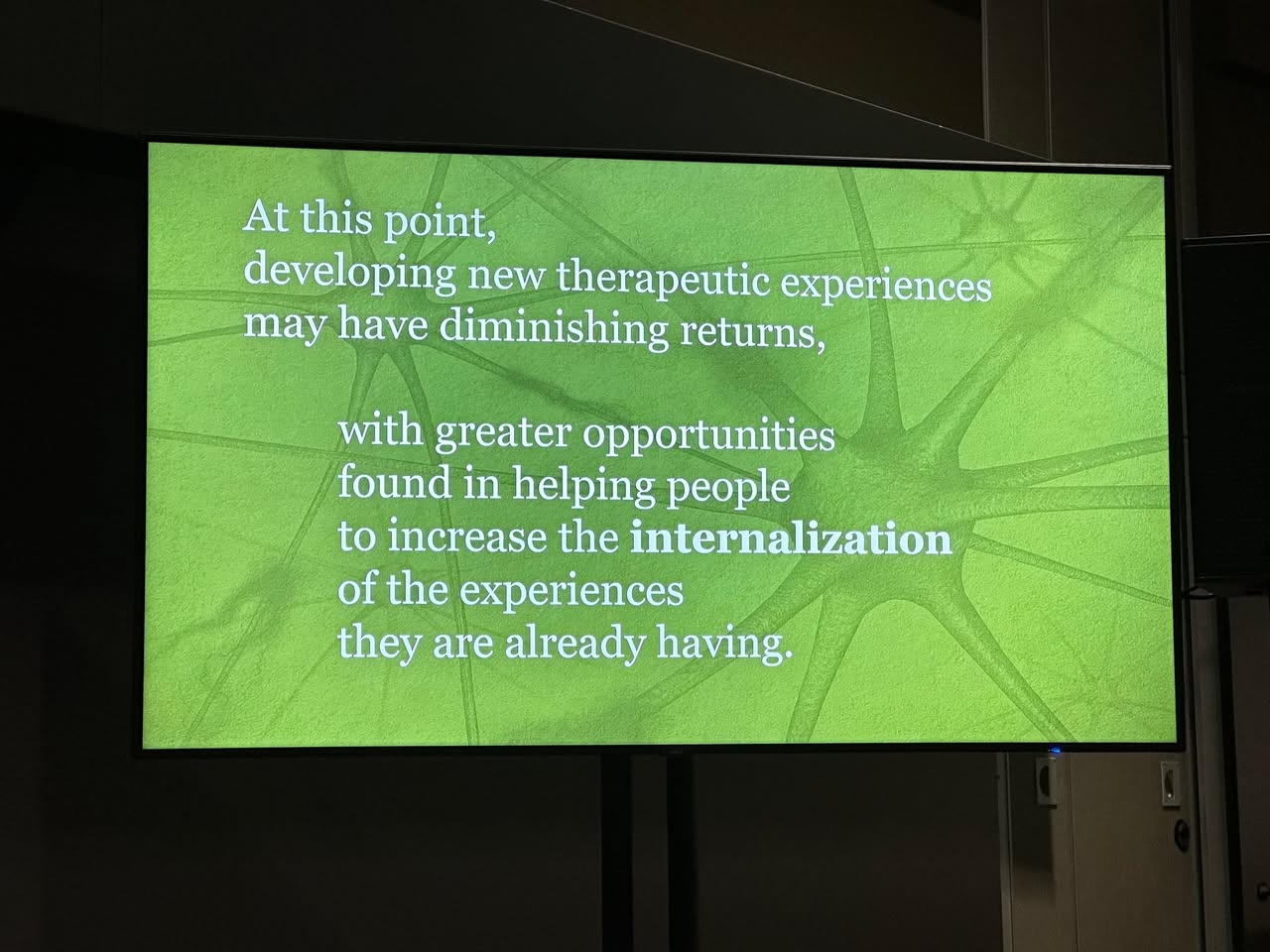
既に経験していることの内面化。が大切。(成長2.0)
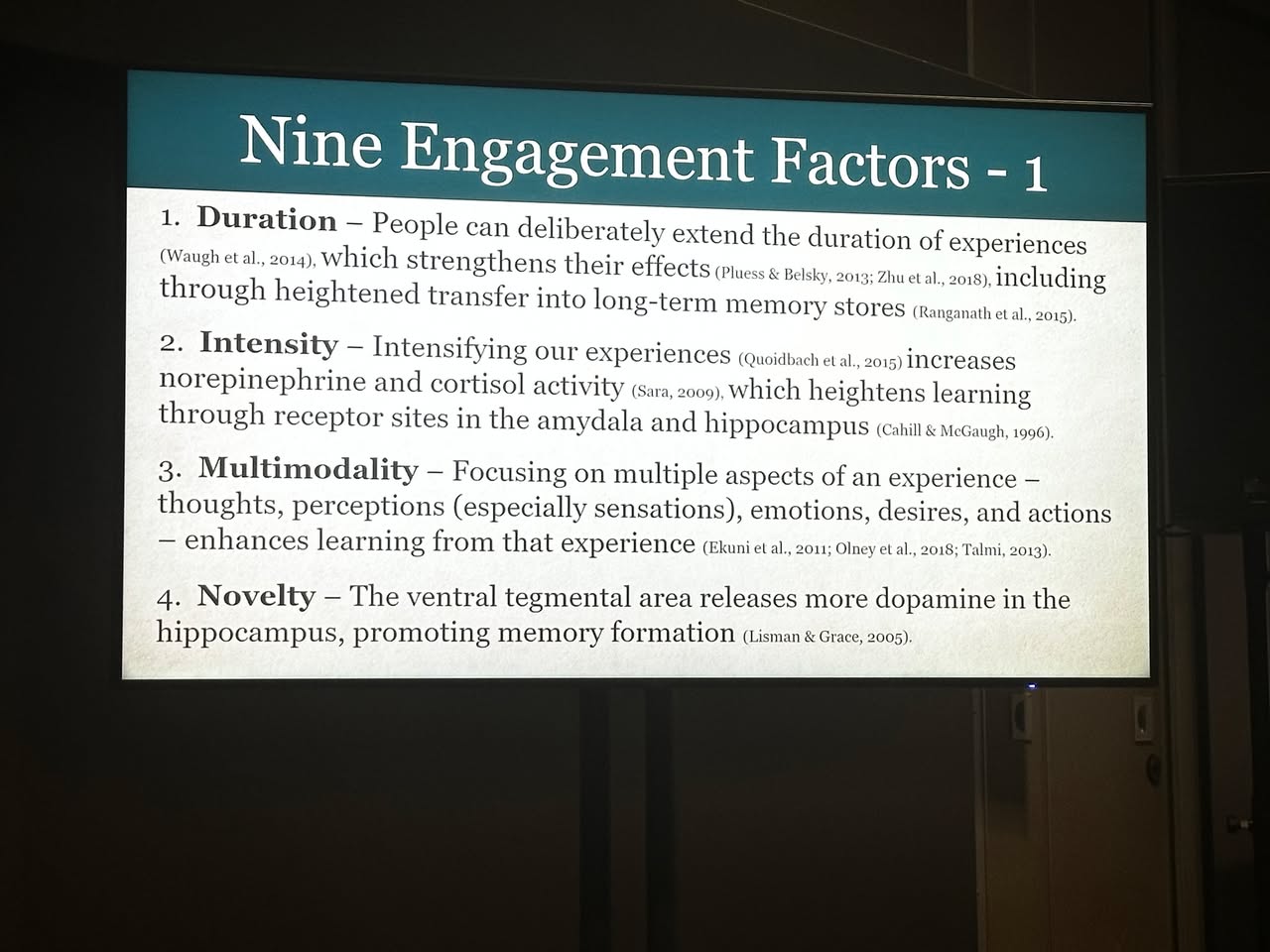
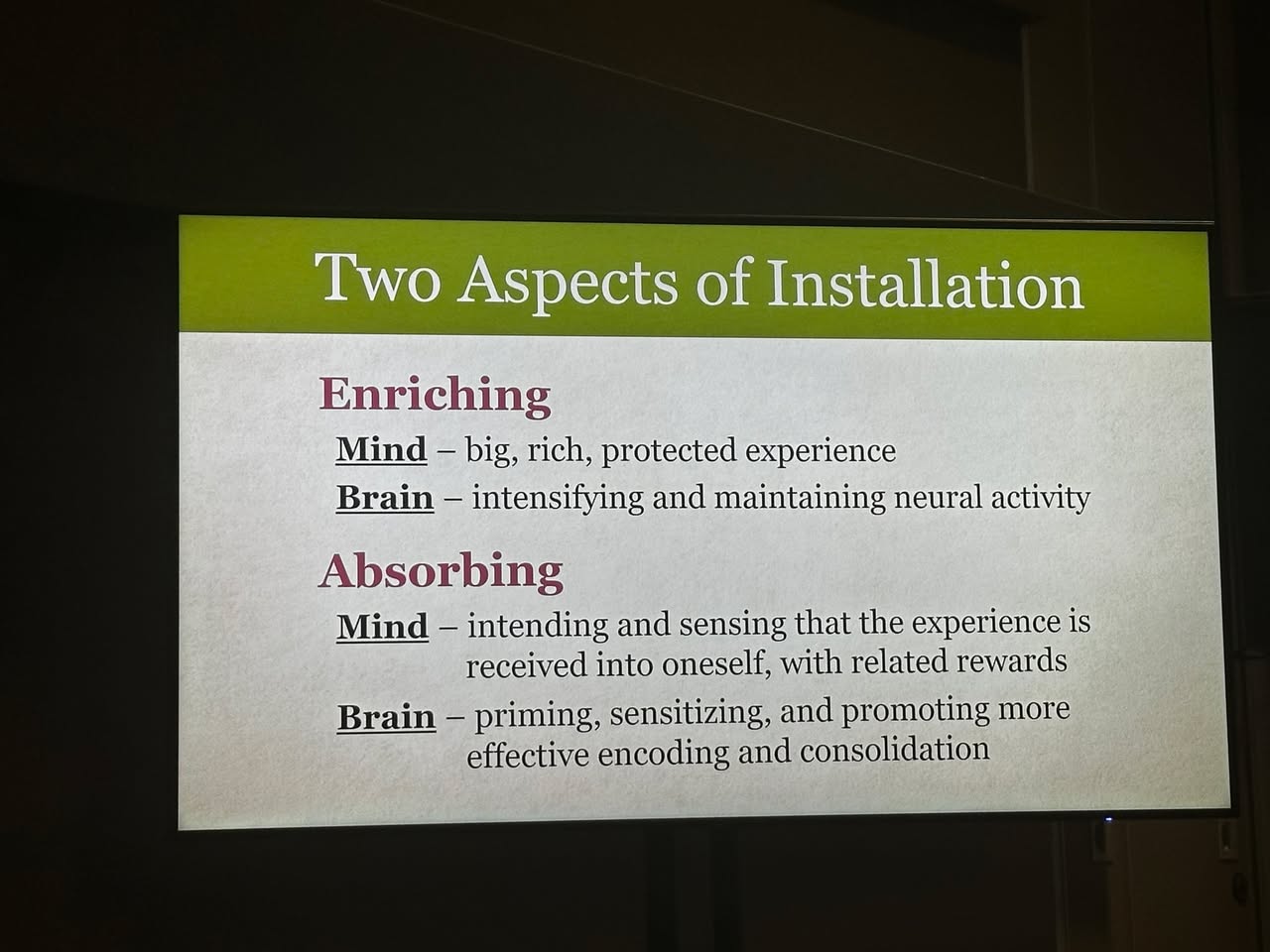
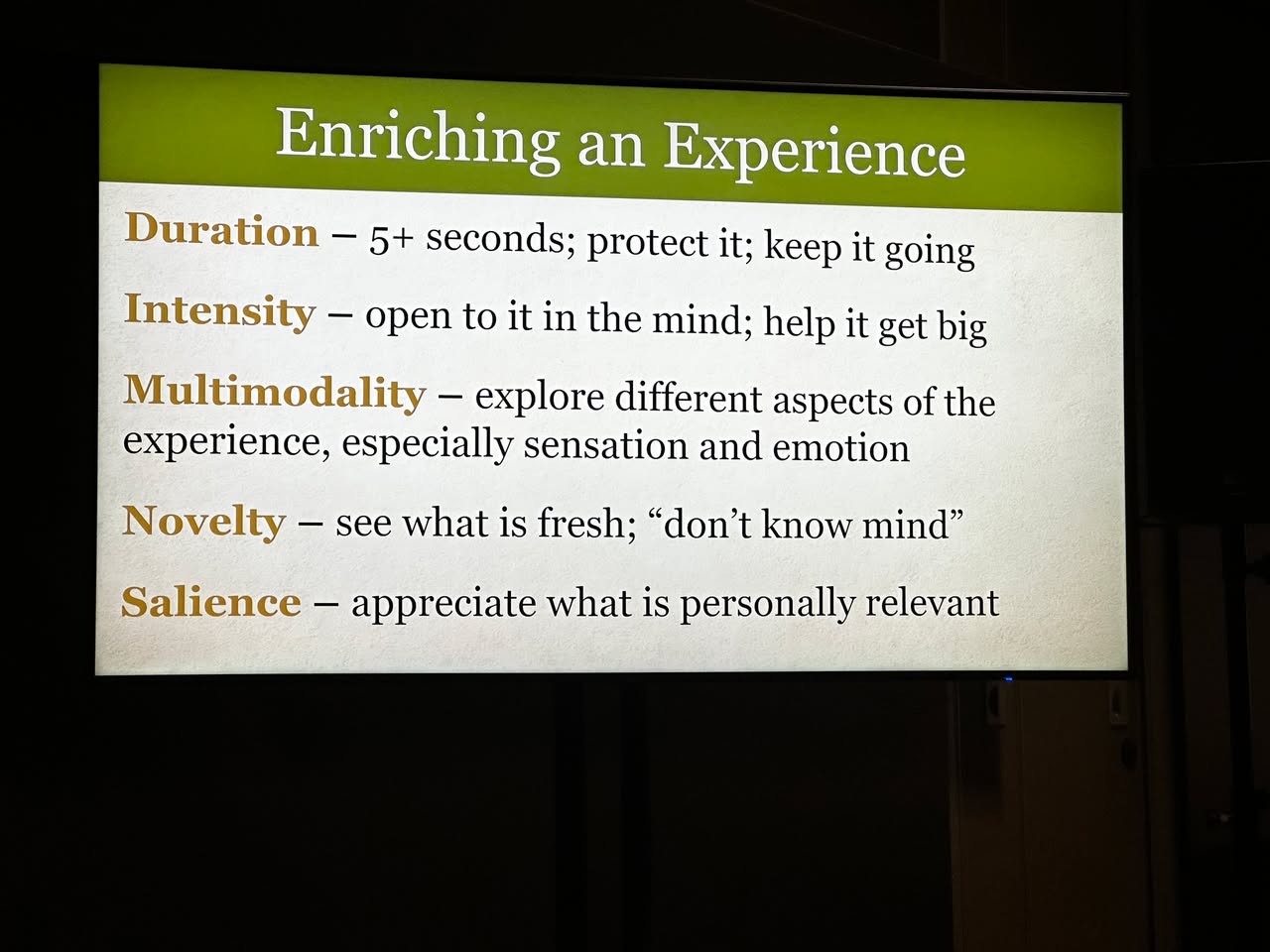
そのための、9つの方法。
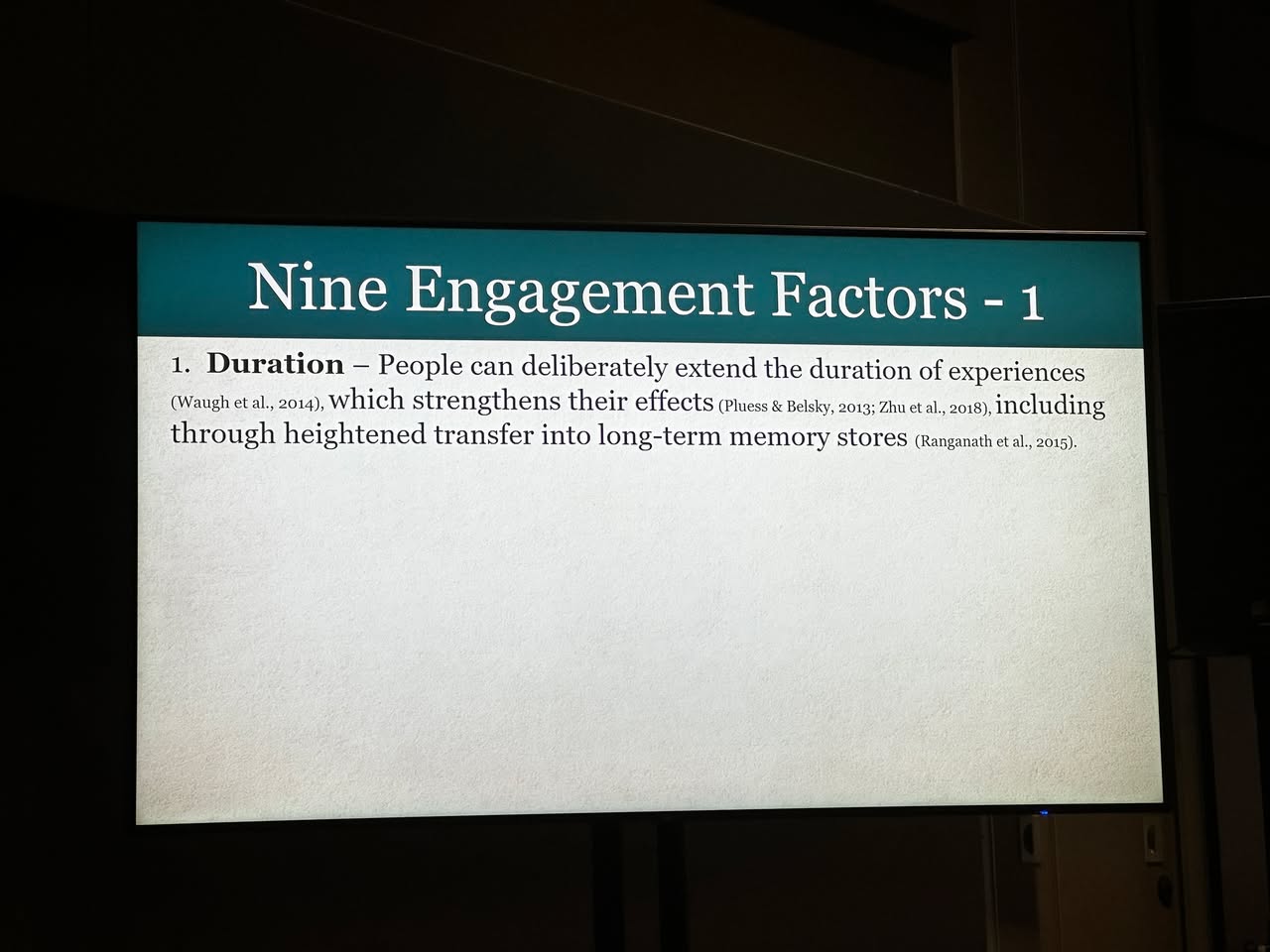
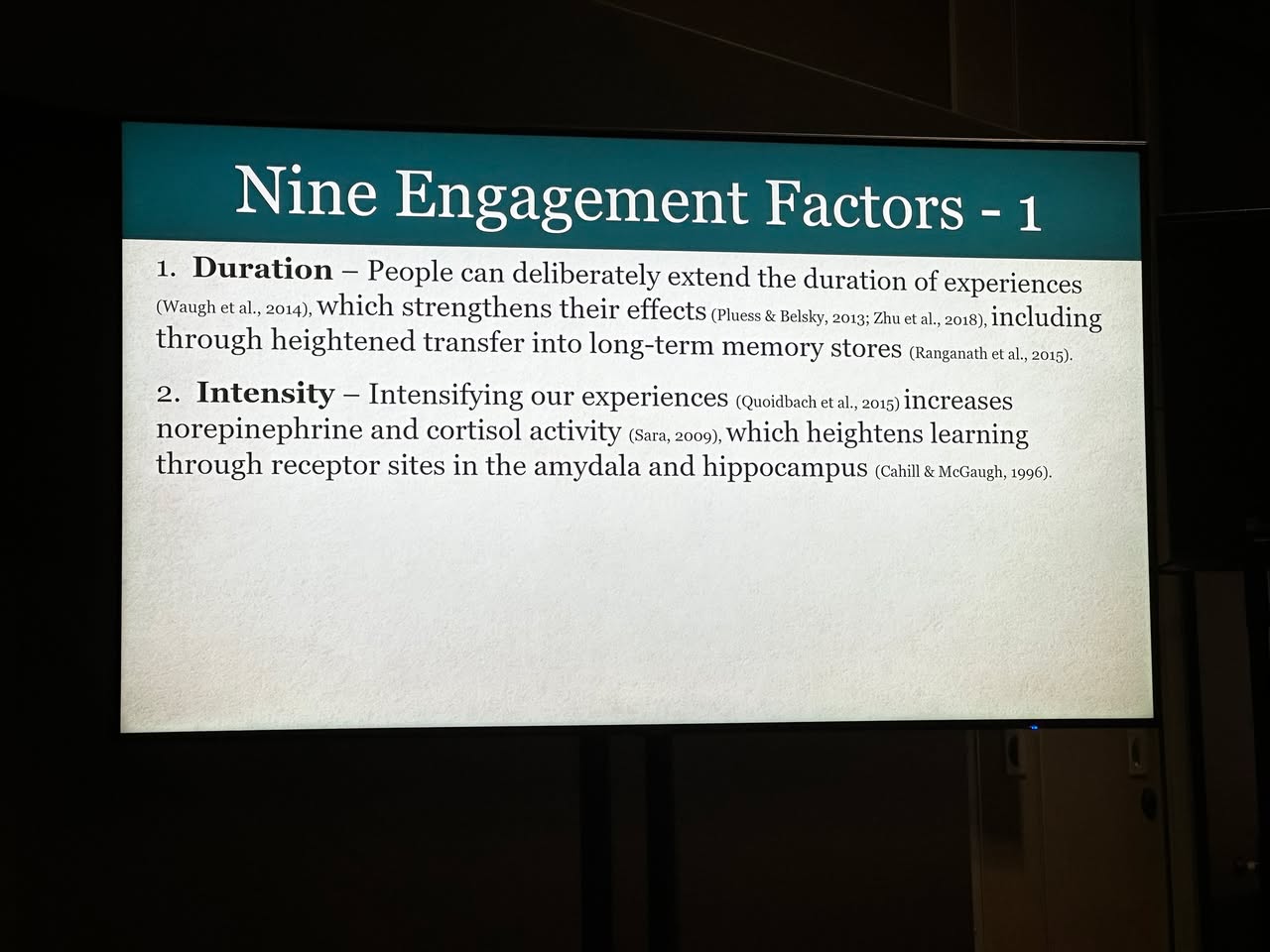
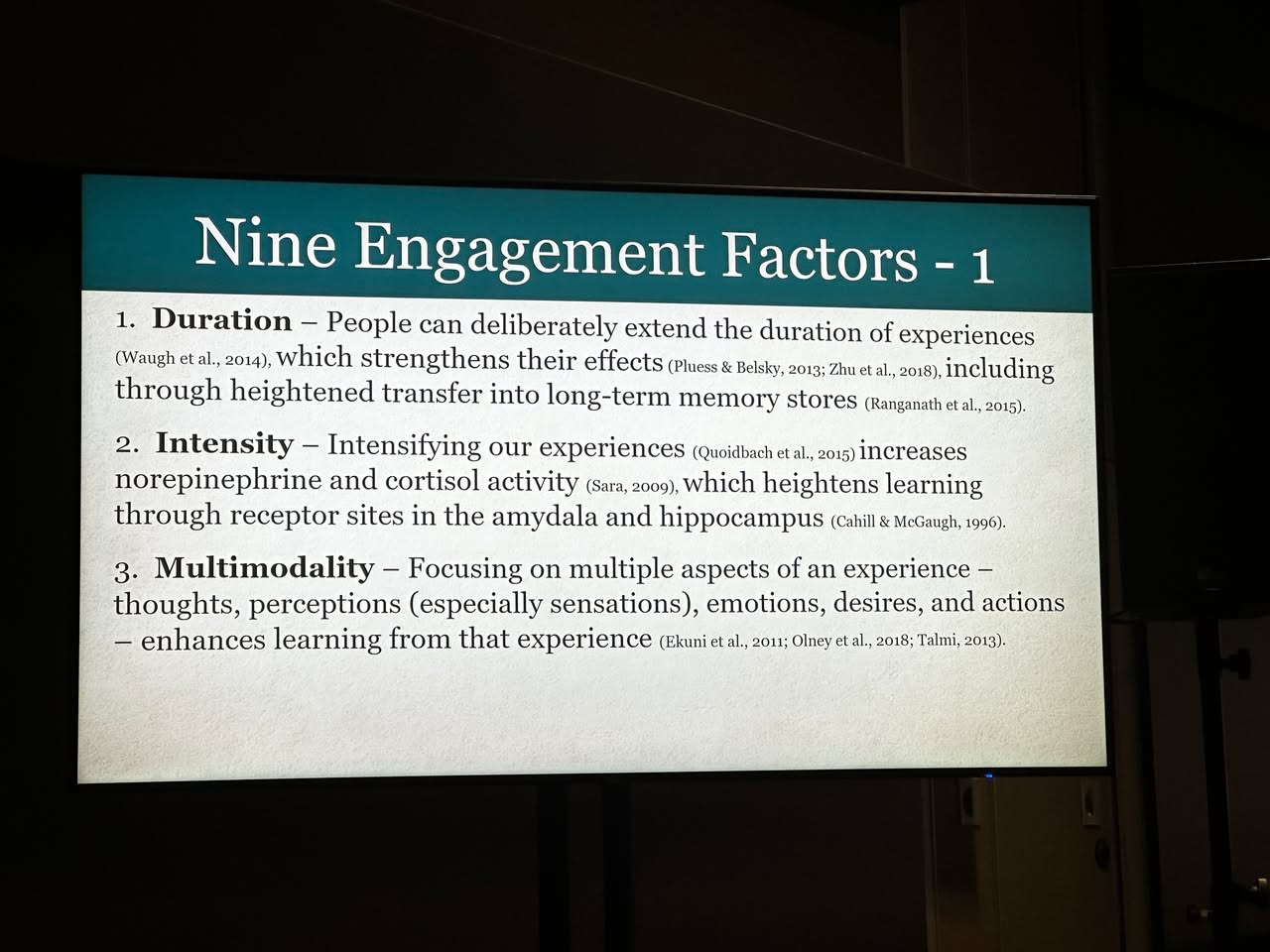
①Duration
②Intensity
③Multimodality
④Novelty
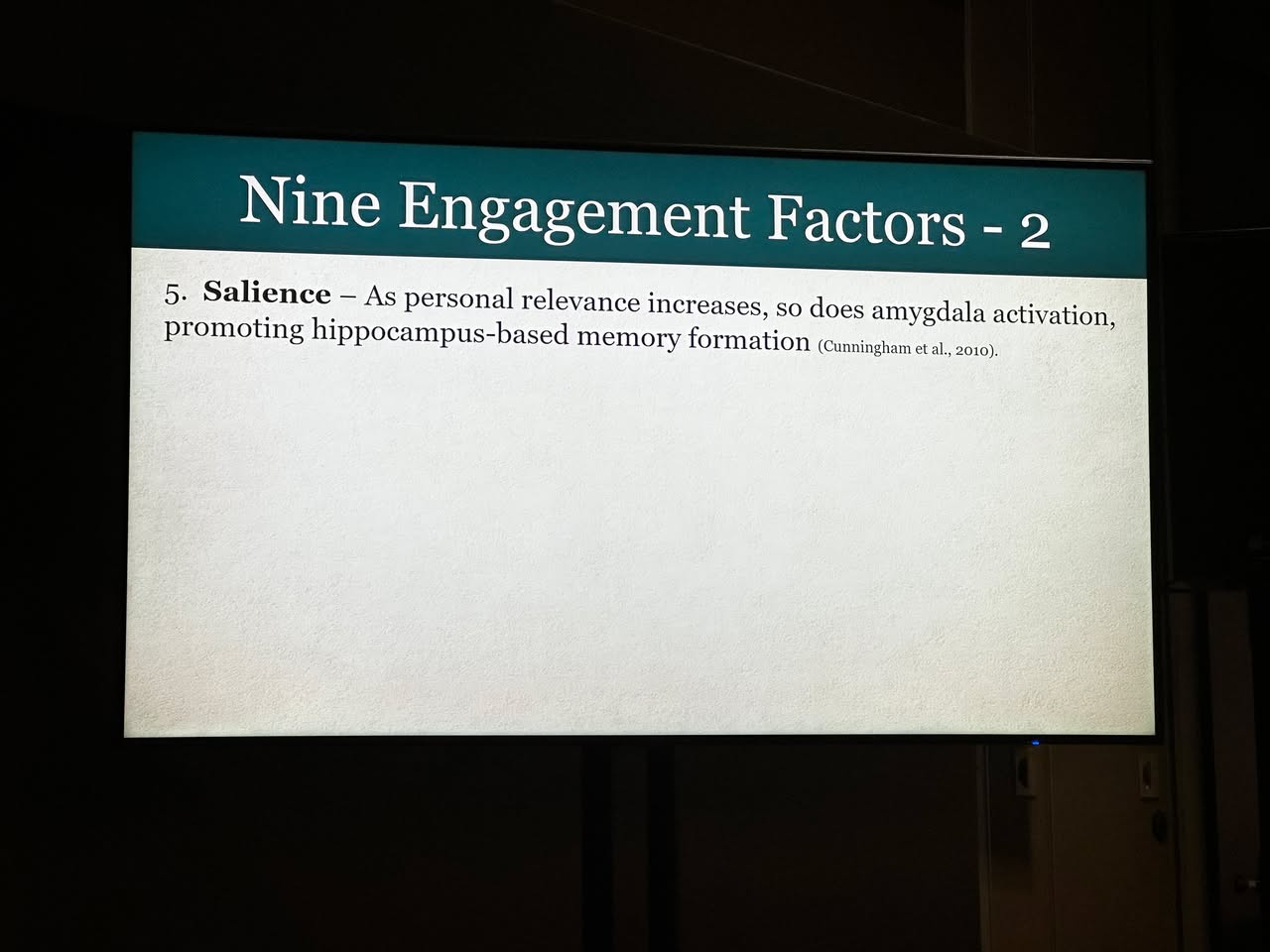
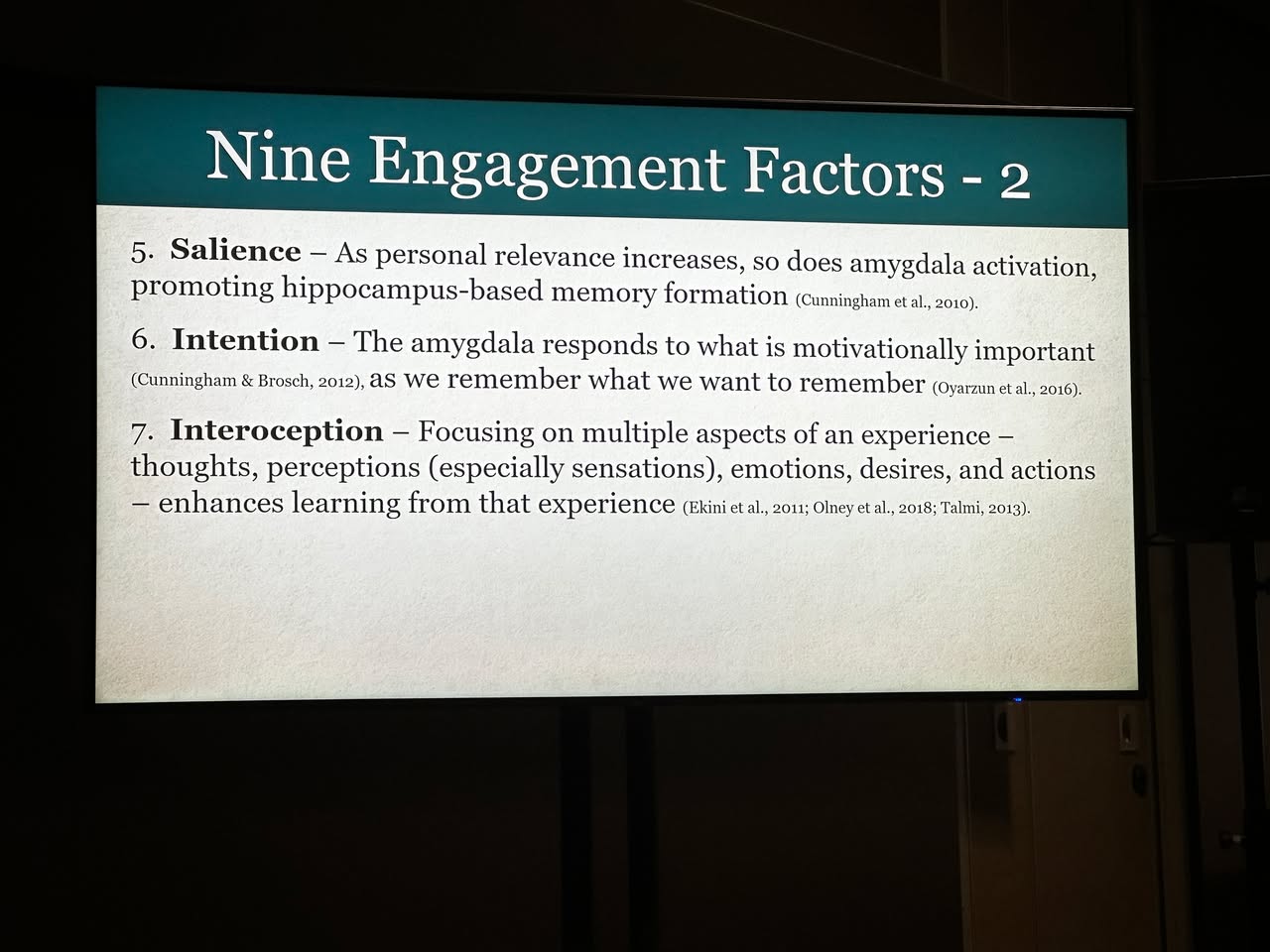
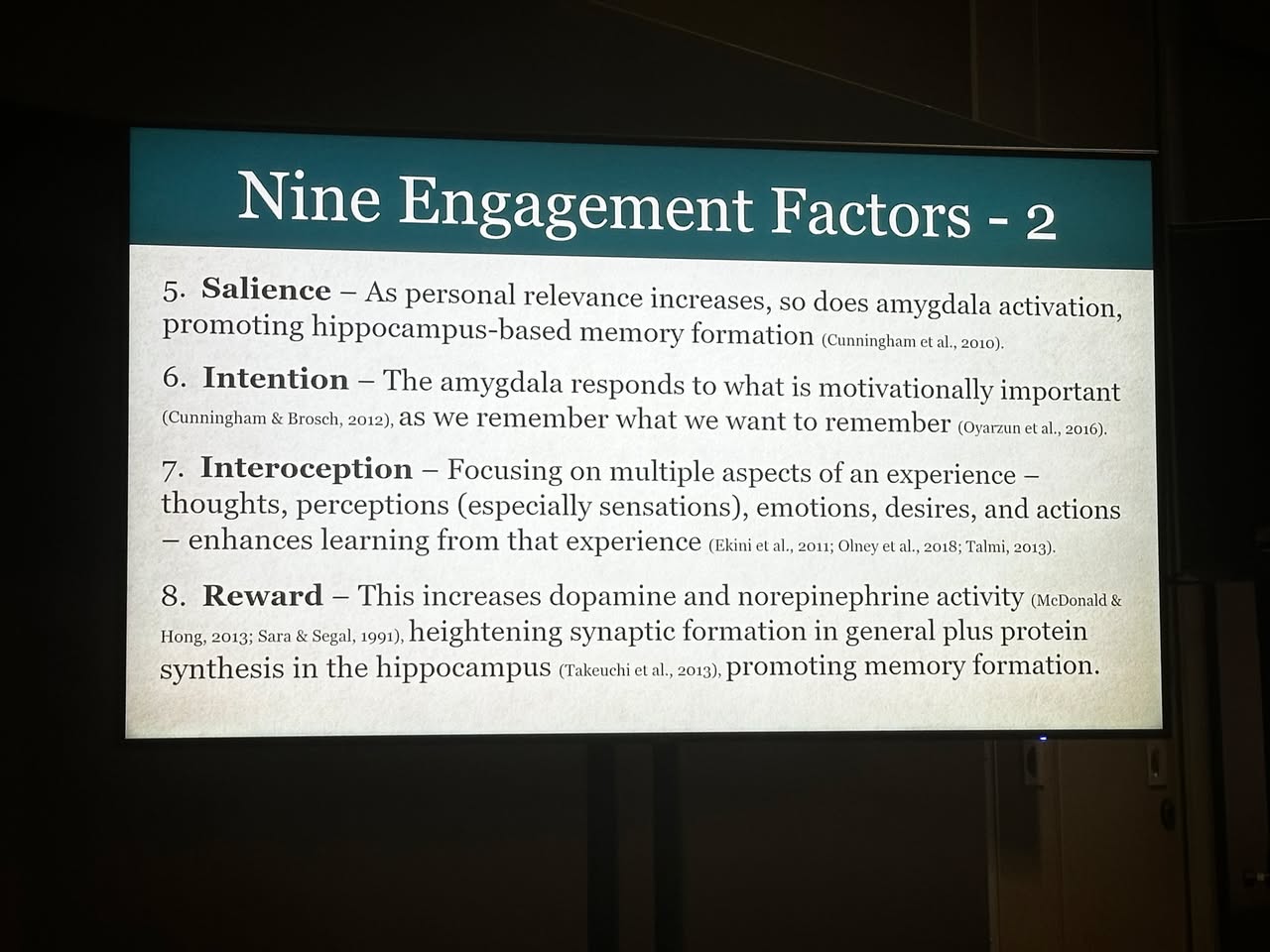
⑤Sailence
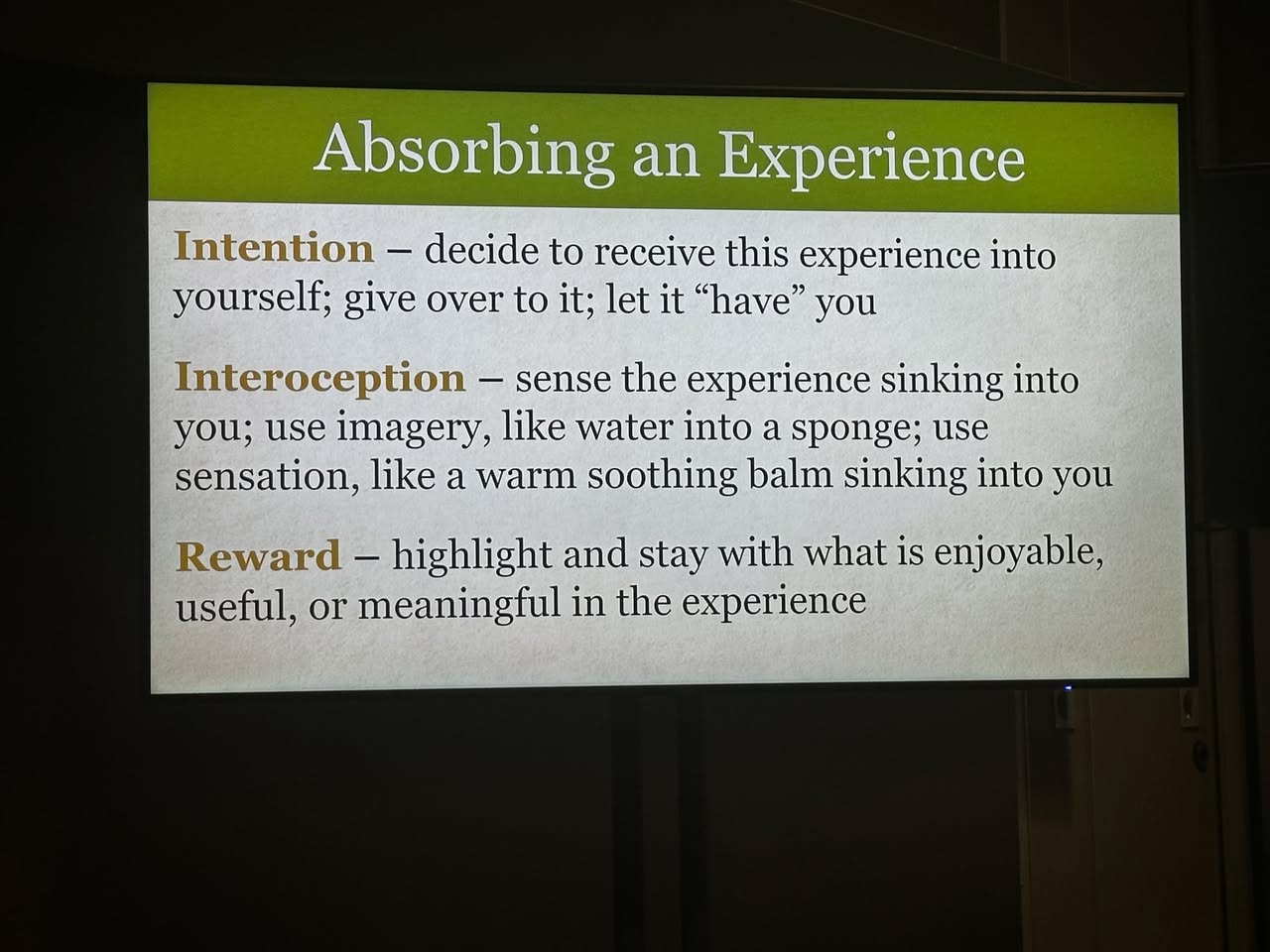
⑥Intention
⑦Interoception
⑧Reward
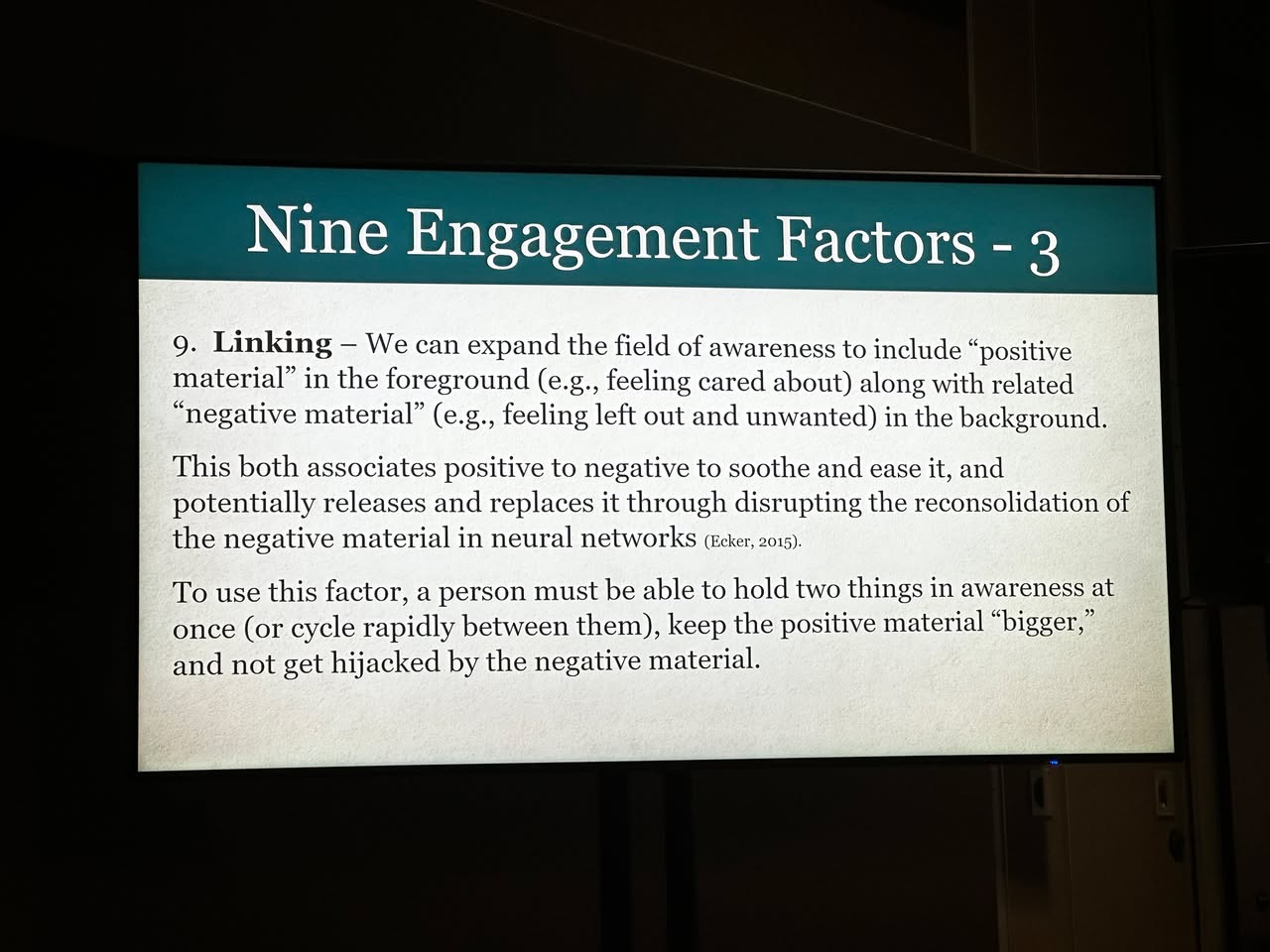
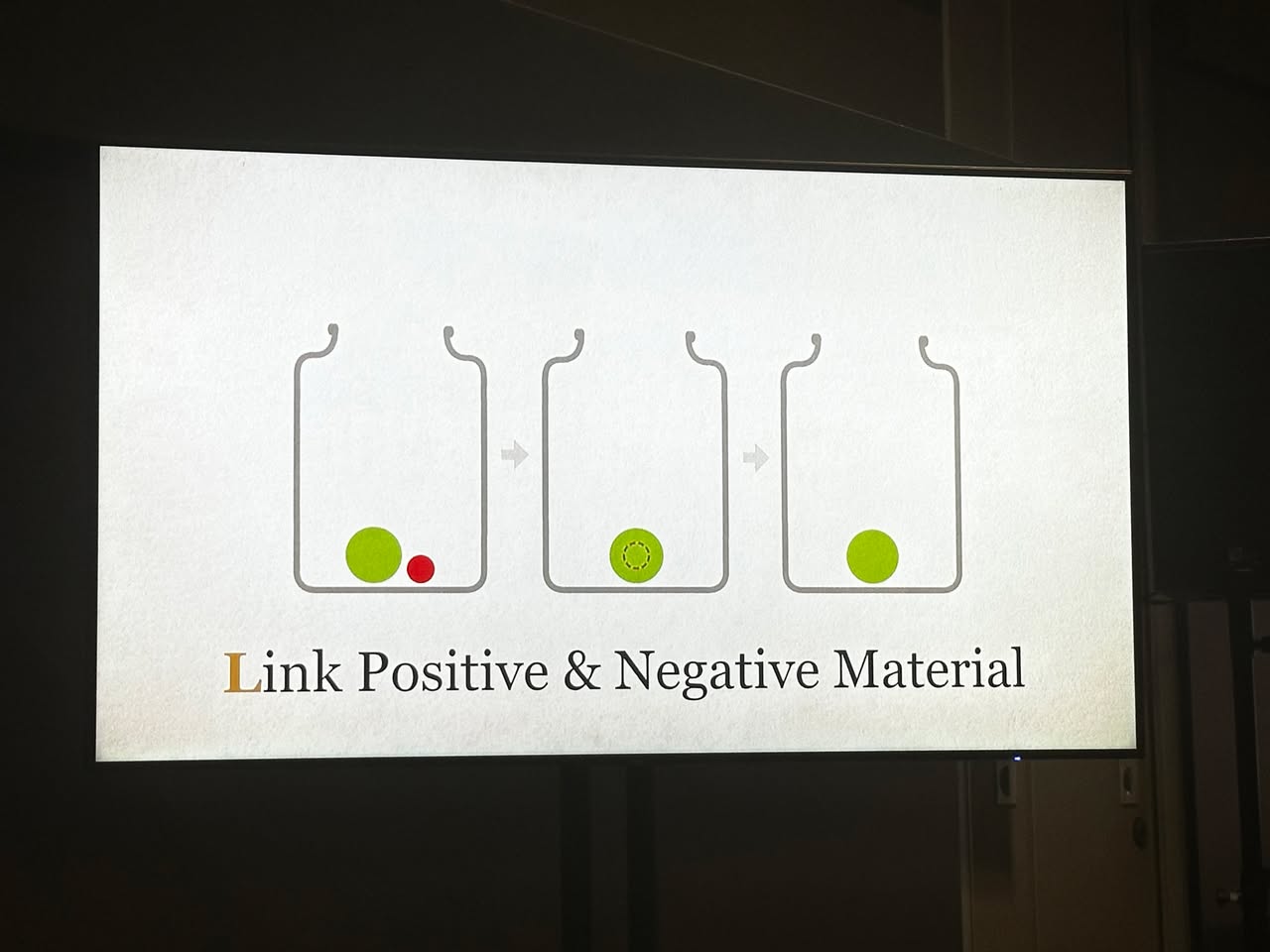
⑨Linking
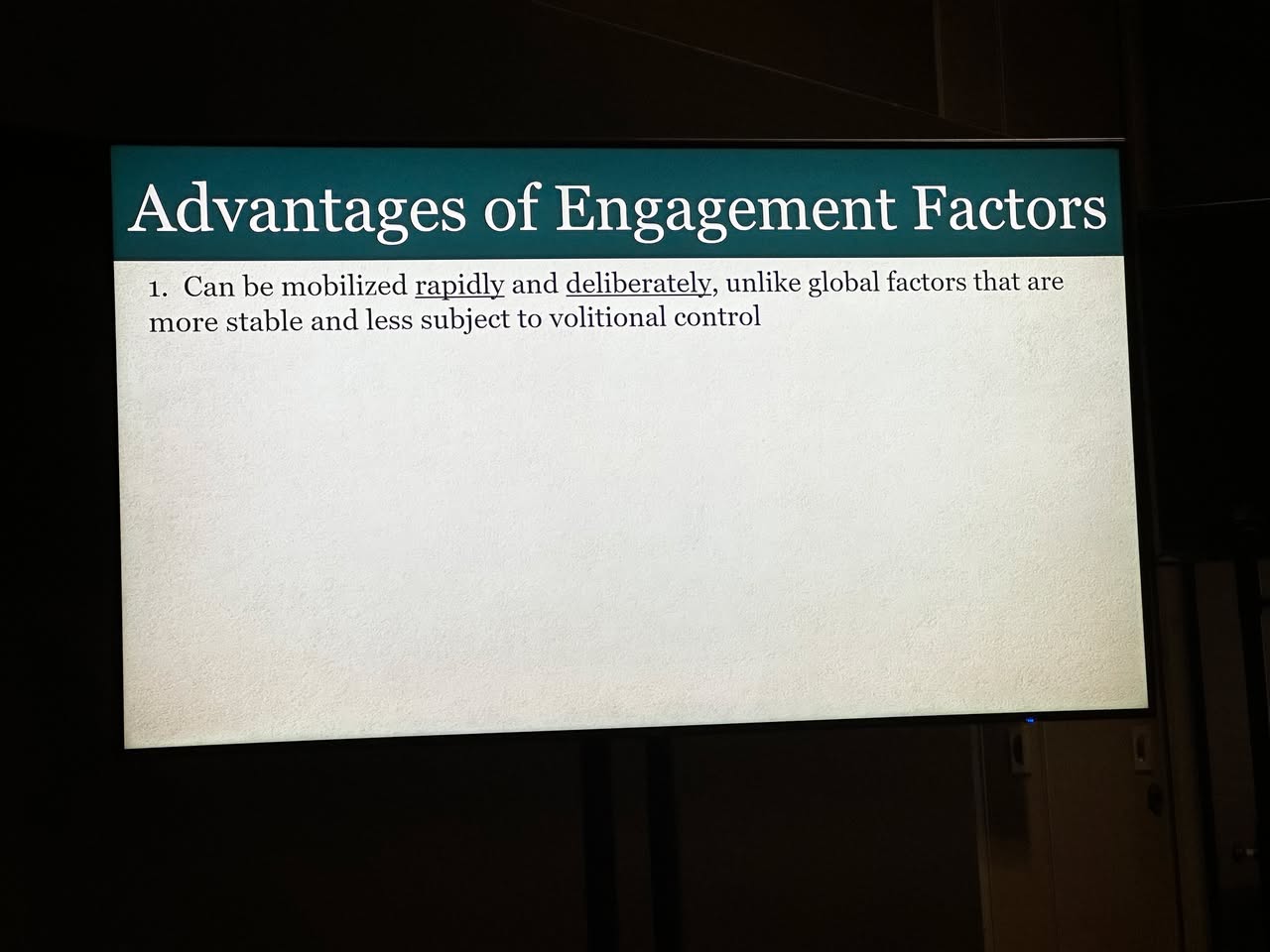
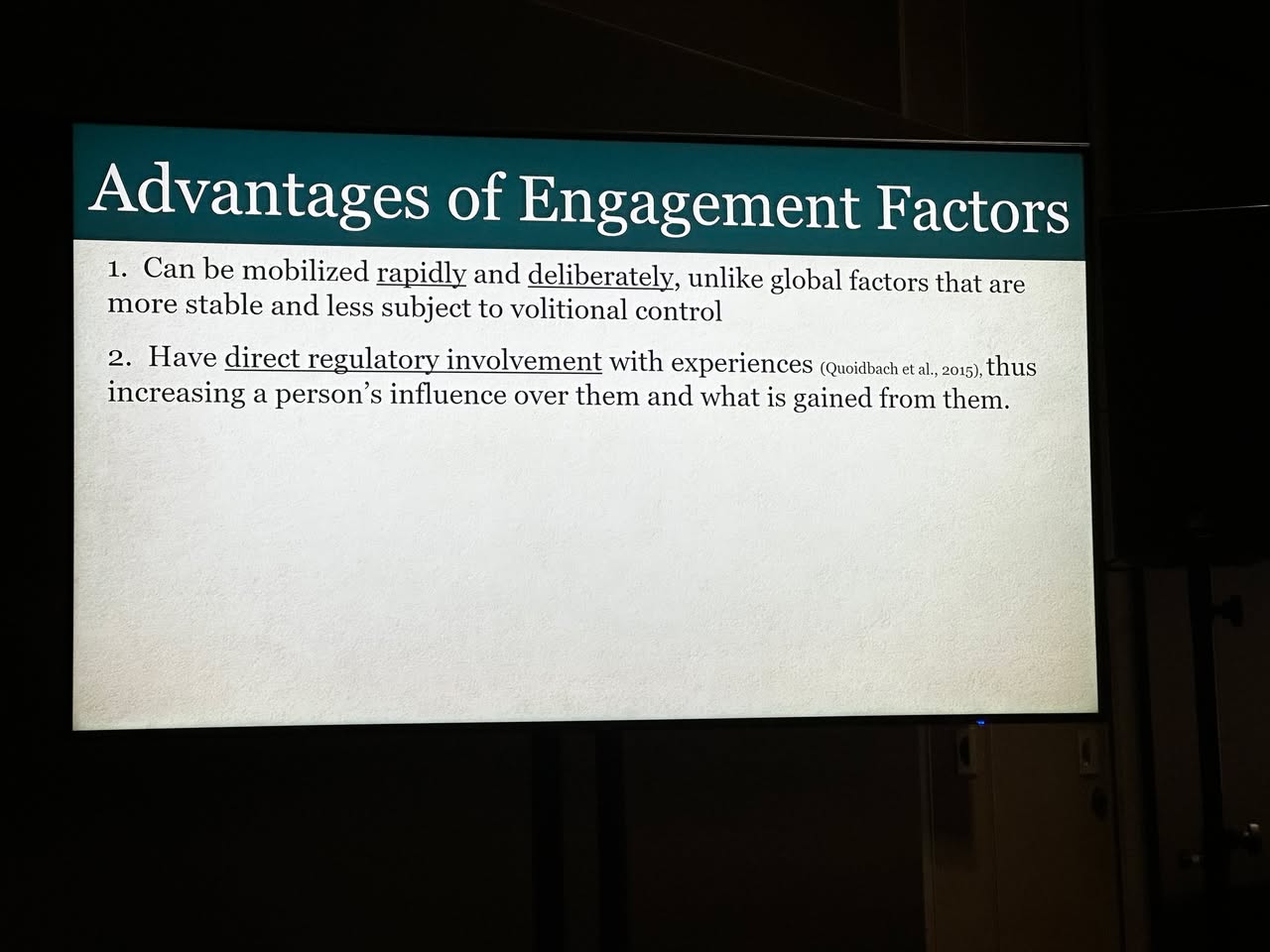
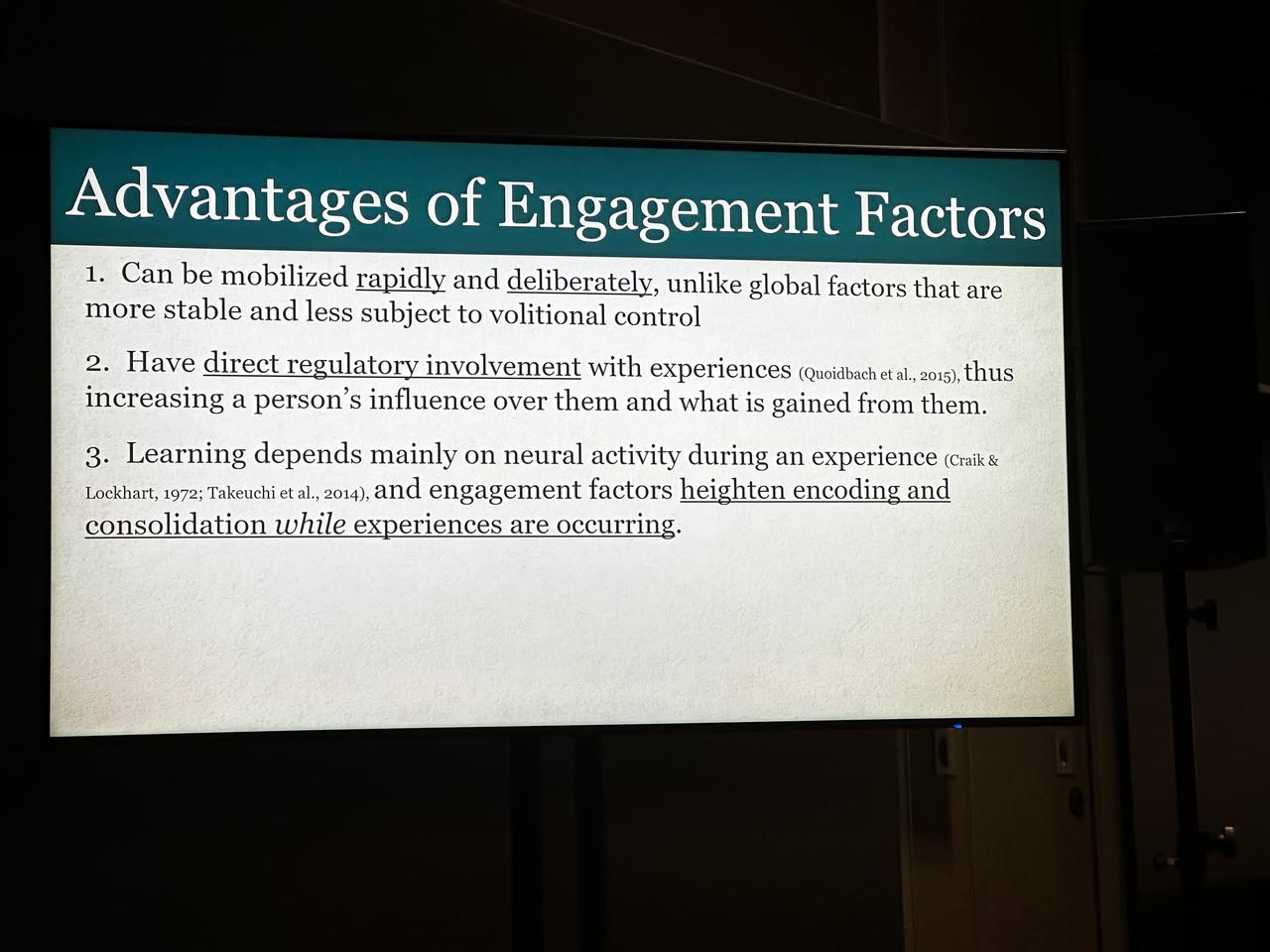
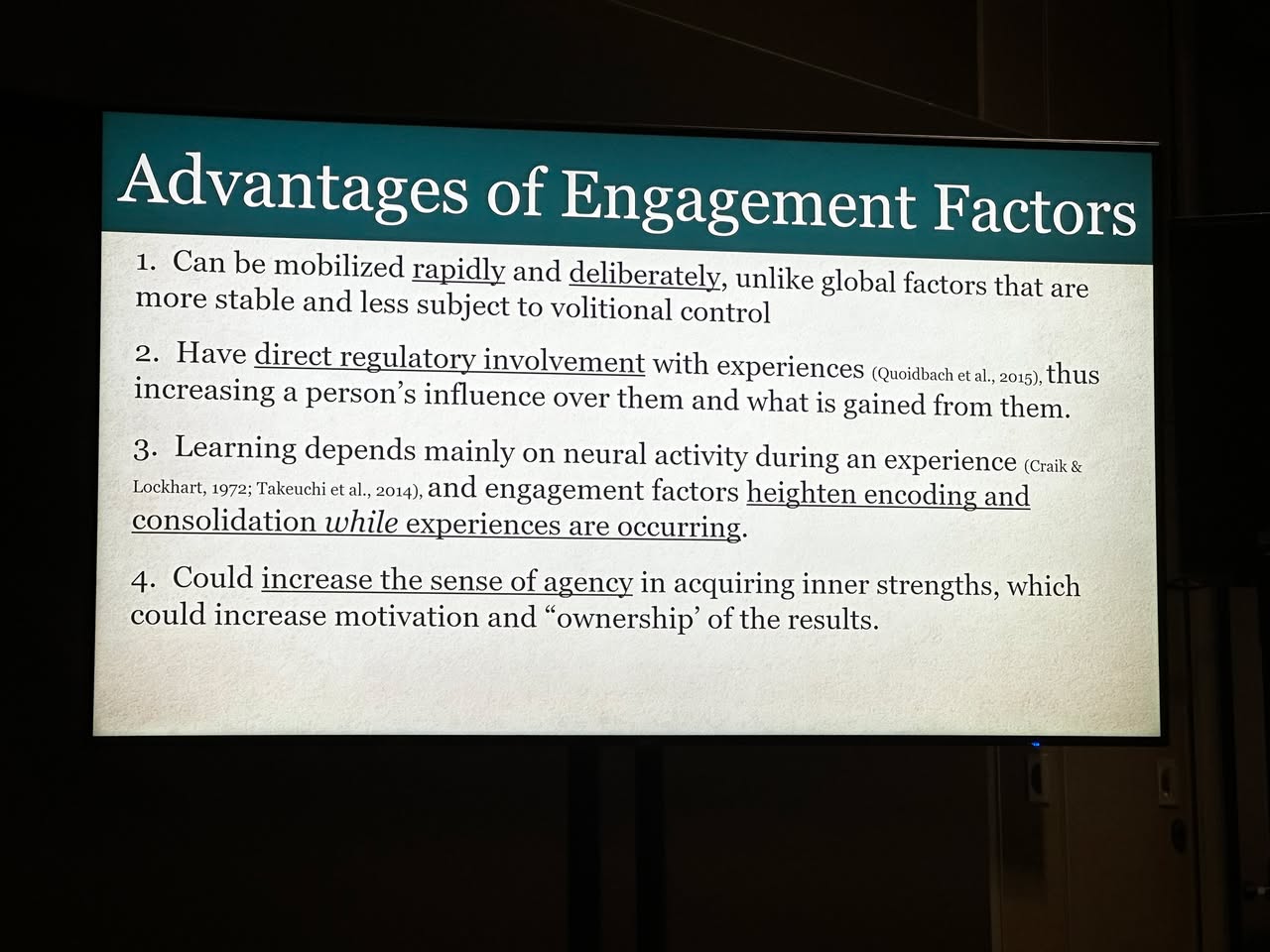
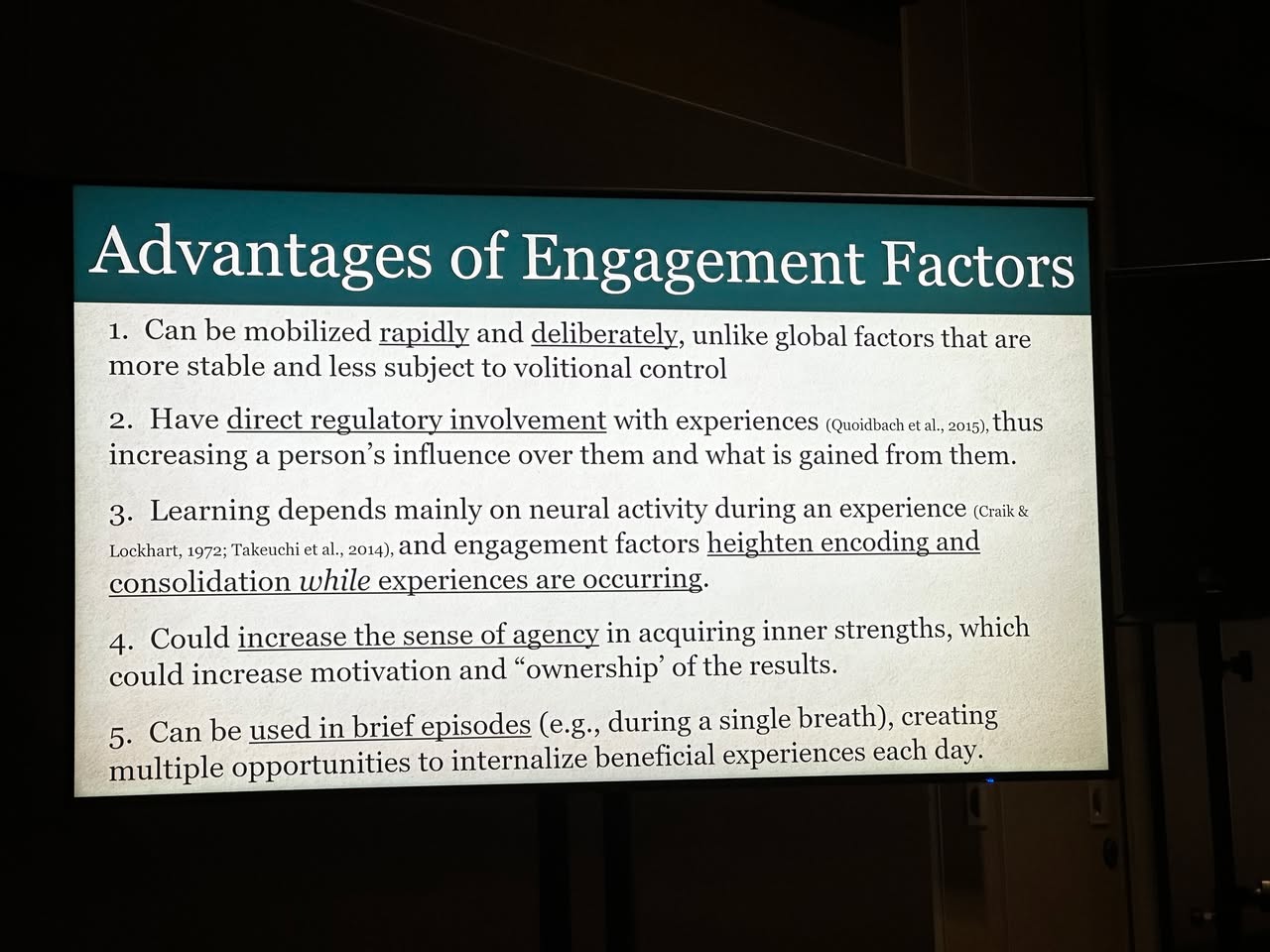
→利点5つ。
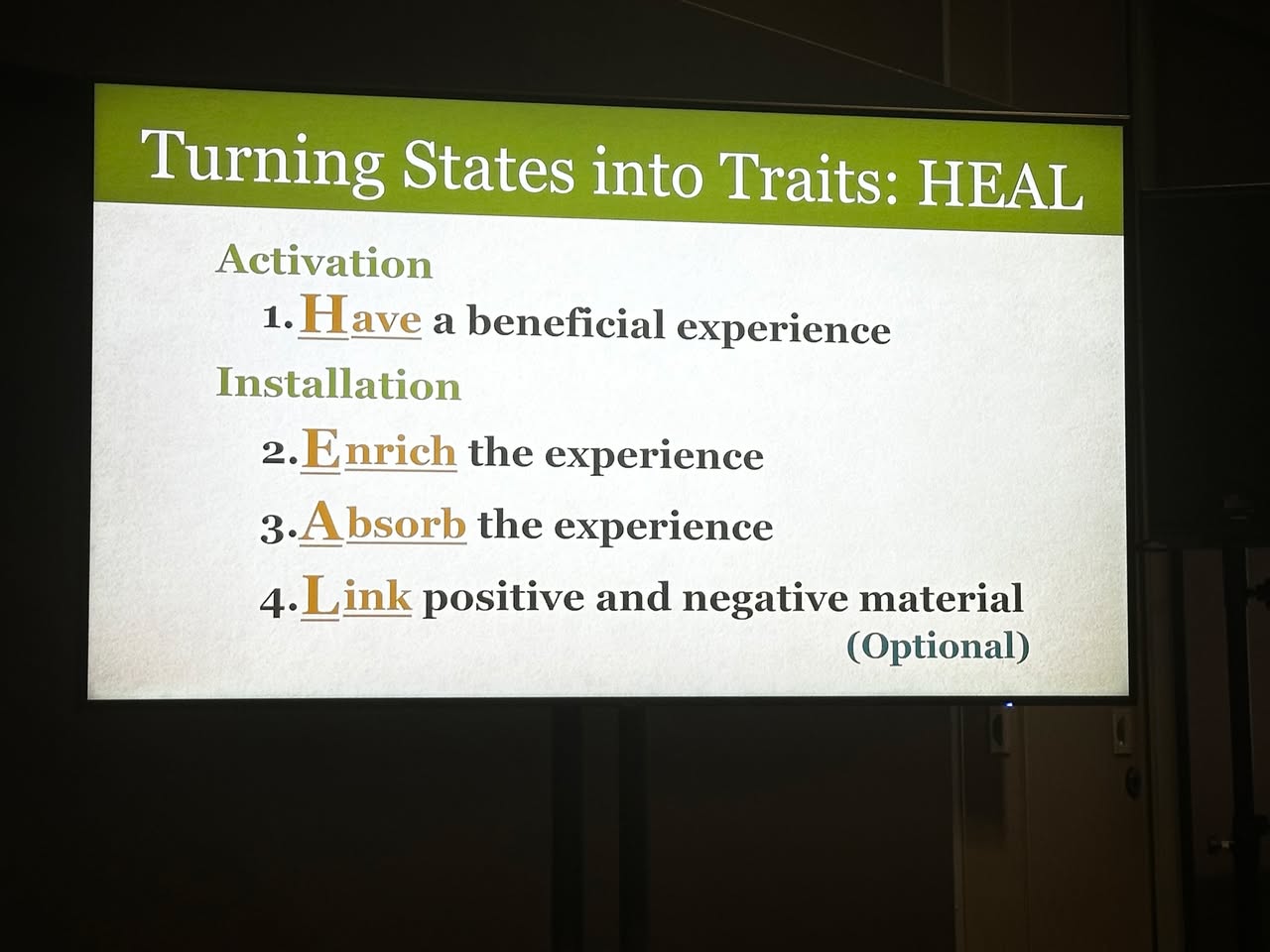
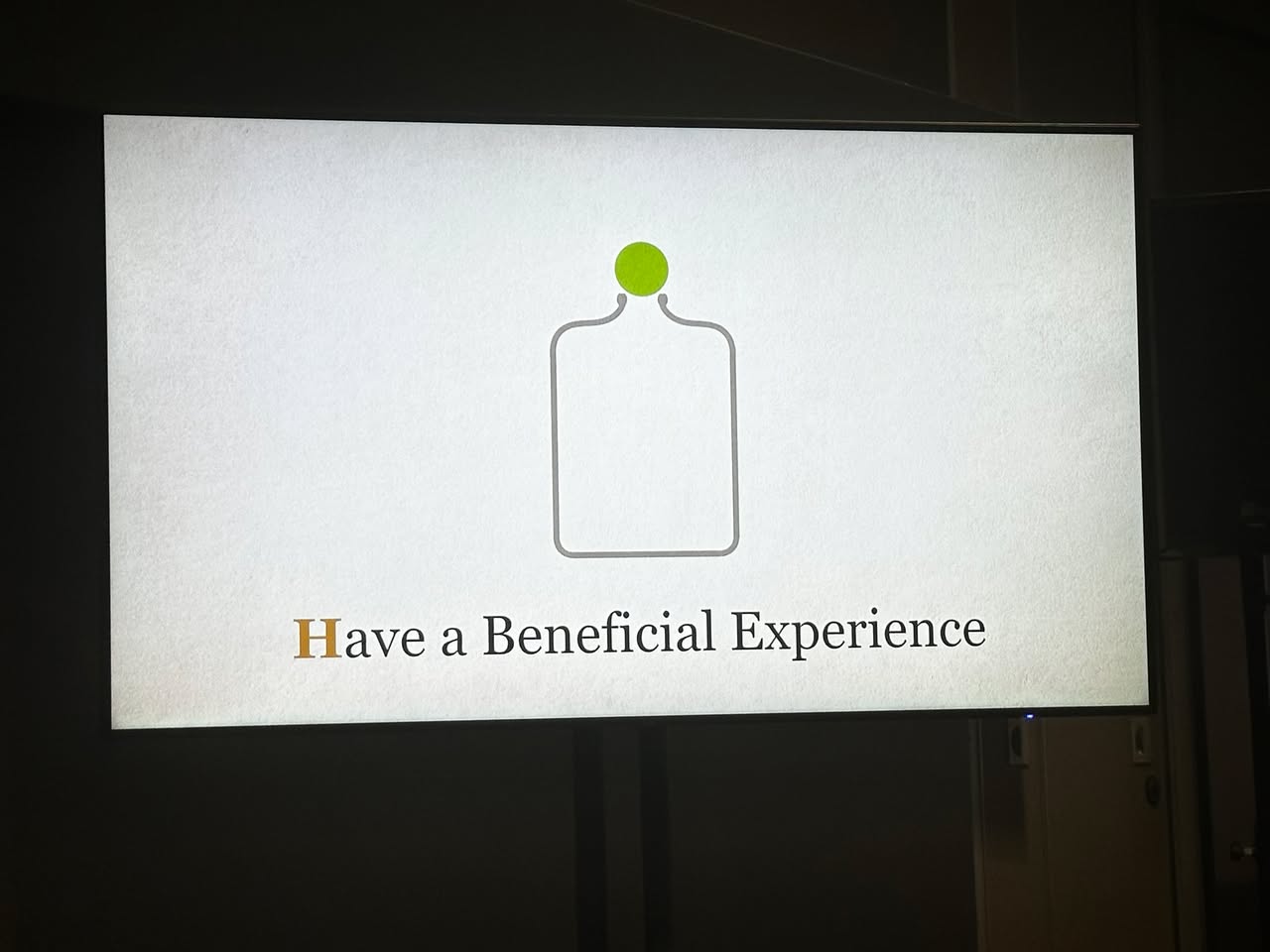
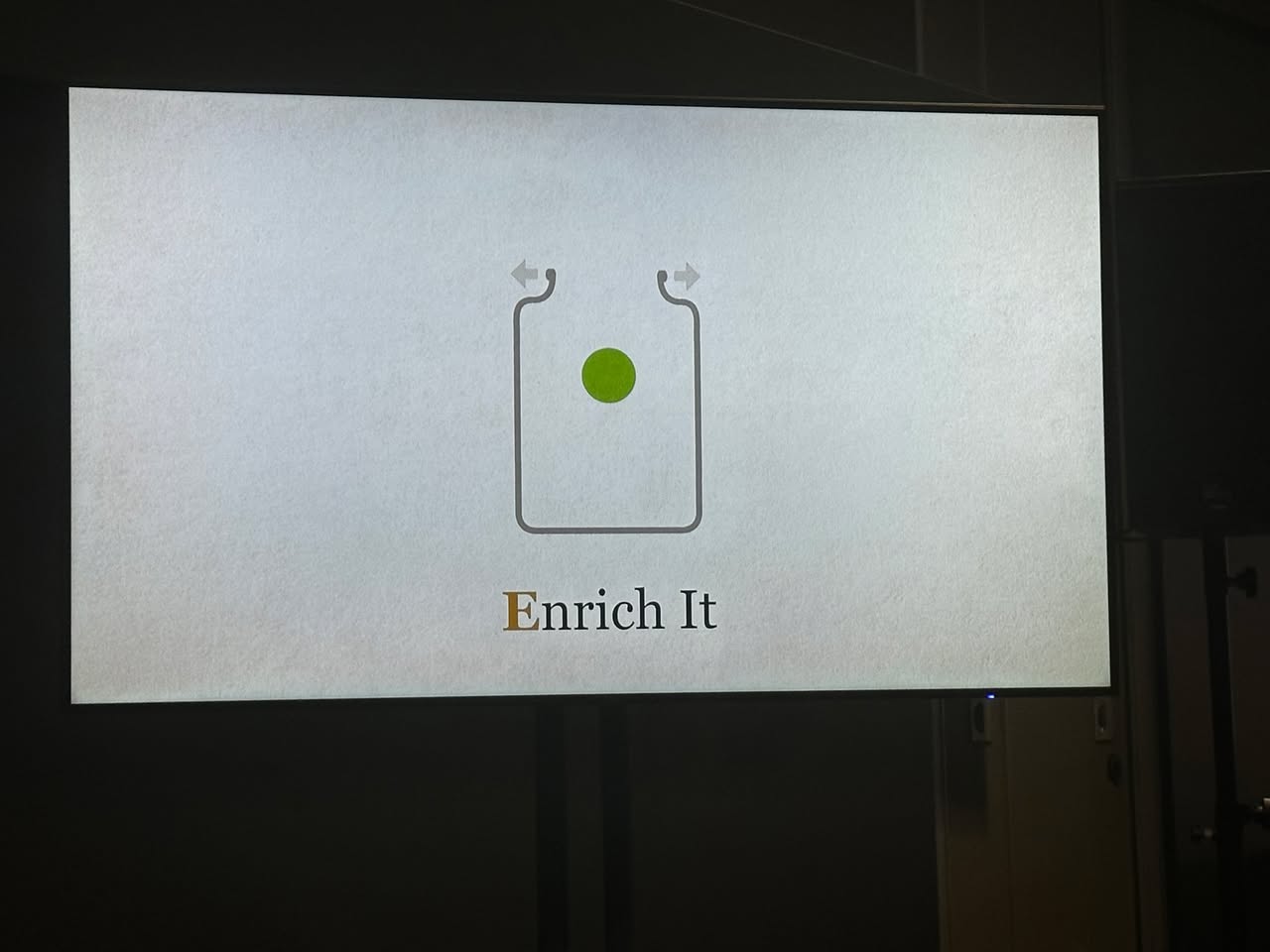
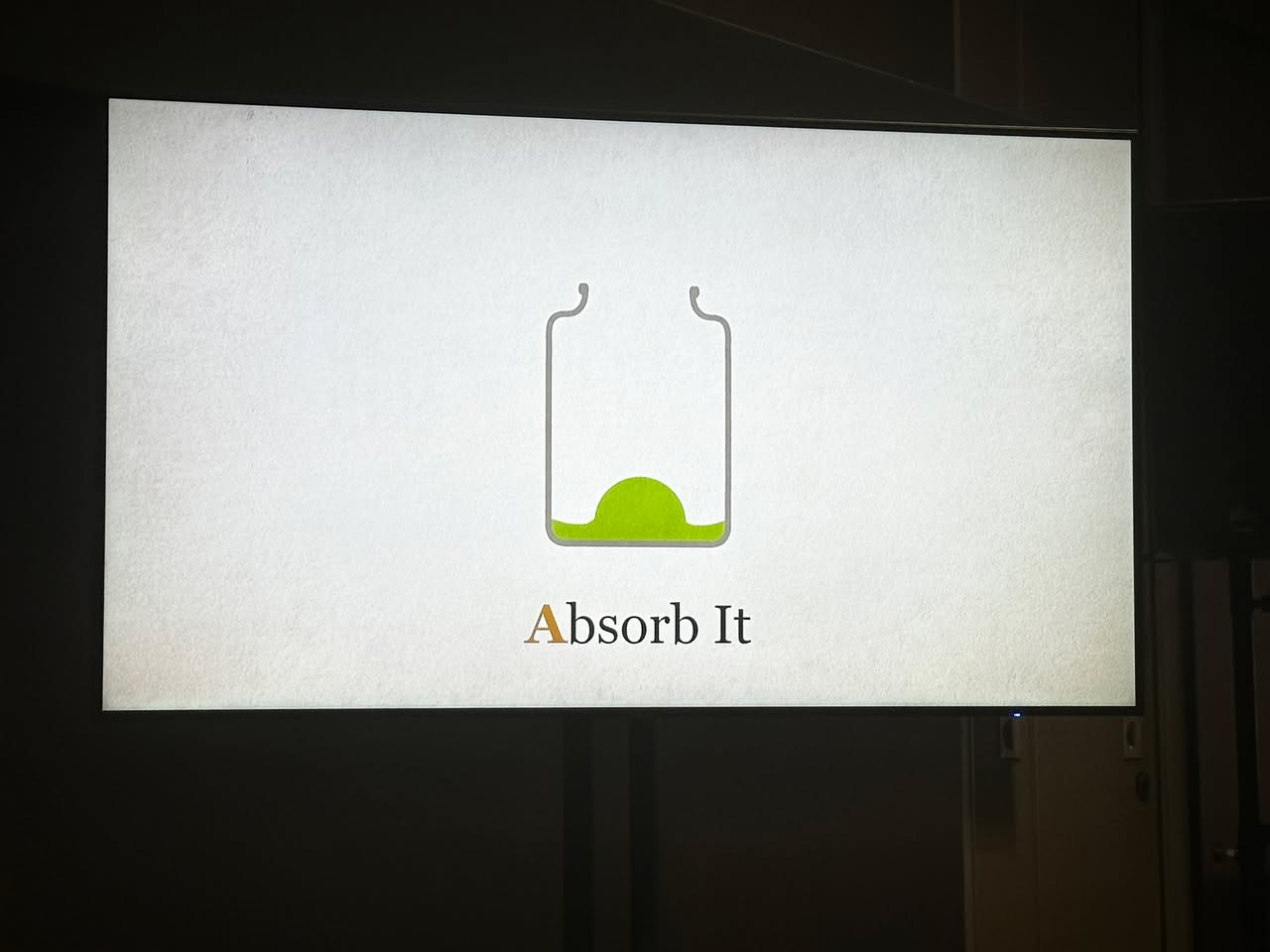
HEALフレームワーク
面白すぎてメモ取ってません❗
詳細は後ほど貼る添付画像を御参照
ーーー
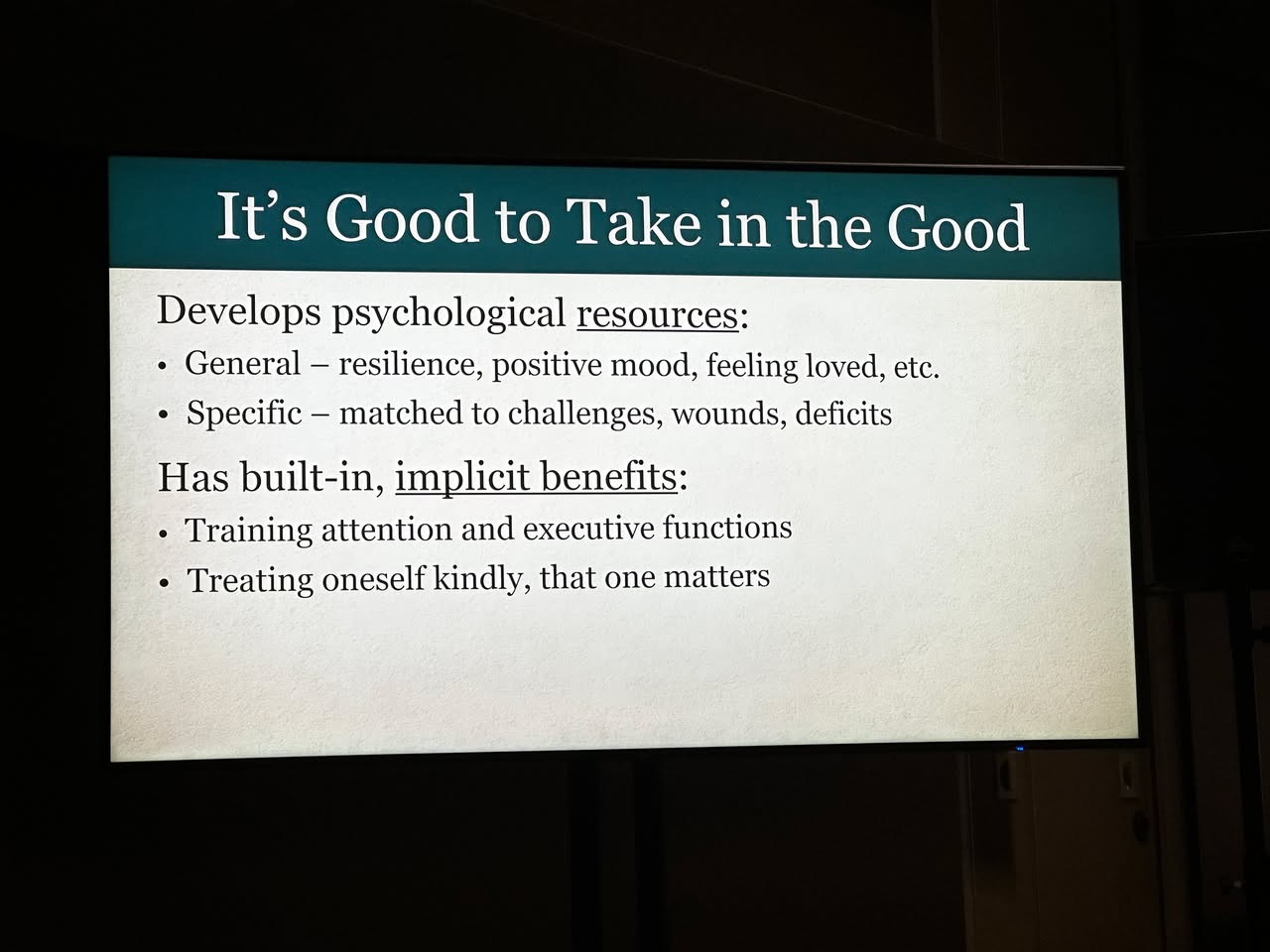
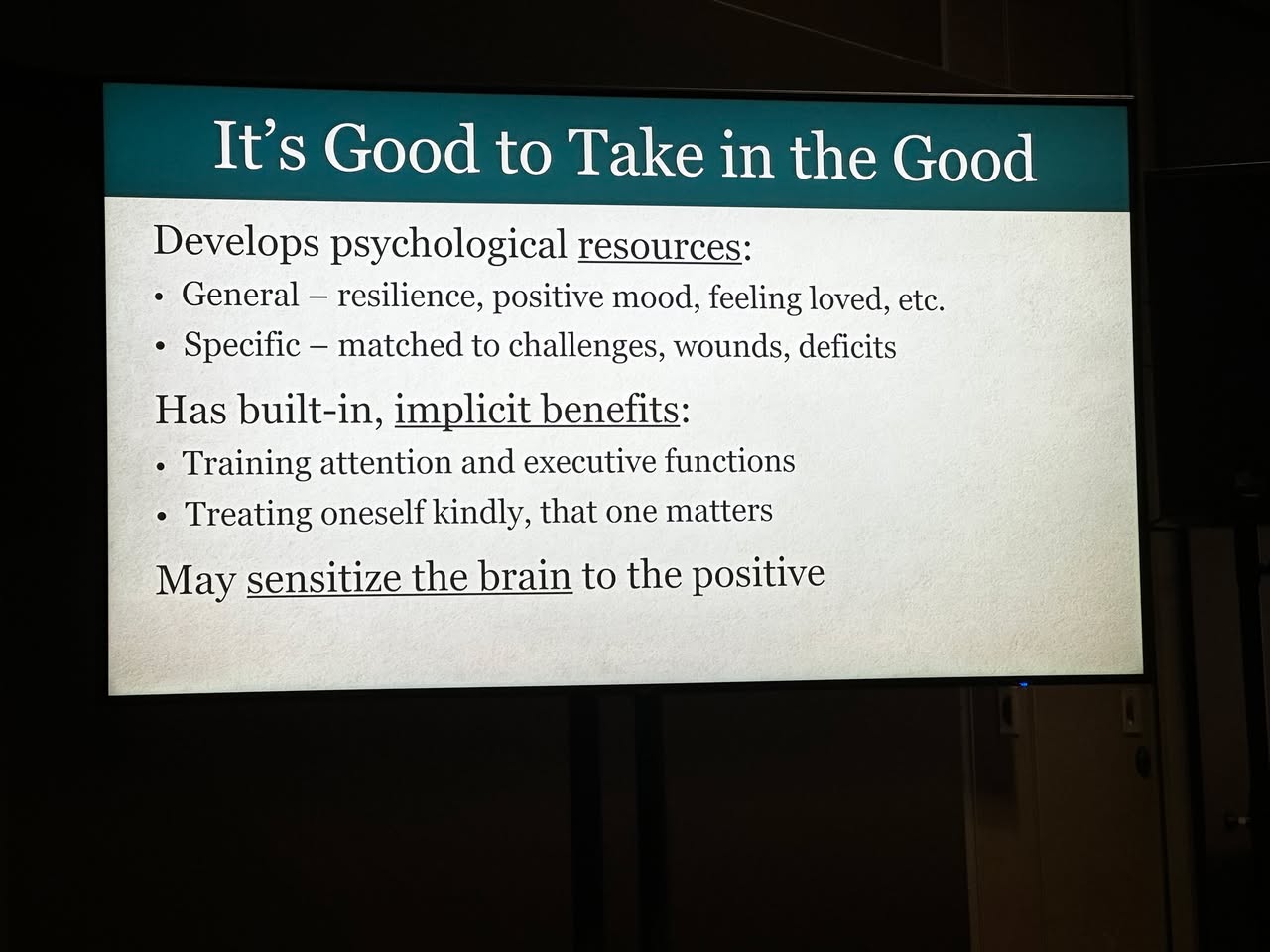
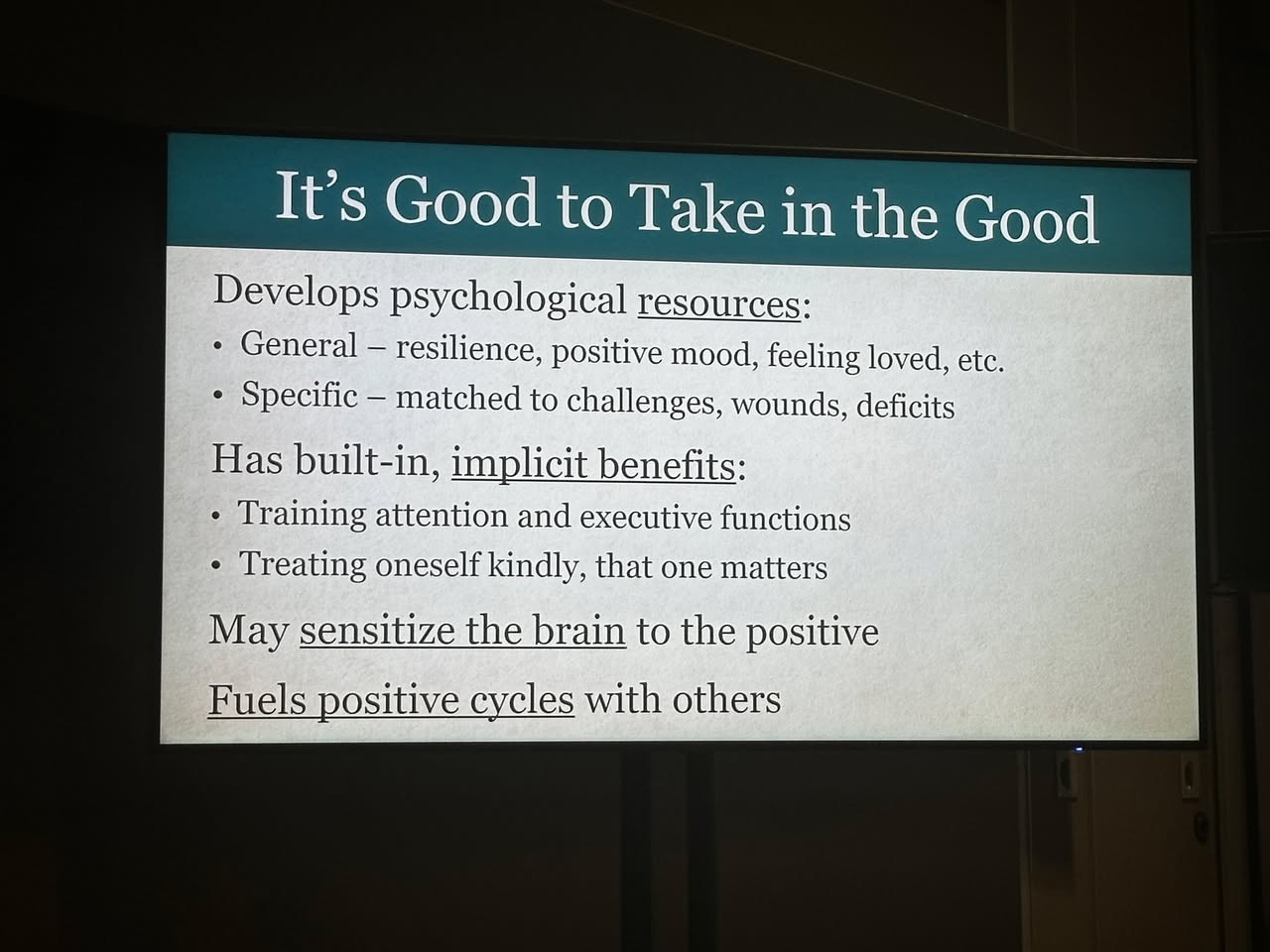
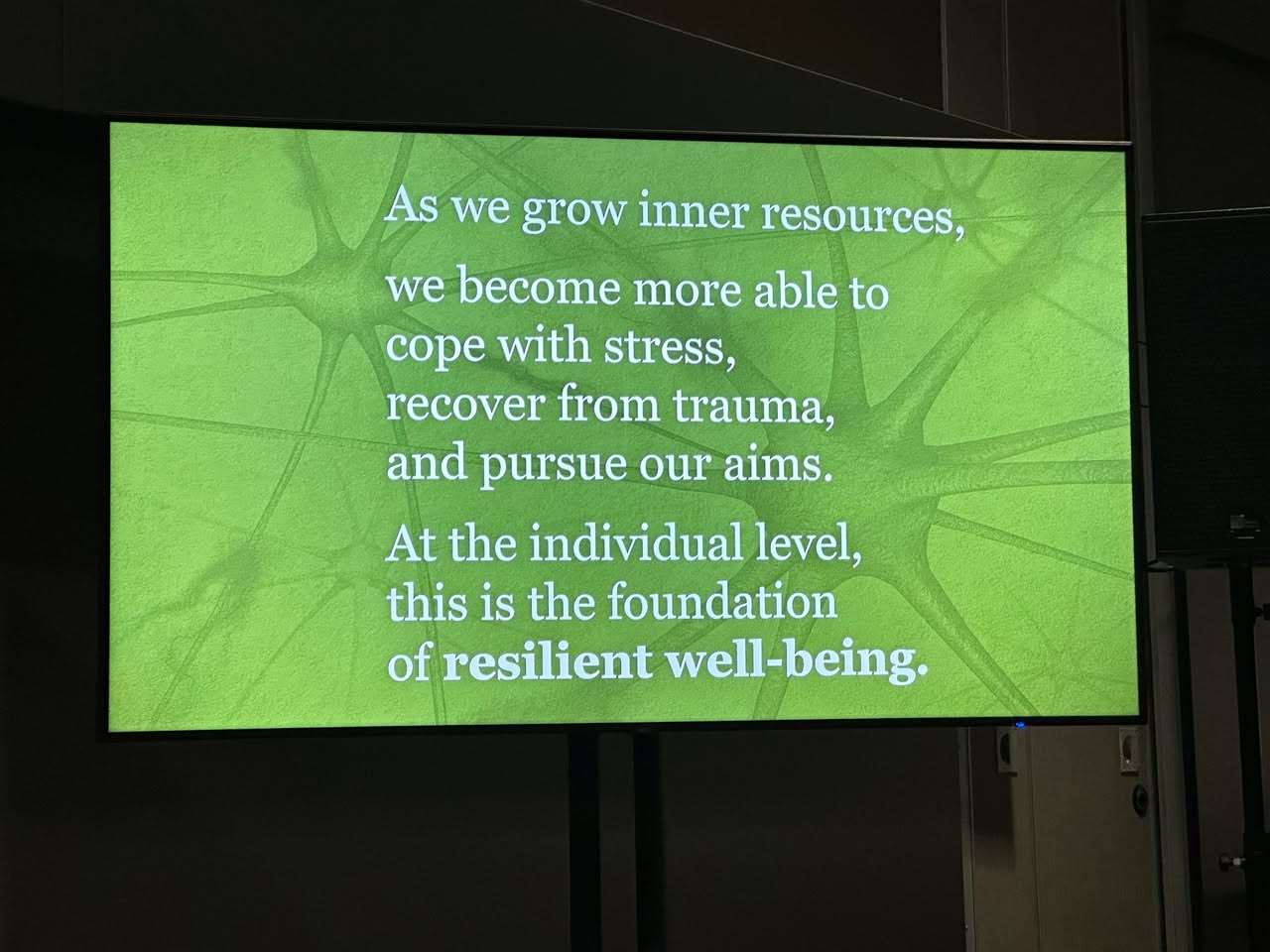
途中で愛と幸福を持って人生の課題に対処するには、立ち直り、感謝、思いやりなどの心理的リソースが必要です。これらの内なる強さを伸ばすには、その経験を神経構造や機能の永続的な変化に変える必要があります。
残念なことに、そのような経験のほとんどはふるいを通る水のように脳を通過しますが、痛みやストレスの多い経験は、脳の進化した否定性バイアスのせいで永続的な痕跡を残します。そのため、悪い経験にはベルクロのようなものですが、良い経験にはテフロンのようになります。多くの人にとって、これは、心理療法、コーチング、人材トレーニング、マインドフルネス プログラムなどの正式な介入や、非公式な自助努力の結果を平坦にしてしまいます。
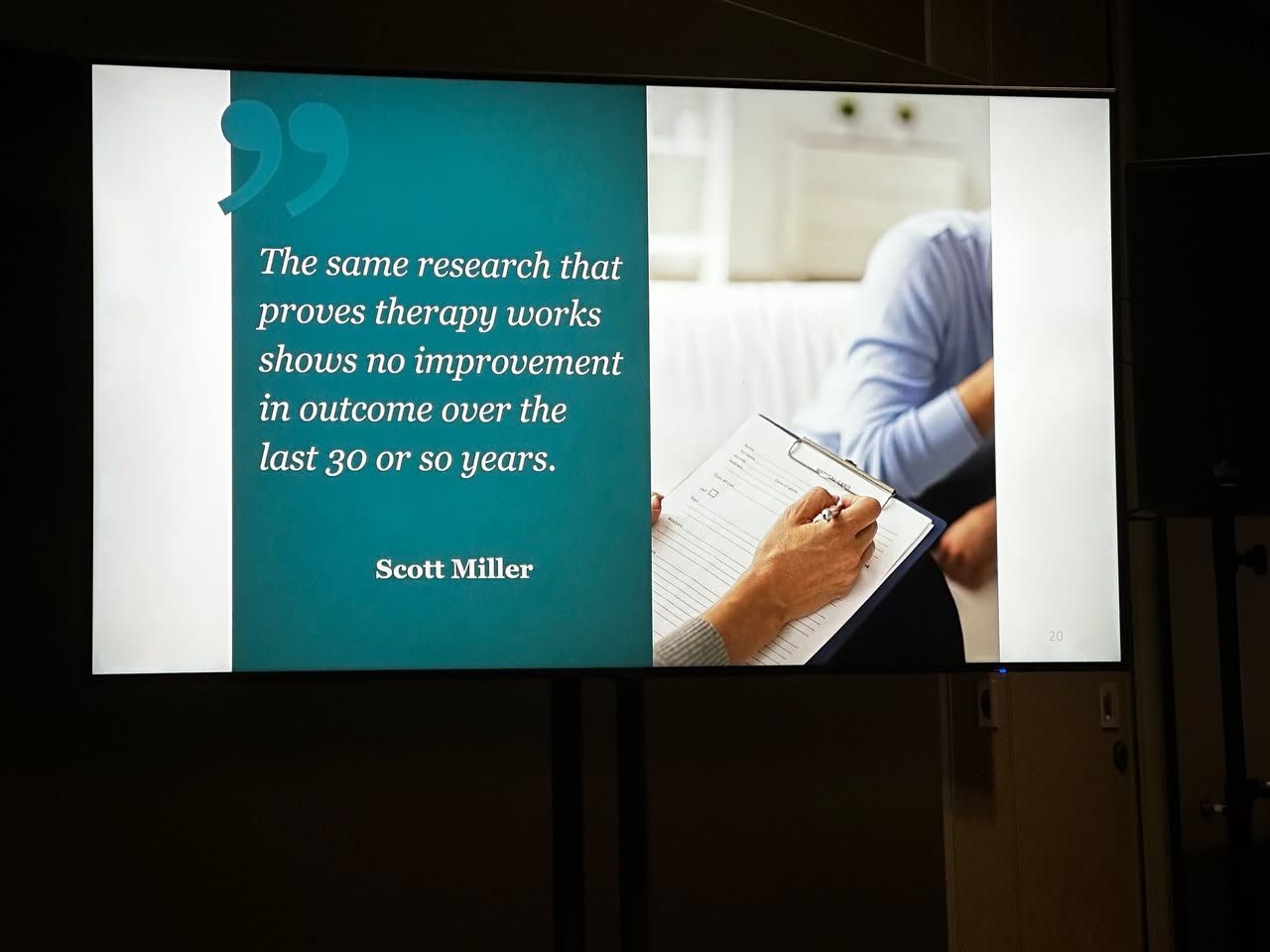
一般に、援助の専門家は、何かが定着することを期待して情報や経験が注ぎ込まれる受動的な器のように人々を扱う成長 1.0 モデルを使用してきました。効果がある人もいますが、多くの人はわずかな効果、あるいはせいぜい一時的な効果しか報告していません。
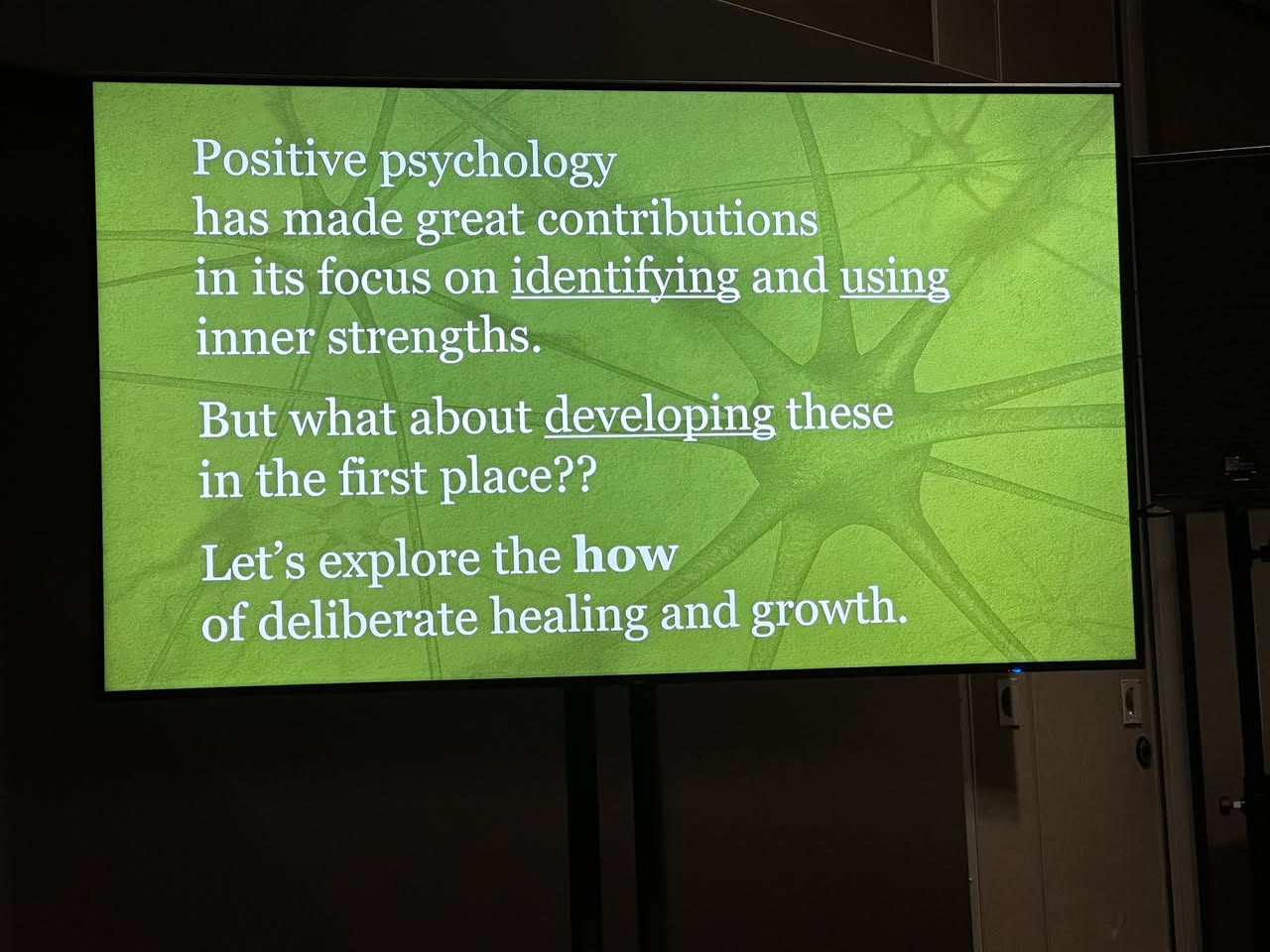
このペースの速い、時には経験的で非常に実践的なプレゼンテーションでは、人々が内なる強さの経験の神経可塑性「内面化」において積極的な主体となる成長 2.0 モデルにおける証拠に基づいた方法を探ります。そして、日常生活と組織化された介入の両方において、彼らは自分自身の中にある善をさらに成長させる素晴らしい力を持っています - 他の存在に利益をもたらすことも含めて。
ーーー
あとは、
ホームページにさらに色々載せてるよ〜とのこと。
あとは、↓の論文に今回の話が載ってます。
ーーー
※今回の話の論文
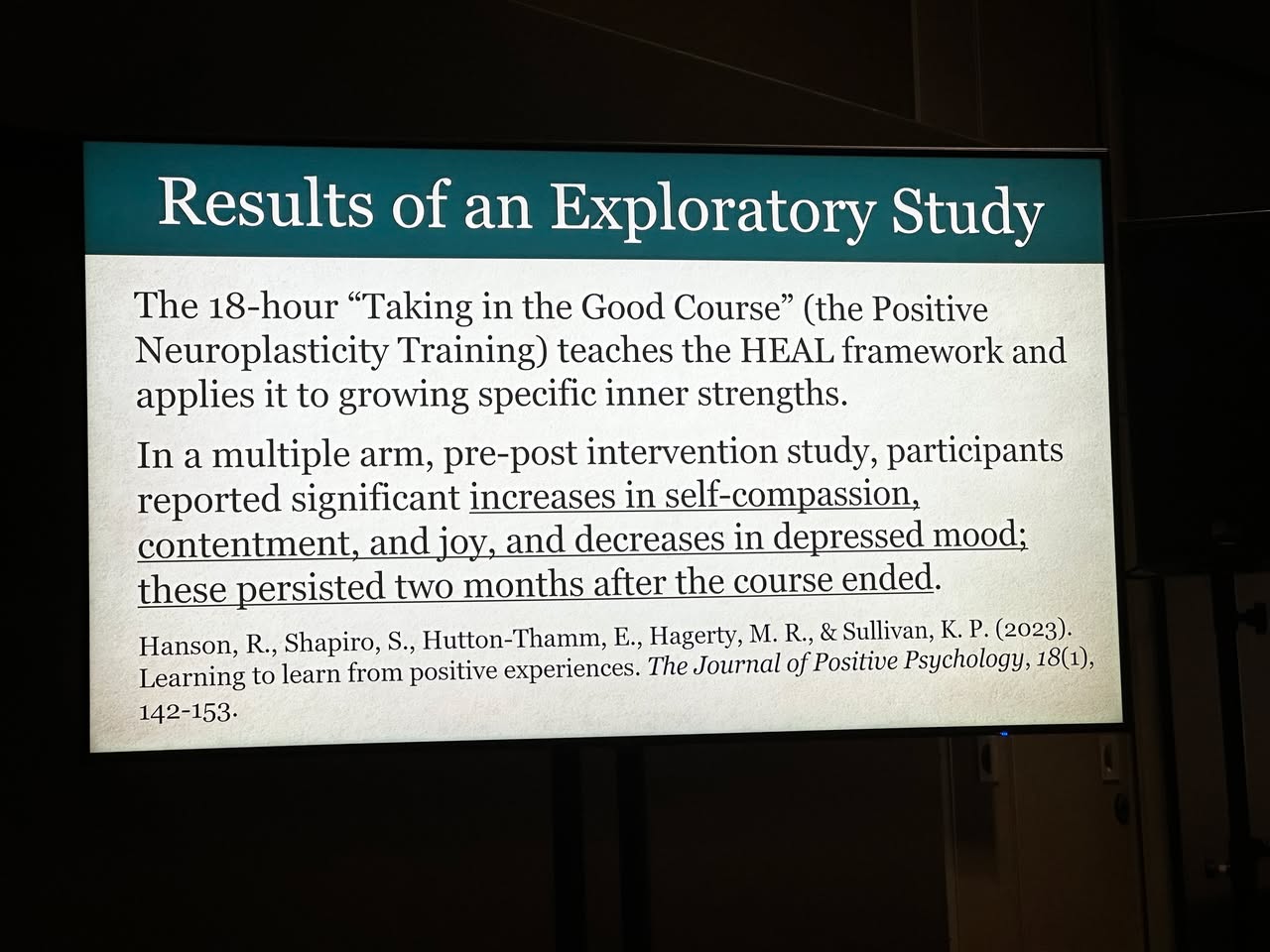
Learning to learn from positive experiences(2023)
https://www.tandfonline.com/doi/full/10.1080/17439760.2021.2006759
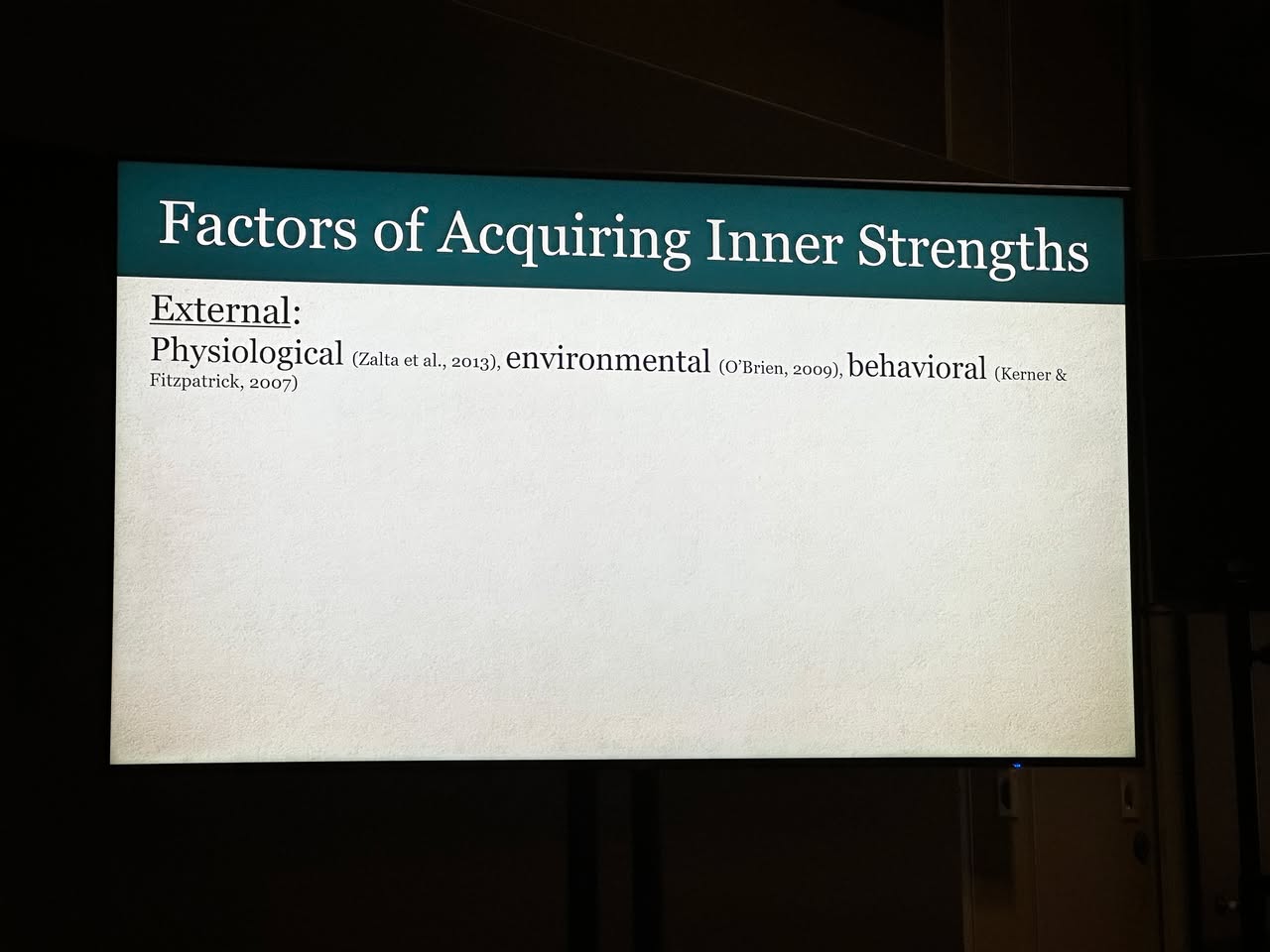
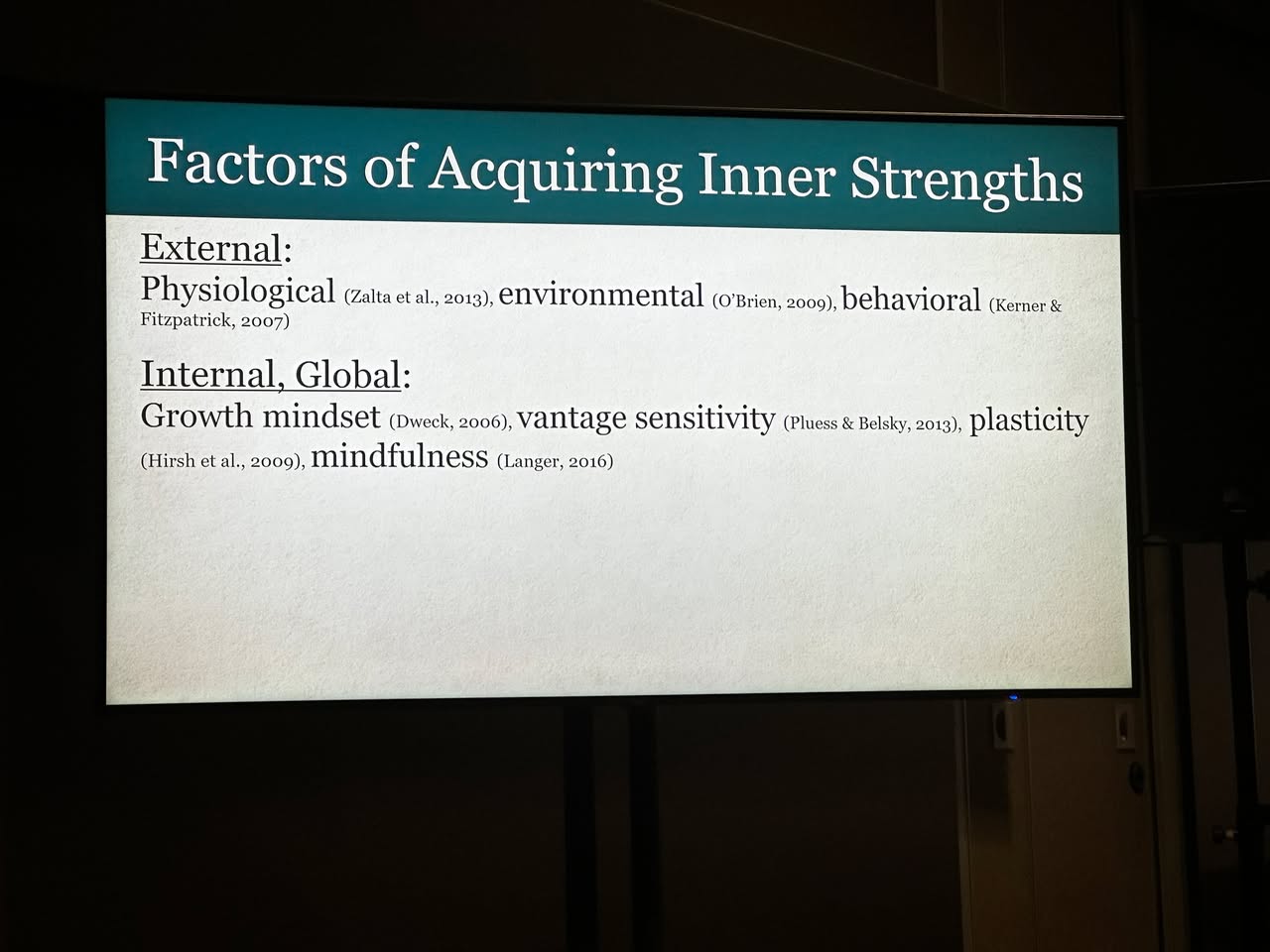
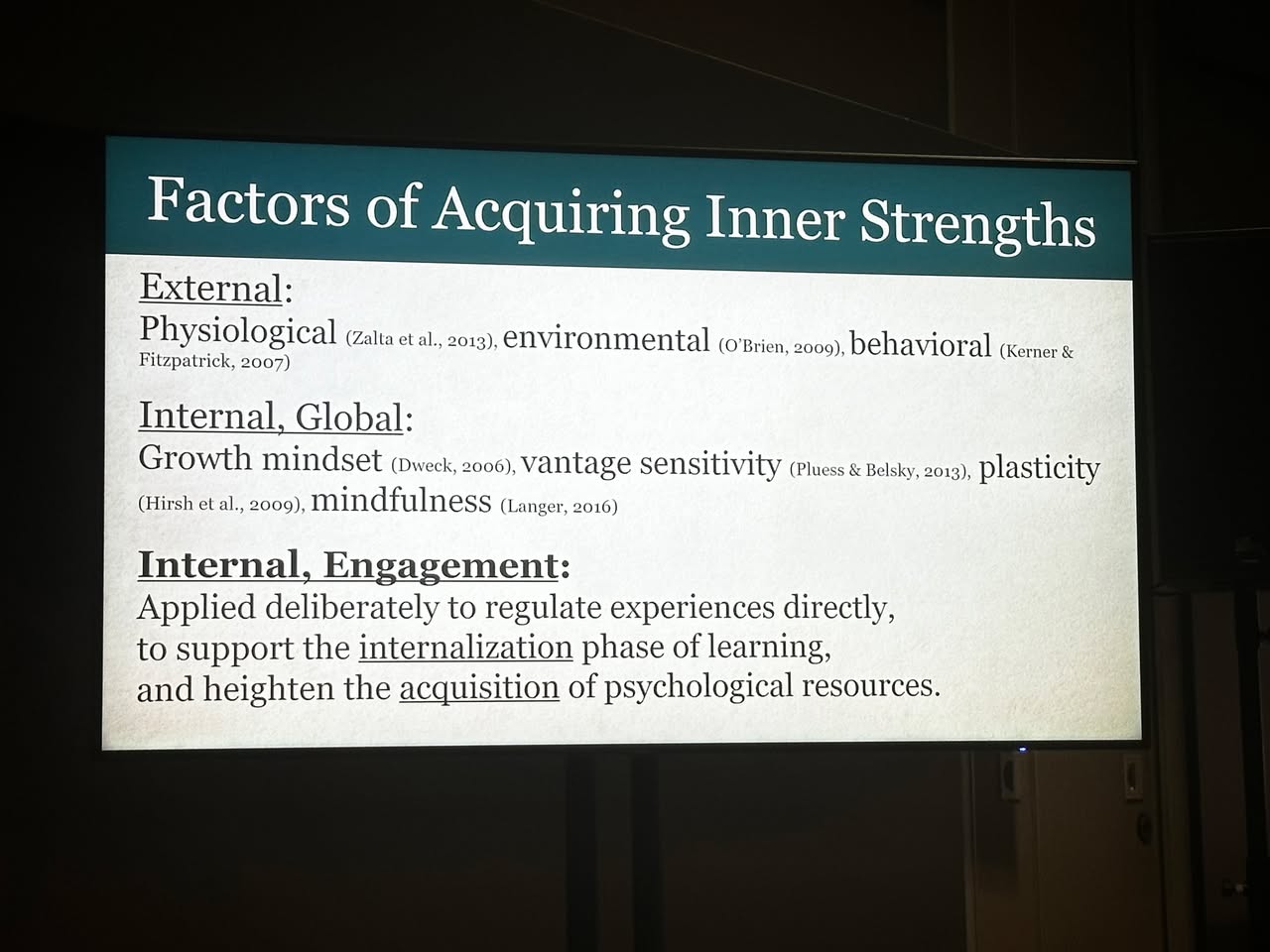
人々は逆境に対処し、幸福を維持するために感謝などの心理的資源を活用します。これらのリソースの大部分は獲得する必要があり、研究により、この学習の環境要因と行動要因が特定されています。しかし、人々が心理的リソースの経験にどのように関与するかによって、このプロセスにおいてどのように積極的な主体になることができるかを調査した研究はほとんどありません。その結果、多数の「精神的関与要素」を整理するために HEAL フレームワークが開発され、その使用法を検討するために Take in the Good Course (TGC) が作成されました。複数群の介入前後の研究において、TGC 参加者は、認知資源、ポジティブな感情、総合的幸福度の複合尺度が大幅に増加し、ネガティブな感情の複合尺度が減少したと報告しました。これらの結果はコース終了後 2 か月間持続しました。
※参考記事・論文
ポジティブな神経可塑性: マインドフルネスの神経科学(2021)
記事
https://www.embodiedphilosophy.com/positive-neuroplasticity-the-neuroscience-of-minduflness-2/
ポジティブな経験から学ぶことを学ぶ(2021)
https://www.tandfonline.com/doi/full/10.1080/17439760.2021.2006759
良いものを取り入れる(2013)
http://www.wisebrain.org/media/SlidesBerlinInEnglish2013.pdf
・セルフ・コンパッション
・進化する脳
・否定バイアス
・良いことを取り入れる
・古い痛みを癒す
・苦しみの火を消す
本
・脳を鍛えてブッダになる52の方法
・幸せになれる脳をつくる
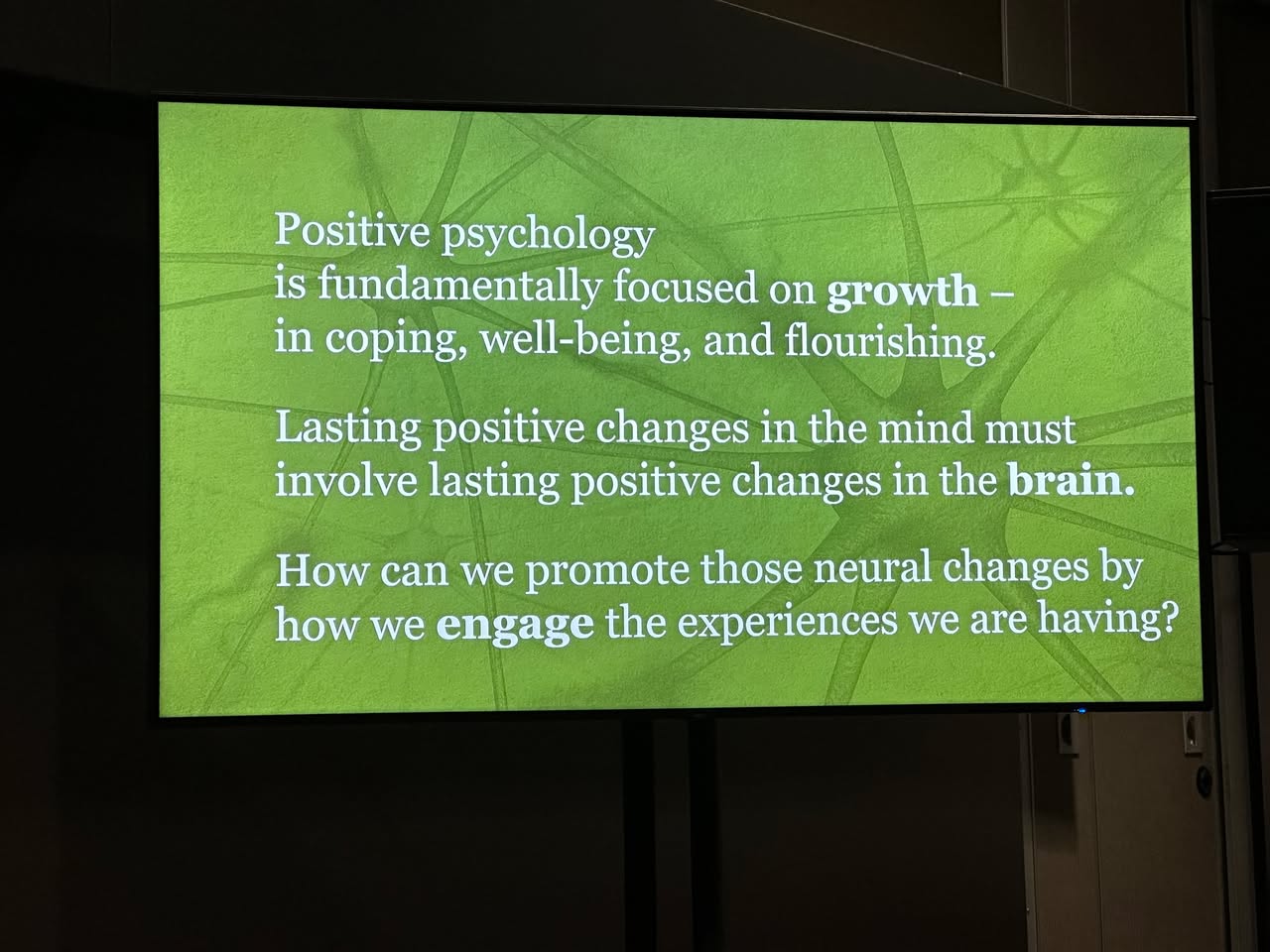
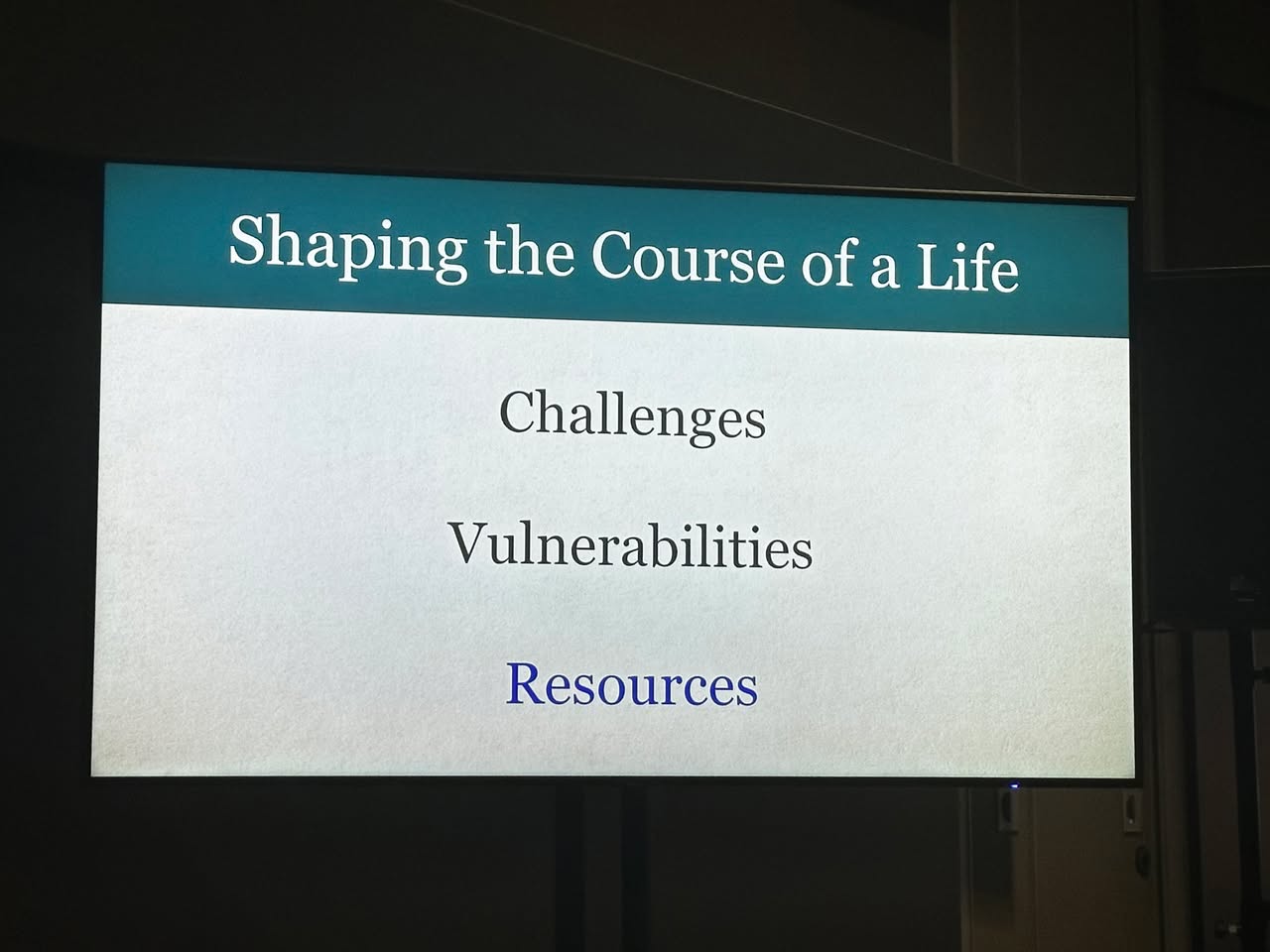
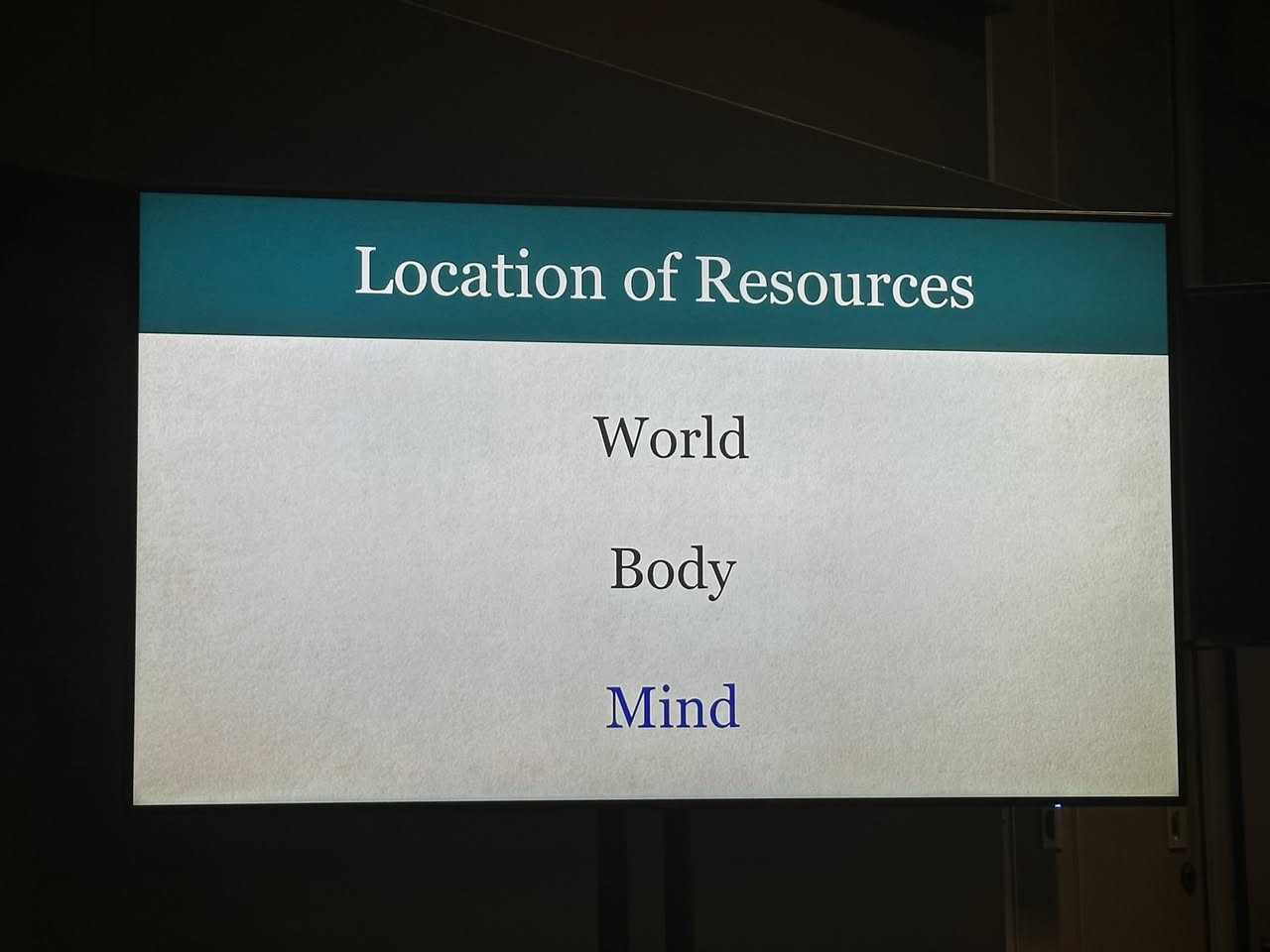
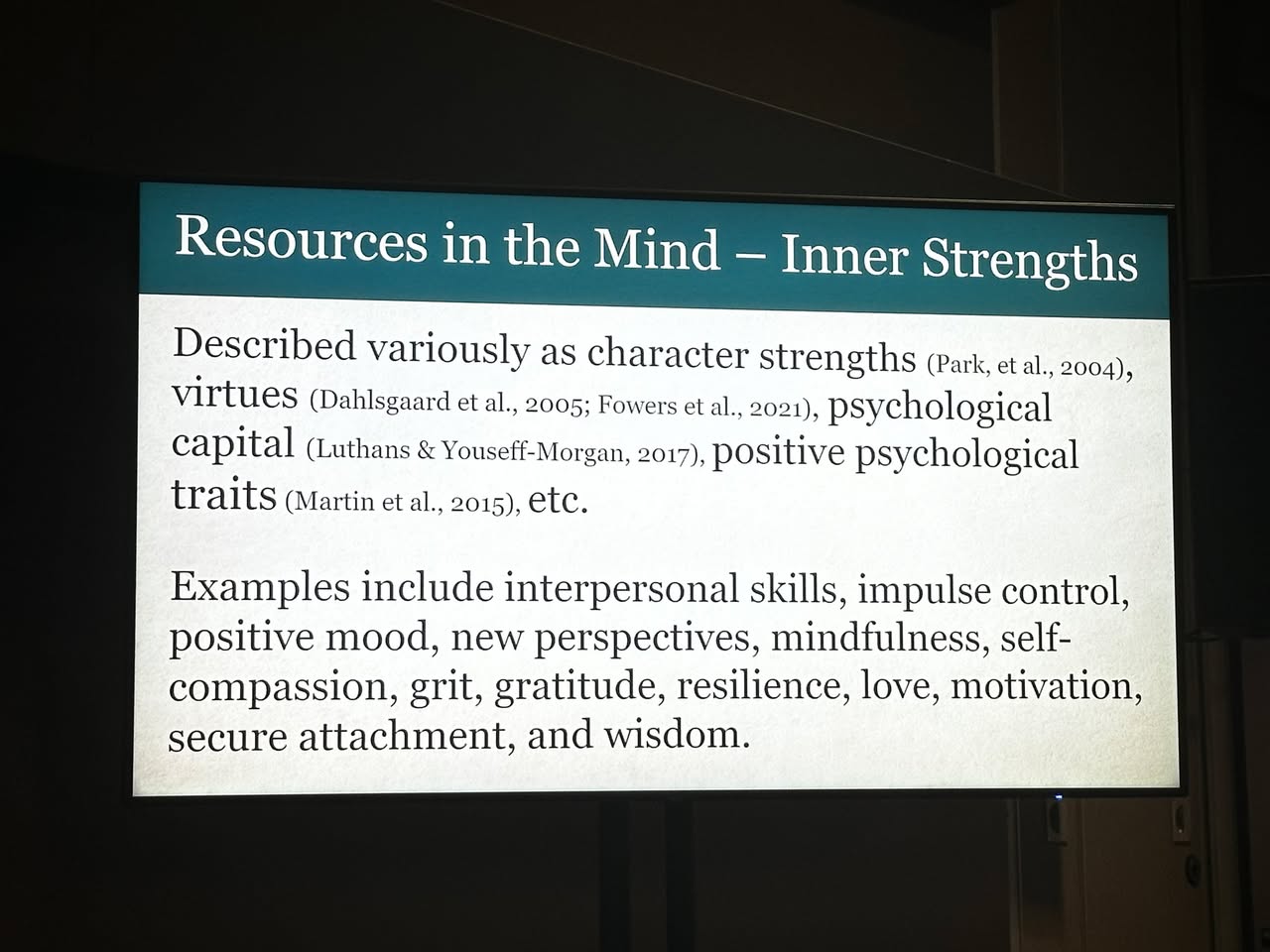
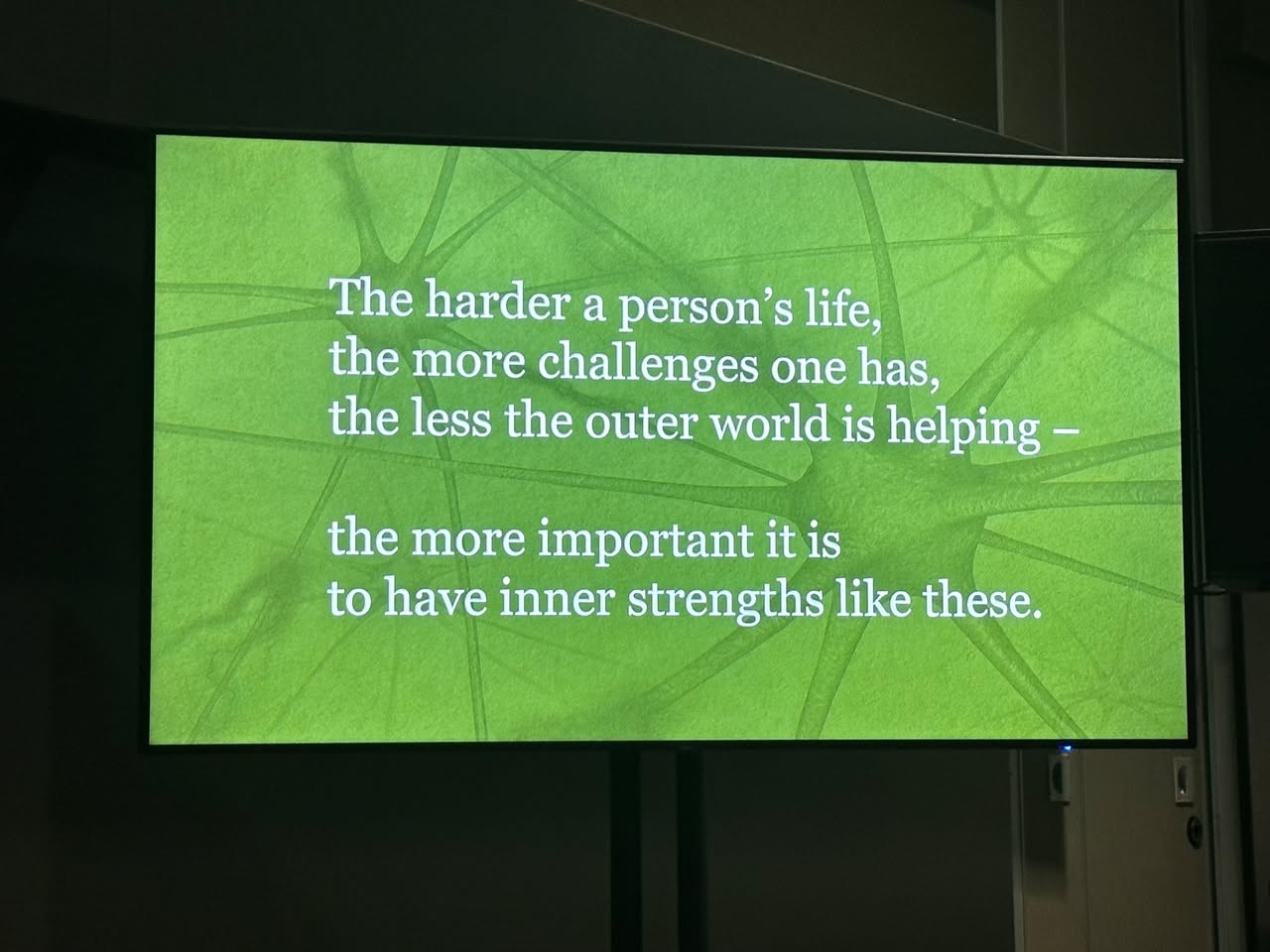
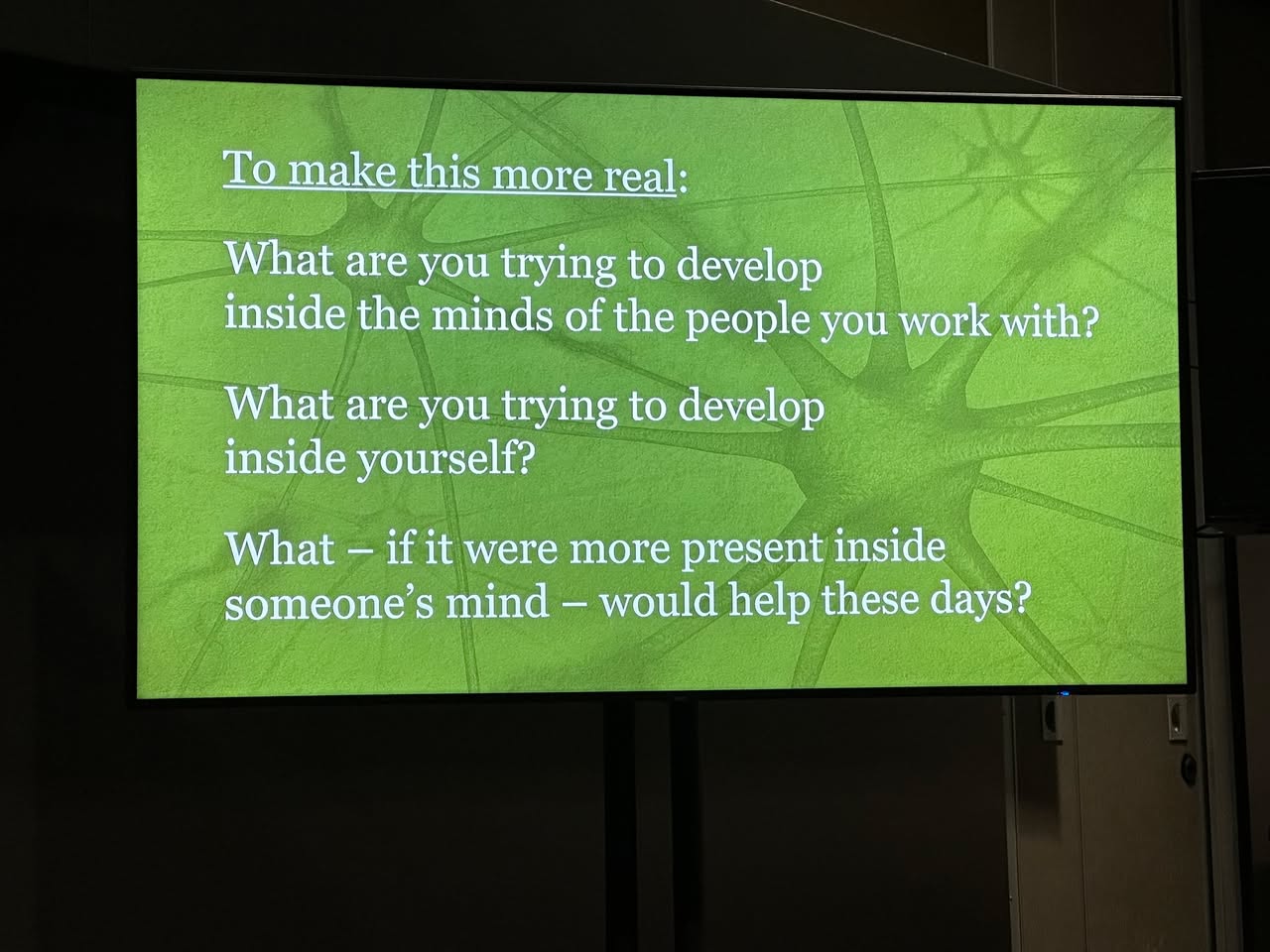
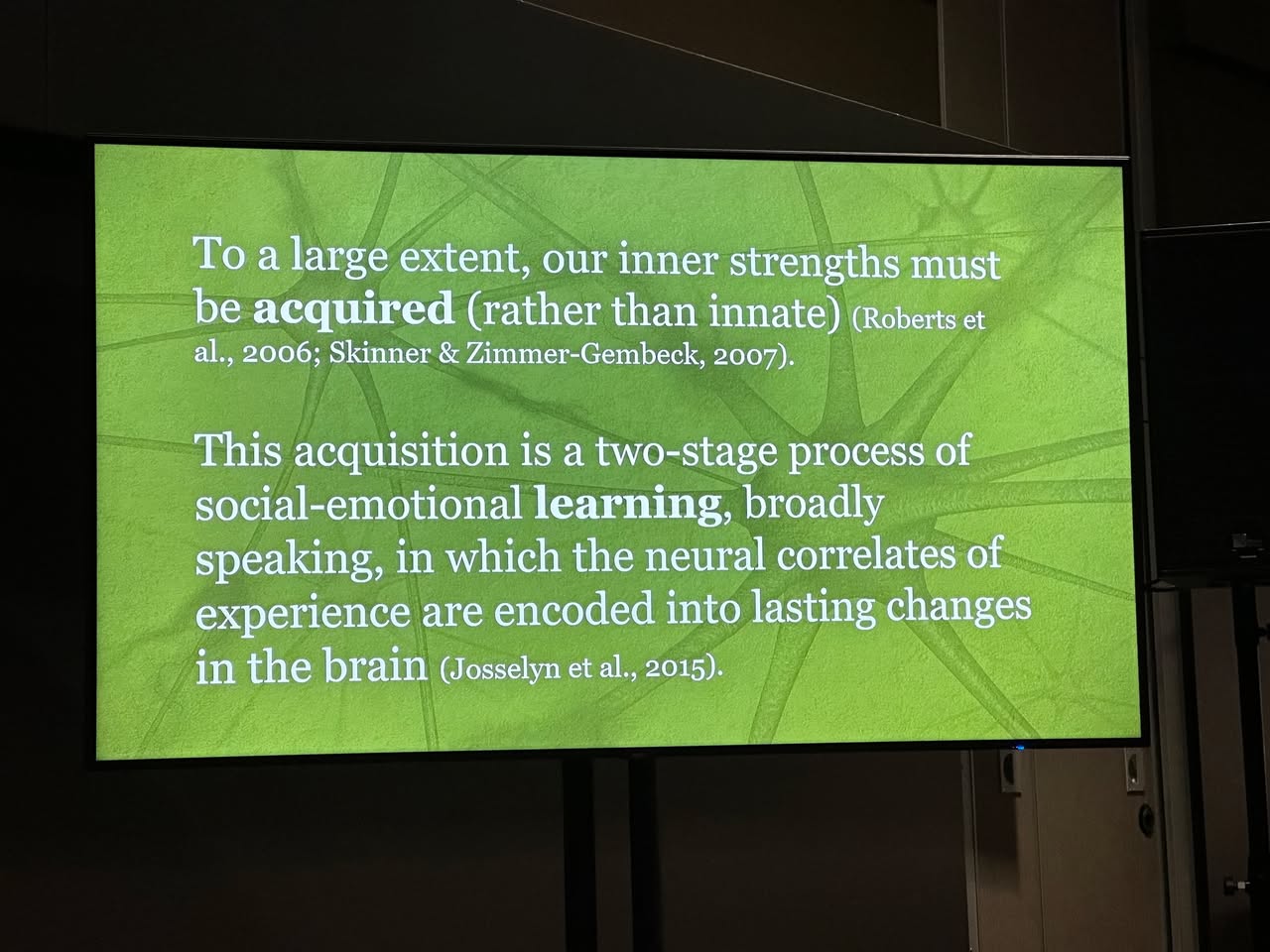
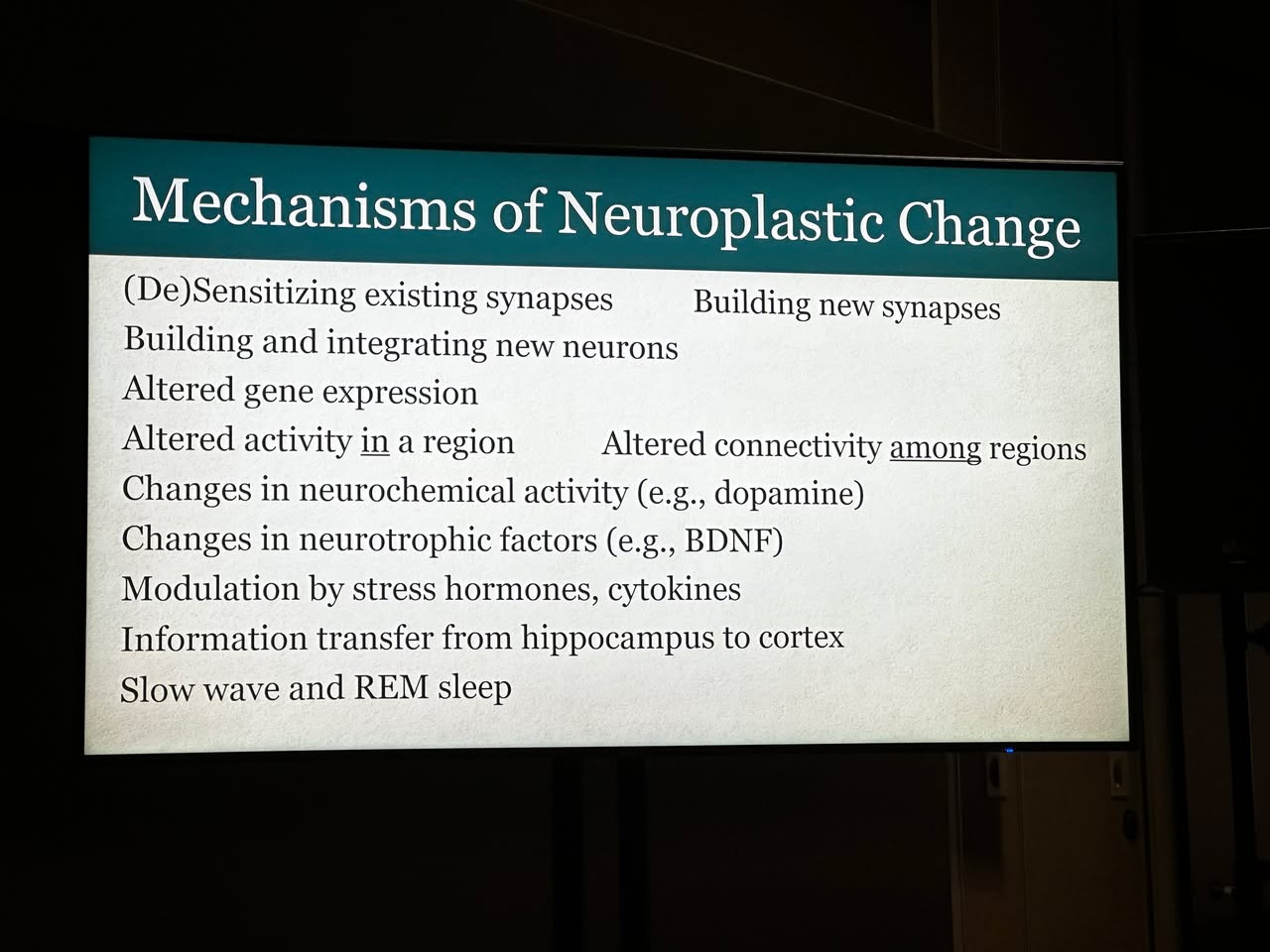
Growth 2.0: Using Positive Neuroplasticity To Build Lasting Inner Strengths Rick Hanson, Ph.D. Greater Good Science Center, UC Berkeley Global Compassion Coalition www.RickHanson.net Positive psychology is fundamentally focused on growth – in coping, well-being, and flourishing. Lasting positive changes in the mind must involve lasting positive changes in the brain. How can we promote those neural changes by how we engage the experiences we are having? Shaping the Course of a Life Challenges Vulnerabilities Resources Location of Resources World Body Mind Resources in the Mind – Inner Strengths Described variously as character strengths (Park, et al., 2004), virtues (Dahlsgaard et al., 2005; Fowers et al., 2021), psychological capital (Luthans & Youseff-Morgan, 2017), positive psychological traits (Martin et al., 2015), etc. Examples include interpersonal skills, impulse control, positive mood, new perspectives, mindfulness, self-compassion, grit, gratitude, resilience, love, motivation, secure attachment, and wisdom. The harder a person's life, the more challenges one has, the less the outer world is helping – the more important it is to have inner strengths like these. To make this more real: What are you trying to develop inside the minds of the people you work with? To make this more real: What are you trying to develop inside the minds of the people you work with? What are you trying to develop inside yourself? To make this more real: What are you trying to develop inside the minds of the people you work with? What are you trying to develop inside yourself? What – if it were more present inside someone's mind – would help these days? To a large extent, our inner strengths must be acquired (rather than innate) (Roberts et al., 2006; Skinner & Zimmer-Gembeck, 2007). This acquisition is a two-stage process of social-emotional learning, broadly speaking, in which the neural correlates of experience are encoded into lasting changes in the brain (Josselyn et al., 2015). Mechanisms of Neuroplastic Change (De)Sensitizing existing synapses Building new synapses Building and integrating new neurons Altered gene expression Altered activity in a region Altered connectivity among regions Changes in neurochemical activity (e.g., dopamine) Changes in neurotrophic factors (e.g., BDNF) Modulation by stress hormones, cytokines Information transfer from hippocampus to cortex Slow wave and REM sleep Inner strengths are acquired in two stages: Encoding → Consolidation Activation → Installation State → Trait BUT: Experiencing doesn't equal learning. Activation without installation may be pleasant, but no trait resources are acquired. What fraction of our beneficial mental states lead to lasting changes in neural structure or function? Formally and informally, we tend to focus more on activation than on installation. This alone reduces the gains from psychotherapy, coaching, human resources training, mindfulness programs, and self-help activities. And meanwhile, th