2024.08.25
日々の仕事を楽しむ人は、仕事における幸福感を6倍感じやすく、離職意向が37%低下
ちょっと前の研究ですが、仕事の幸福感と、離職意向に何が効いてくるのかを調べた研究。
すると、日々の仕事を楽しむ、がどちらにおいても、もっとも効いてきました😍😍😍
(ちょっと他の項目と比べると、大きな違いが。ただ、他の項目も大事なんですが、日々の仕事を楽しむが飛び抜けてしまった。)
ー
仕事を楽しむ❗というのが、とっても大事ですね😊
ですし、まずは、少しずつでも、仕事における楽しめるポイントを見つけていけると良いですね❗
ーーー
■仕事における幸福感
日々の仕事を楽しむこと(オッズ比6.06)、同僚から評価されていると感じること(オッズ比1.27)、人生の目的を持つこと(オッズ比1.22)、意義のある仕事(オッズ比1.15)
※オッズ比:事象の関連性。日々の仕事を楽しむ人は、仕事における幸福感を6.06倍感じやすい。
■離職意向を低下させる
日々の仕事を楽しむこと(離職意向37%低下)、人生の目的に貢献する仕事を持つこと(離職意向26%低下)、感謝されていると感じること(離職意向18%低下)
ーーー
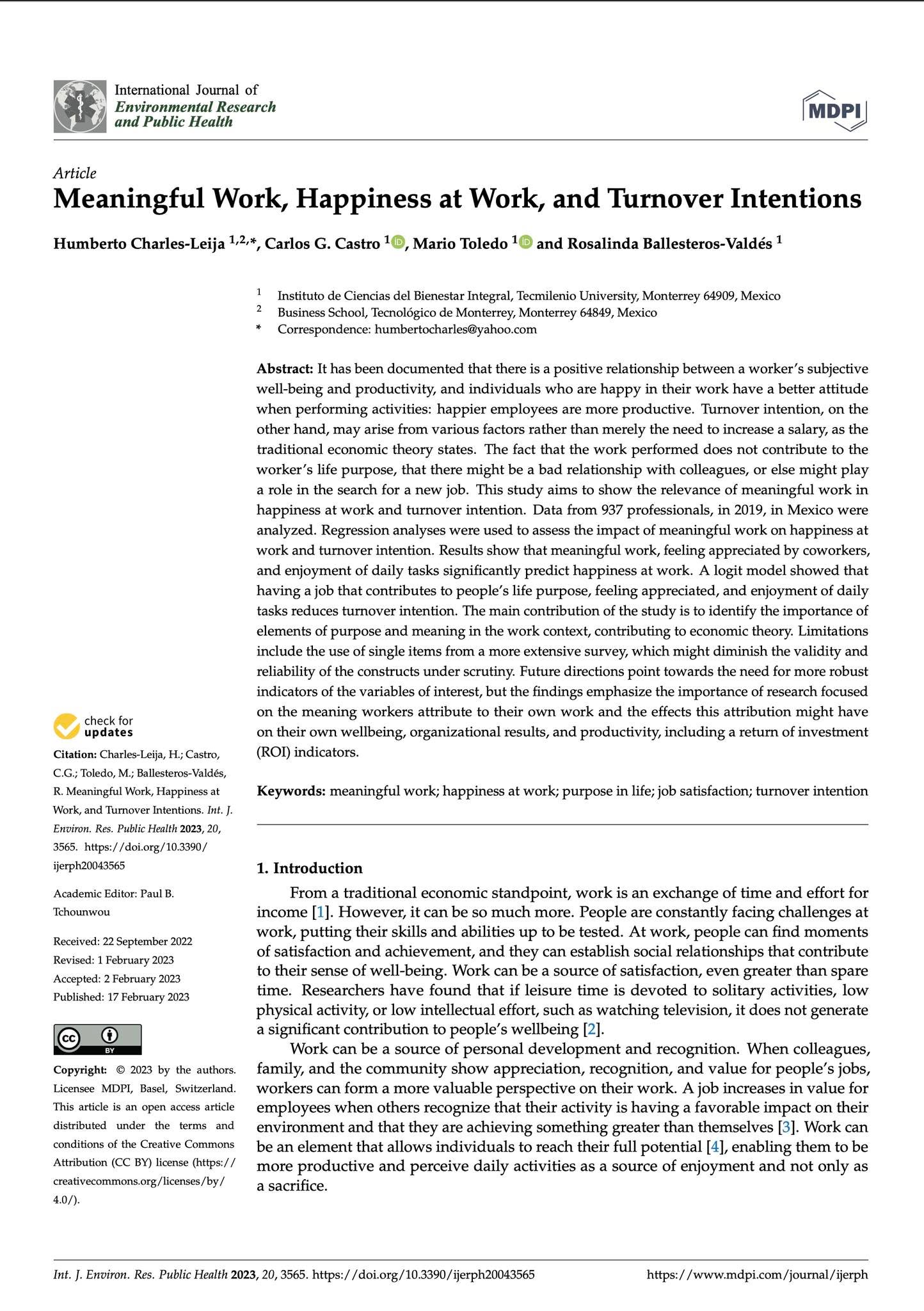
Meaningful Work, Happiness at Work, and Turnover Intentions
有意義な仕事、職場での幸福感、そして離職意向
Int J Environ Res Public Health,2023
https://pubmed.ncbi.nlm.nih.gov/36834260/
DL用↓
https://www.researchgate.net/publication/368630858_Meaningful_Work_Happiness_at_Work_and_Turnover_Intentions
労働者の主観的幸福感と生産性の間には正の関係があり、仕事に満足している個人は活動時の態度が良い、つまり幸福な従業員ほど生産性が高いということが文書化されている。
一方、離職意向は、伝統的な経済理論にあるように、単に給与を増やす必要性から生じるのではなく、様々な要因から生じる可能性がある。遂行する仕事が労働者の人生の目的に寄与していないこと、同僚との関係が悪いこと、あるいはそれ以外のことが、新しい仕事を探す上で一役買うかもしれない。
本研究の目的は、仕事における幸福度と離職意向における有意義な仕事の関連性を示すことである。 2019年のメキシコの専門職937人のデータを分析した。 回帰分析を用いて、意義のある仕事が仕事における幸福感と離職意向に与える影響を評価した。
その結果、意義のある仕事、同僚から評価されていると感じること、日々の仕事を楽しむことが、仕事における幸福感を有意に予測することが示された。
ロジットモデルでは、人々の人生の目的に貢献する仕事を持つこと、感謝されていると感じること、日々の仕事を楽しむことが、離職意向を低下させることが示された。 本研究の主な貢献は、仕事の文脈における目的と意味の要素の重要性を明らかにし、経済理論に貢献したことである。 限界としては、より広範な調査から単一の項目を使用したことであり、精査中の構成要素の妥当性と信頼性を低下させる可能性がある。 今後の方向性としては、対象となる変数のより頑健な指標の必要性を指摘しているが、調査結果は、労働者が自らの仕事に帰属させる意味と、この帰属が自らのウェルビーイング、組織の成果、生産性(投資収益率(ROI)指標を含む)に及ぼすかもしれない効果に焦点を当てた研究の重要性を強調している。
International Journal of Environmental Research and Public Health MDPI Article Meaningful Work, Happiness at Work, and Turnover Intentions Humberto Charles-Leija 1,2,*, Carlos G. Castro 1 , Mario Toledo 1 and Rosalinda Ballesteros-Valdés 1 1 Instituto de Ciencias del Bienestar Integral, Tecnmilenio University, Monterrey 64909, Mexico 2 Business School, Tecnológico de Monterrey, Monterrey 64849, Mexico * Correspondence: humbertocharles@yahoo.com Abstract: It has been documented that there is a positive relationship between a worker's subjective well-being and productivity, and individuals who are happy in their work have a better attitude when performing activities; happier employees are more productive. Turnover intention, on the other hand, may arise from various factors rather than merely the need to increase a salary; as the traditional economic theory states. The fact that the work performed does not contribute to the worker's life purpose, that there might be a bad relationship with colleagues, or else might play a role in the search for a new job. This study aims to show the relevance of meaningful work in happiness at work and turnover intention. Data from 937 professionals in 2019, in Mexico were analyzed. Regression analyses were used to assess the impact of meaningful work on happiness at work and turnover intention. Results show that meaningful work, feeling appreciated by coworkers, and employment of daily tasks significantly predict happiness at work. A logit model showed that having a job that contributes to people's life purpose, feeling appreciated, and employment of daily tasks reduces turnover intention. The main contribution of the study is to identify the importance of dimensions of purpose and meaning in the work context, contributing to economic theory. Limitations include the use of single items from a more extensive survey, which might diminish the validity and reliability of the constructs under scrutiny. Future directions point towards the need for more robust indicators of the variables of interest, but the findings emphasize the importance of research focused on the innovative workers' attribute to their own wellbeing, organizational results, and productivity, including a return of investment (ROI) indicators. Keywords: meaningful work; happiness at work; purpose in life; job satisfaction; turnover intention 1. Introduction From a traditional economic standpoint, work is an exchange of time and effort for income [1]. However, it can be so much more. People are constantly facing challenges at work, putting their skills and abilities up to the test. At work, people can find moments of satisfaction and achievement, and they can establish social relationships that contribute to their sense of well-being. Work can be a source of satisfaction, even greater than that which leisure time provides [2]. Researchers have found that if leisure time is devoted to low- physical activity, or low intellectual effort, such as watching t
本研究のウェルビーイング小話はこちら😊
はぴテク相談室:日々の仕事を楽しむ人は、仕事における幸福感を6倍感じやすく、離職意向が37%低下
https://wellbeing-archive.pages.dev/posts/2024-08-25-1724623803/